
Regular Hospital Beds Comparison

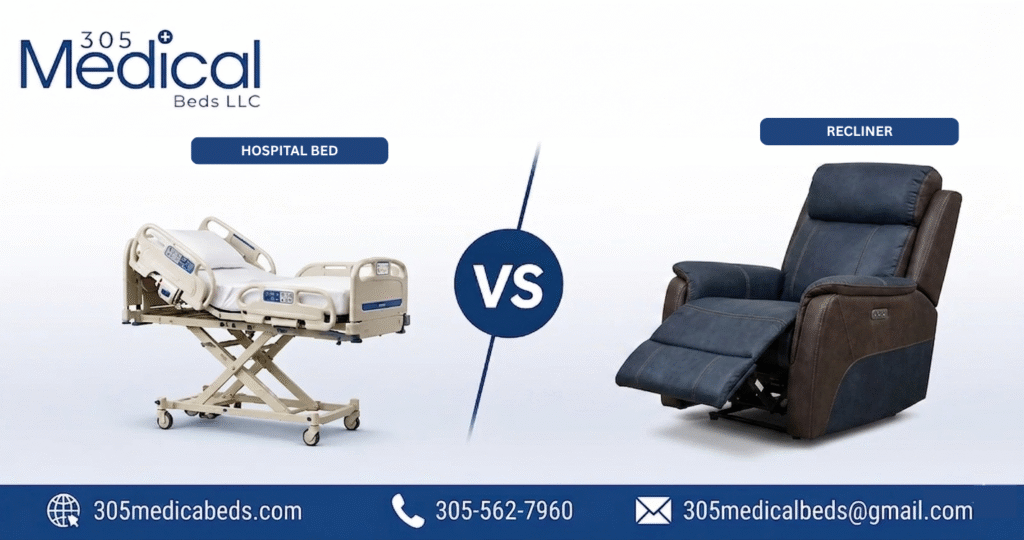
Hospital Bed VS Recliner
Recliner, Regular Hospital Beds Comparison, Uncategorized

Hospital Bed vs Recliner: Which One Actually Helps Recovery at Home?

It’s a debate that happens in living rooms and hospital discharge meetings across the country every single day. Someone is coming home after surgery, or managing a chronic illness that makes lying flat impossible, and the question comes up: do we need an actual hospital bed or would a good recliner do the same job? It’s a fair question. Recliners are familiar. They don’t look medical. They’re already in many homes. And at first glance, an adjustable recliner that elevates the head and the legs seems to do what a hospital bed does just without the clinical associations and the price tag. Except that first glance is wrong in ways that matter. Not always recliners genuinely work for some situations. But for others, choosing a recliner over a hospital bed is a decision that leads to complications, falls, pressure ulcers, and caregiver injuries that didn’t need to happen. This article compares them honestly, round by round, and gives you a clear answer for the specific situations in which each one wins. 1. Sleep Quality and Overnight Positioning This is where the comparison opens up its biggest gap. Sleep real, restorative sleep requires more from a recovery surface than most people realize, and it’s the area where recliners fall furthest short, which can reassure patients and caregivers about the importance of proper support during recovery. A recliner positions you in a seated incline. Even fully reclined, most chairs don’t reach a true horizontal position you’re sleeping at roughly 30–40 degrees across your entire body. For a night or two after a procedure, this is manageable. For weeks of recovery, it creates problems. The seated posture compresses the lumbar spine and puts sustained pressure on the tailbone and thighs areas that are already under pressure from reduced mobility. It prevents the full muscle relaxation that the body needs during deep sleep, which can impact recovery quality and trust in the recovery process. A hospital bed solves this at every level. The four-section articulating deck head, seat, thigh, foot allows the patient to move between near-flat sleeping positions and elevated sitting positions fluidly, with the knee-break that prevents sliding. The full-flat position enables genuine muscular rest, giving caregivers peace of mind about pressure relief and comfort. Hospital Bed Recliner Full range of positions including true flat. Four-section deck prevents sliding. Pressure-relief mattress option. Patient can reposition independently during the night. Consumer cushion not rated for sustained clinical pressure loads. Concentrates weight on tailbone and thighs. No mechanism for systematic repositioning. Significant pressure ulcer risk for low-mobility patients. For any patient spending significant hours at rest with limited mobility, pressure ulcer risk from a recliner is clinically significant. A hospital bed with a medical mattress is not a comfort upgrade it’s a wound prevention tool. 2. Safety During Transfers Getting in and out of something whether a bed or a chair is one of the highest-risk moments of the recovery day. Most falls during home recovery happen during transfers, and the design of the piece of furniture determines how much risk each transfer carries. Getting out of a recliner requires pushing up from a seated position against the resistance of the reclined back or activating a lift mechanism that tilts the patient forward. Neither approach is smooth for someone with surgical restrictions, weakness, or pain. The standard recliner height is fixed; it does not adjust to the patient’s leg length or strength. And the arms of the chair, while helpful for pushing up, are often positioned in ways that require the patient to twist exactly the movement that post-hip and post-spine surgery patients are told to avoid. A hospital bed’s height adjustment changes everything about transfer safety. Lowering the bed so the patient’s feet are flat on the floor before any transfer and raising it to working height for caregiver assistance is the single most effective fall-prevention design feature in home medical equipment. Add half-rails that the patient can grip for stability during the transfer, and the mechanics of getting in and out become dramatically safer than any recliner can offer. Hospital Bed Recliner Height adjusts so feet are flat on floor before transfer. Half-rails provide stable grip point. Caregiver can raise bed to working height. Transfer risk dramatically reduced. Fixed height regardless of patient. Lift chairs help but can tip patient forward abruptly. No rail system. Pushing up from seated position requires strength and balance many recovery patients don’t have. Height-adjustable transfers with rail support versus fixed-height pushes with no grip system. The safety gap is significant and measurable in fall statistics. 3. Head and upper body elevation This is the round where recliners look strongest on paper and where the reality is more nuanced than it first appears. A recliner does elevate the upper body. For mild elevation needs reducing acid reflux, propping up slightly for comfort it works. But the elevation a recliner provides is not controllable in the same way as a hospital bed’s head section. Most recliners offer a handful of preset positions or a continuous reclining arc with no fixed stop points. You can’t set “35 degrees and hold it there” the way a hospital bed’s pendant allows you to. More importantly, recliner elevation moves the entire body together back, hips, and legs all shift as one unit. A hospital bed’s head section elevates independently of the lower body. This matters enormously for clinical positioning. When a heart failure patient needs their upper body elevated for breathing while their legs stay relatively flat to reduce pressure a hospital bed accommodates this. A recliner cannot separate the two. For patients who simply need to sleep slightly elevated for comfort or mild reflux, a recliner may be adequate in the short term. For anyone with a respiratory condition, cardiac condition, or post-surgical positioning requirement, independent head-section control is a clinical necessity, not a preference. Hospital Bed Recliner Head section elevates independently of lower body. Precise angle control via pendant. Any position from 0° to 75°. Clinical positioning for CHF, COPD,
Medical Beds VS Regulard Beds which is better for homecare
Comparisons, Medical Beds Comparison, Regular Hospital Beds Comparison

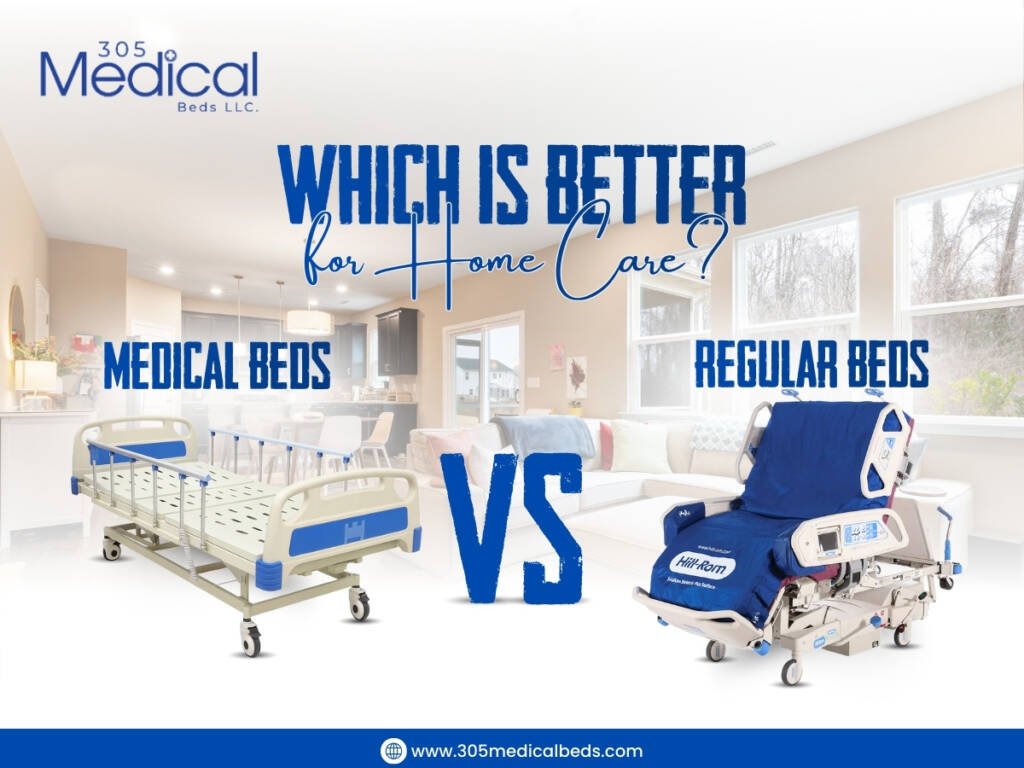
Medical Beds vs Regular Beds: Which Is Better for Home Care?

Choosing the right bed for home care is not just about comfort—it’s about safety, independence, and daily quality of life. Many families initially assume a regular bed will be enough. However, once mobility issues, caregiving needs, or long-term recovery enter the picture, that assumption often changes. Understanding medical beds vs regular beds for home care helps families make a smarter decision—one that protects the patient, supports caregivers, and creates a safer home environment. Understanding Home Care Needs Home care patients often face challenges that standard furniture is not designed to handle, such as: The bed becomes the center of care. Choosing the wrong one can increase risks, while selecting the right one can dramatically improve safety and comfort. What Is a Regular Bed? A regular bed is designed for everyday sleep, not medical care. While it may look appealing and feel familiar, it lacks essential safety and support features. Limitations of Regular Beds in Home Care For short-term rest with full mobility, a regular bed may work. For true home care, its limitations quickly become clear. What Is a Medical Bed? A medical bed—often called a hospital bed for home use—is designed specifically for patients who require medical support outside of a clinical setting. Key Features of Medical Beds These features directly address the challenges of home care. Feature Medical Bed Regular Bed Height Adjustment Yes No Head & Foot Positioning Yes No Fall Prevention Support Yes No Caregiver Assistance Easy & Safe Difficult Long-Term Home Care Ideal Limited Medical Mattress Support Yes No Safety and Fall Prevention Falls are one of the most common home care risks. Medical beds reduce this risk through: Regular beds offer no such protection, making them a higher-risk option for patients with mobility issues. Adjustability and Positioning Benefits Medical beds allow patients to: Regular beds remain fixed, forcing patients into uncomfortable or unsafe positions that can worsen health conditions. Comfort for Long-Term Use While regular beds may feel comfortable at first, they are not designed for extended medical use. Medical beds paired with pressure-relief mattresses provide: Comfort directly affects recovery and daily well-being. Caregiver Support and Ease of Care Caregivers are often overlooked when choosing home care equipment. Medical beds support caregivers by: Regular beds increase physical strain and the risk of caregiver injury over time. Mattress Compatibility and Pressure Relief Medical beds are designed to work with specialized mattresses that improve safety. Best Mattress Options for Medical Beds Standard mattresses used on regular beds may increase the risk of pressure sores and discomfort. When a Regular Bed Might Be Acceptable In limited cases, a regular bed may work: However, these situations are uncommon in long-term home care. When a Medical Bed Is the Better Choice A medical bed is the right option when: In most real-world scenarios, medical beds vs regular beds for home care is a clear decision in favor of medical beds. Cost Comparison: Short-Term vs Long-Term Value At first glance, regular beds appear cheaper. Over time, they often cost more due to: Refurbished medical beds offer a cost-effective solution, providing hospital-grade safety and performance at a lower price. Many families across the United States choose refurbished options for long-term value. Space and Home Compatibility Modern medical beds are designed to fit residential spaces: With proper placement, medical beds integrate smoothly into home care environments. Conclusion When comparing medical beds vs regular beds for home care, the difference is clear. Medical beds are built to protect patients, support caregivers, and improve daily comfort—making them the better choice for most home care situations. While regular beds may work temporarily, medical beds provide long-term safety, dignity, and peace of mind. Choosing the right bed is not just about sleep—it’s about creating a safer, more supportive home care environment. Frequently Asked Questions

what makes ICU-beds different from regular hospital beds
ICU Beds Comparison, Regular Hospital Beds Comparison

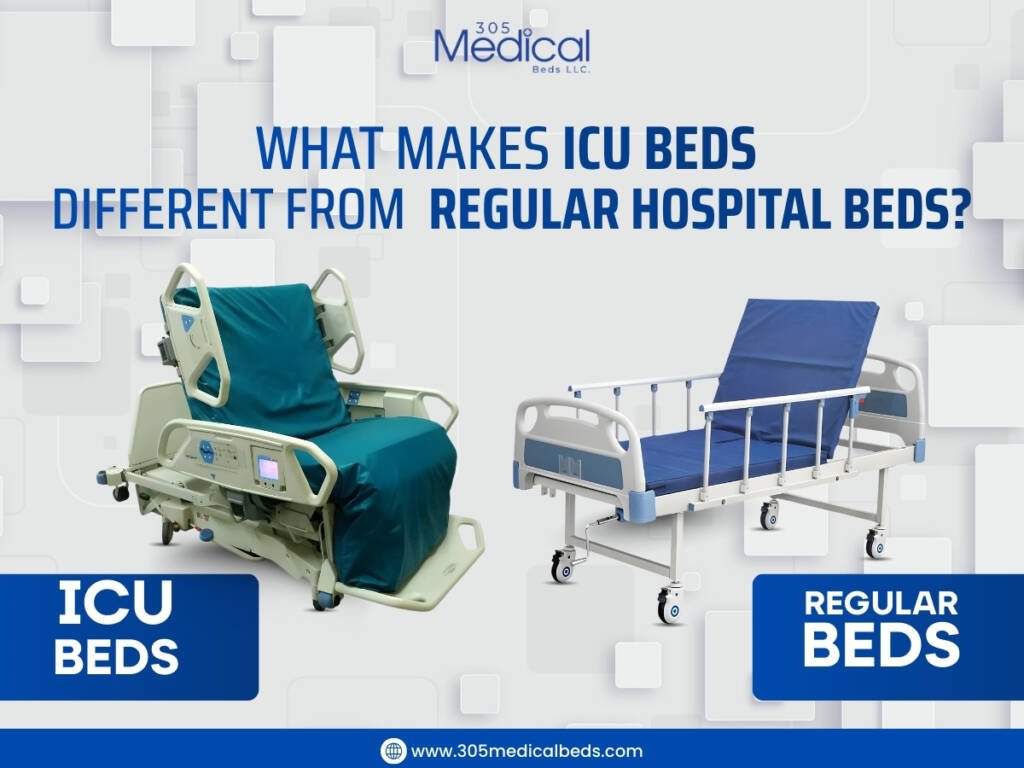
What Makes ICU Beds Different from Regular Hospital Beds

When it comes to hospital care, the type of bed a patient uses plays a crucial role in their recovery. ICU beds and regular hospital beds may seem similar at first glance, but they have significant differences that make ICU beds ideal for patients requiring critical care and constant monitoring. In this blog, we’ll explore the key features that differentiate ICU beds from regular hospital beds, explaining why ICU beds are a vital part of intensive care units and critical care settings. What is an ICU Bed? An ICU bed (Intensive Care Unit bed) is a specialized bed designed for patients who are critically ill and require constant monitoring, frequent position changes, and advanced medical interventions. ICU beds are often equipped with advanced features that help healthcare providers closely monitor the patient’s condition and provide life-saving care. These beds are designed to provide maximum comfort and safety for patients who may be in a life-threatening situation. ICU beds also come with unique features such as built-in monitoring systems, adjustable side rails, and pressure-relieving mattresses to provide the necessary care for patients who are often in need of intensive and long-term medical attention. What is a Regular Hospital Bed? A regular hospital bed, on the other hand, is designed for patients who are generally in less critical or stable conditions. While they also offer adjustability and comfort, regular hospital beds don’t have the same specialized features needed for intensive monitoring and medical care. These beds are suitable for recovery after surgery, childbirth, or treatment for non-life-threatening conditions. Regular hospital beds are typically used for post-operative recovery or care for patients in need of basic medical attention or rehabilitation. Key Differences Between ICU Beds and Regular Hospital Beds Let’s dive into the main features that distinguish ICU beds from regular hospital beds. While both beds are designed with patient comfort in mind, ICU beds come with several unique features that cater to patients in critical care. 1. Adjustability and Positioning 2. Advanced Monitoring and Support Features 3. Weight Capacity and Durability 4. Mobility and Ease of Use 5. Infection Control and Hygiene 6. Patient Access and Comfort Why Are ICU Beds Necessary for Critical Care? ICU beds are crucial in providing the highest level of care for critically ill patients. The advanced monitoring systems, adjustability features, and durability make them indispensable for intensive care units where patients require constant supervision and advanced medical interventions. These beds are designed to enhance patient comfort, improve recovery, and make it easier for medical professionals to provide life-saving care. Conclusion While both ICU beds and regular hospital beds are essential in healthcare settings, ICU beds are specifically designed to cater to the needs of critically ill patients. With their advanced features for positioning, monitoring, and patient comfort, ICU beds play a pivotal role in critical care environments, making them far more specialized than regular hospital beds. Understanding the differences between these two types of beds can help you make informed decisions, whether you’re a healthcare professional or a patient seeking care options for a loved one. ICU beds are engineered for intensive care, providing safety, monitoring, and comfort for patients in need of constant care. FAQs: 1. What are the main features of an ICU bed? ICU beds offer advanced adjustability, built-in monitoring, and pressure-relieving mattresses. These beds also come with higher weight capacities and more durable frames compared to regular hospital beds. 2. Can ICU beds be used in regular hospital rooms? While ICU beds are designed for critical care settings, they can be used in regular hospital rooms if needed. However, they are typically more expensive and are primarily intended for use in intensive care units. 3. How do ICU beds help prevent pressure ulcers? ICU beds are equipped with specialized mattresses that redistribute body weight to prevent pressure sores (bedsores). Some ICU beds feature alternating pressure systems or air-flow mattresses that help maintain circulation and comfort. 4. What is the weight capacity of an ICU bed? ICU beds typically have a weight capacity of around 500-600 pounds, depending on the model. This is significantly higher than regular hospital beds, which usually have a weight capacity of 350-450 pounds.

305 Medical Beds LLC |  2739 W 79 St, Unit 15, Hialeah, Florida 33016 |  Phone: 1.305.562.7960
© Copyright 2012 – 2024 | All Rights Reserved.

You have been successfully Subscribed! Ops! Something went wrong, please try again.

About Us

305 Medical Beds LLC is a certified supplier of refurbished hospital, ICU, and adjustable medical beds. Serving healthcare facilities and home care patients across Florida and the United States since 2020

305 Medical Beds LLC |  2739 W 79 St, Unit 15, Hialeah, Florida 33016 |  Phone: 1.305.562.7960
© Copyright 2012 – 2026 | All Rights Reserved.