Comparisons

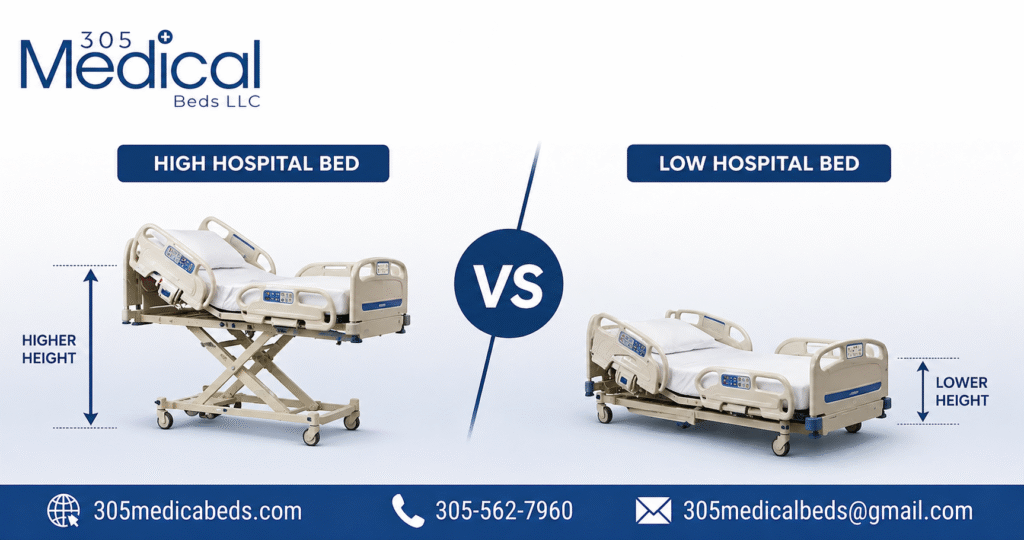
What is the difference between high and low hospital beds
Comparisons, High Hospital Beds, Low Hospital Beds, Uncategorized

What is the difference between high and low hospital beds?

Quick Answer High hospital beds are elevated to a working height (typically 24″–36″) that allows caregivers and nurses to perform medical tasks comfortably without bending. Low hospital beds sit close to the floor (as low as 7″–15″) and are specifically designed to reduce fall-related injury risk for patients who are at high risk of rolling or climbing out of bed. Most modern hospital beds are height-adjustable and can function as both. Whether you’re purchasing a bed for a hospital, nursing home, rehabilitation facility, or home care — this guide breaks down exactly what sets these two bed types apart, who needs each one, and what to consider before you buy. What Is a High Hospital Bed? A high hospital bed refers to the elevated position that an adjustable medical bed can reach — typically between 24 and 36 inches from the floor. In clinical language, this is often called the “caregiver height” or “working height.” When a bed is raised to its highest position, nurses, doctors, and care aides can perform medical procedures, wound care, repositioning, and personal hygiene tasks without having to bend over repeatedly. This protects both the patient and the caregiver from unnecessary strain. High Hospital Bed Height Range: 24″ – 36″ from floor Important: Using an incompatible mattress can void your adjustable bed’s warranty. Always check your bed frame’s compatibility guidelines before purchasing a mattress. What Is a Low Hospital Bed? A low hospital bed is designed to sit as close to the floor as possible — often between 7 and 15 inches in height. These beds are primarily used for patients who have a high risk of falling out of bed, including elderly patients, those with dementia, individuals with neurological conditions, or anyone who is restless and disoriented during sleep or recovery. The core idea is simple: if a patient does fall from a very low bed, the distance to the floor is minimal — which dramatically reduces the severity of any potential injury. In some setups, floor mats are placed alongside a low bed to further cushion any accidental exit. Low Hospital Bed Height Range: 7″ – 15″ from floor Side-by-Side Comparison: High vs Low Hospital Beds Feature High Hospital Bed Low Hospital Bed Primary Purpose Caregiver access & medical tasks Patient fall prevention Height Range 24″ – 36″ 7″ – 15″ Best For Active treatment, post-surgery Dementia, fall-risk, elderly care Caregiver Ergonomics ✓ Excellent ✗ Poor (at lowest position) Patient Fall Safety ✗ Higher risk if not lowered ✓ Significantly reduced Patient Independence Easier for mobile patients Harder for independent exit Used In Hospitals, surgical units, ICUs Geriatric wards, home care, dementia units Adjustable? ✓ Yes (motorized) ✓ Yes (motorized) Floor Mats Recommended? Optional ✓ Highly recommended Not Sure Which Hospital Bed Height Is Right for You? Our specialists at 305 Medical Beds help hospitals, care facilities, and families choose the right bed for every care level and patient need. Who Should Use a High Hospital Bed? High hospital beds — or beds used primarily at an elevated working height — are best suited for situations where hands-on medical care is a frequent need and where the patient is not at immediate fall risk. Hospital Wards Active treatment areas where nurses and doctors need frequent access to the patient for monitoring and procedures Surgical Recovery Post-operative patients often require frequent repositioning, wound care, and IV management — all easier at raised heights. ICU & Critical Care Critical care patients need rapid-access positioning so care teams can respond quickly without physical barriers. Rehabilitation Centers Physical therapists and rehab staff need beds at ergonomic heights during transfer training and exercise sessions Who Should Use a Low Hospital Bed? Low hospital beds are a targeted safety solution. They are prescribed or recommended when fall prevention is the primary concern — typically for patients who cannot be relied upon to call for help before attempting to get up. Dementia & Cognitive Impairment Patients who are disoriented or confused often try to leave the bed unexpectedly. A low position means a fall is far less dangerous. Elderly & Frail Patients Older adults with fragile bones face severe consequences from falls. A low bed significantly reduces fracture risk. Home Care Settings Families caring for loved ones at home often choose low beds for overnight safety when caregivers are not constantly present. Neurological Conditions Patients with Parkinson’s, MS, or stroke-related mobility issues may have unpredictable movement — low beds limit injury exposure. Did you know? Falls are one of the most common and costly patient safety incidents in healthcare settings. Low hospital beds, when used correctly and paired with floor mats, are one of the most effective non-pharmacological interventions for high fall-risk patients. Are Most Modern Hospital Beds Both High and Low? Yes — and this is one of the most important things to understand when shopping for a hospital bed. The vast majority of quality medical beds sold today are height-adjustable, which means they can function as both a high bed and a low bed depending on what the patient needs at any given moment. A modern electric hospital bed typically adjusts between a minimum floor clearance of around 7–10 inches (ultra-low position) and a maximum working height of 30–36 inches. This flexibility is essential in real-world care settings where the patient’s needs constantly change throughout the day. Safety Protocol Reminder: After every caregiving session, the bed must be returned to its lowest safe position. This is a documented standard of care in most hospital fall-prevention protocols and should be followed in home care settings too. Looking for a height-adjustable medical bed for home or facility use? Key Features to Look for in a Height-Adjustable Hospital Bed Whether you need a bed that goes very low, very high, or both, here are the most important features to evaluate before purchasing a hospital or medical bed: High vs Low Hospital Beds: Which One Do You Need? If you’re trying to decide between prioritizing a high or low hospital bed, here’s a simple decision framework based on the patient’s situation: Patient Situation Recommended Bed Height

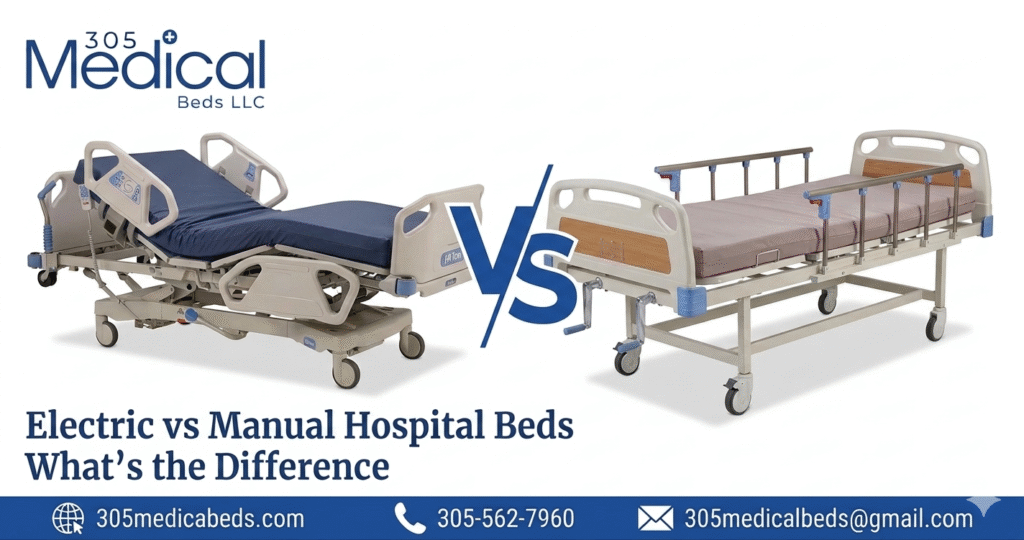
Electric VS Manual Hospital Beds
Comparisons, Uncategorized

Electric vs Manual Hospital Beds What’s the Difference

When people search for hospital beds for sale, one of the most important decisions is choosing between electric and manual hospital beds. Both types are widely used in hospitals and home care, but they are designed for very different needs. The right choice depends on patient condition, caregiver support, and budget. This guide explains the difference in a simple and practical way so you can make the right decision without confusion. What is a Manual Hospital Bed? A manual hospital bed is operated using hand cranks. These cranks control the movement of different parts of the bed. How it works: Key Features: Best Use Case: Manual beds are practical and reliable, especially when simplicity is more important than automation. What is an Electric Hospital Bed? An electric hospital bed uses a motor system controlled by a remote or buttons. Instead of physical effort, adjustments are done automatically. How it works: Key Features: Best Use Case: Electric beds are designed for comfort, convenience, and reduced caregiver effort. Key Differences Between Electric and Manual Hospital Beds Understanding these differences is essential when choosing from available hospital beds for sale. 1. Operation Method Electric beds are much easier and faster to use. 2. Comfort and Adjustability Electric beds provide higher patient comfort. 3. Caregiver Effort Electric beds reduce caregiver workload significantly. 4. Cost Manual beds are budget-friendly, electric beds are feature-rich. 5. Maintenance Manual beds are easier to maintain in basic setups. 6. Long-Term Use Electric beds are more suitable for ongoing patient care. Pros and Cons Manual Hospital Beds Pros: Cons: Electric Hospital Beds Pros: Cons: Which One Should You Choose? When looking at hospital beds for sale, the best choice depends on patient needs. Choose Manual Hospital Beds if: Choose Electric Hospital Beds if: Practical Buying Insight In real situations, buyers often focus only on price. But in healthcare, daily usability matters more than initial cost. Final Thoughts Choosing between electric and manual hospital beds for sale comes down to one key question: how much support does the patient need daily? For modern patient care, electric beds are increasingly preferred because they improve both patient comfort and caregiver efficiency. Frequently Asked Questions

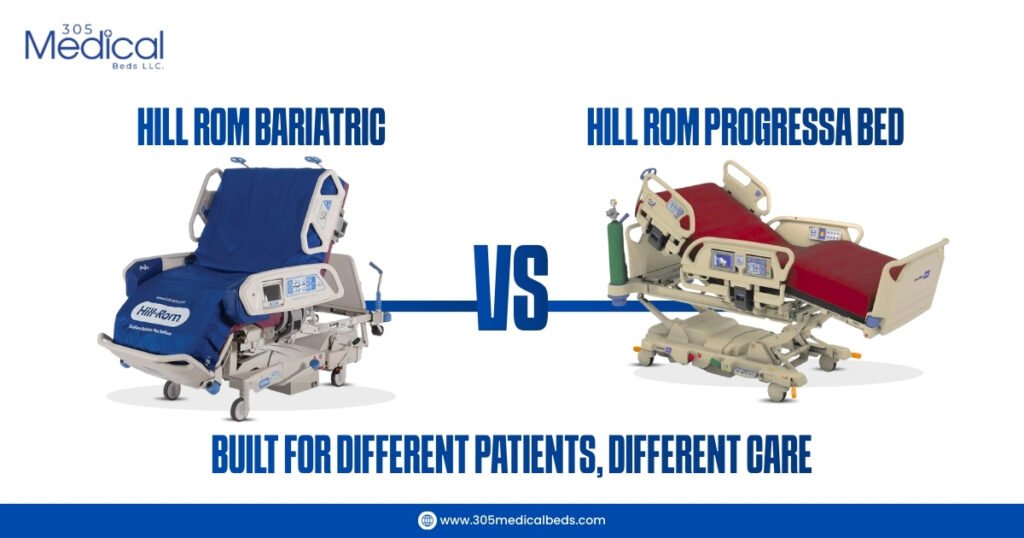
Hill Rom bariatric bed vs Hill Rom Progressa bed comparison for patient care
Bariatric Bed Comparison, Comparisons, Pulmonary Progressa Bed, Uncategorized

Bariatric vs Progressa Bed: Built for Different Patients, Different Care

When it comes to providing exceptional care for patients in healthcare settings, choosing the right medical bed is crucial. Hospitals, nursing homes, and home care environments all require specific beds to meet the needs of their diverse patient populations. Two commonly used medical beds are the bariatric bed and the Progressa bed, both designed with patient comfort and care needs in mind. However, these beds cater to different patient groups with distinct requirements. In this blog post, we’ll compare bariatric beds vs Progressa beds, examining their unique features, benefits, and the patients they are designed for. By understanding these differences, healthcare providers can make the best decision when it comes to patient care. What is a Bariatric Bed? Bariatric beds are designed specifically for patients who are overweight or obese. The term “bariatric” refers to the field of medicine that deals with the prevention, diagnosis, and treatment of obesity. These beds offer specialised support for patients with higher weight capacities, ensuring that they are comfortable, safe, and well-supported during their stay. Benefits of Bariatric Beds What is a Progressa Bed? The Progressa bed is a type of medical bed used in critical care units (ICUs) or other specialized healthcare settings where patients need advanced therapeutic support and continuous repositioning. These beds are designed to meet the complex needs of critically ill patients, facilitating quicker recovery and improving overall patient outcomes. Benefits of Progressa Beds Bariatric vs Progressa Bed: Key Differences Although both bariatric beds and Progressa beds are designed with patient comfort and safety in mind, they cater to different patient groups and healthcare settings. Here’s a breakdown of their key differences: Feature Bariatric Bed Progressa Bed Primary Use Patients who are overweight or obese Critical care, post-surgery, rehabilitation Weight Capacity 500 to 1,000 pounds Up to 350 pounds Adjustability Adjustable head, foot, and height Advanced positioning and automated repositioning Therapeutic Features Focus on comfort and safety Focus on therapy, pressure relief, and mobility Technology Integration Basic manual adjustments Automated features for repositioning, therapy surfaces Target Audience Overweight or obese patients Critical, immobile, and post-surgery patients Key Takeaways Which Bed is Right for Your Facility? When it comes to selecting the right bed for your healthcare facility or home care setting, understanding the unique needs of your patient population is key. Bariatric beds are indispensable for accommodating larger patients who require specialized support and comfort. If your facility manages overweight or obese patients, bariatric beds are a necessity. On the other hand, if your facility caters to patients in need of critical care, post-surgical recovery, or rehabilitation, the Progressa bed is a superior choice. The advanced features of Progressa beds ensure that critically ill patients receive continuous care and monitoring, accelerating recovery while preventing complications like pressure sores. Conclusion In summary, both bariatric beds and Progressa beds are essential tools in specialized patient care, offering distinct benefits depending on the patient’s specific needs. Bariatric beds provide the necessary support for larger patients, while Progressa beds ensure advanced care for critically ill and recovering patients. By understanding the differences between these two types of beds, healthcare providers can make informed decisions that enhance patient comfort, safety, and recovery outcomes. Whether you need a bariatric bed to accommodate heavier patients or a Progressa bed to provide intensive care for critical patients, the right bed makes all the difference in improving patient care. Frequently Asked Questions

Which Hill Rom Total Care P1900 Hospital Bed Works Best
About 305 Medical Beds, Comparisons, Total Care P1900 Bed Option 3, Total Care P1900 Bed Option 5

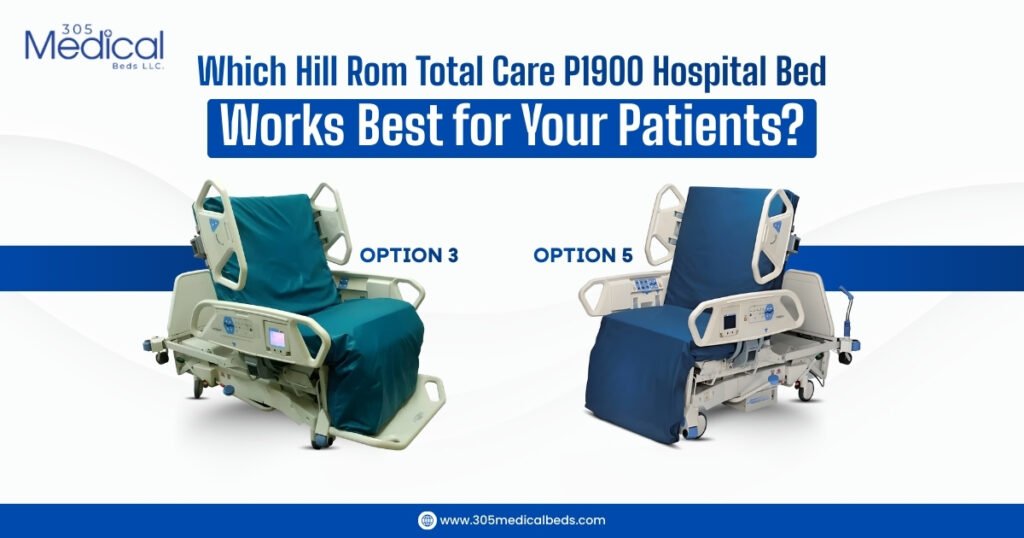
Which Hill Rom Total Care P1900 Hospital Bed Works Best for Your Patients?

Choosing a hospital bed is never just about cost or availability. For patients who spend extended hours in bed, the right surface, positioning features, and safety systems can directly impact comfort, recovery outcomes, and caregiver efficiency. At 305 Medical Beds, we work daily with hospitals, rehab centres, and home-care providers who ask the same important question: Which Hill Rom Total Care P1900 Hospital Bed option is right for my patients? This guide compares Hill Rom Total Care P1900 Option 3 and Option 5 using real clinical needs—not marketing claims—so you can confidently choose the best configuration for your care environment. Quick Answer The Hill Rom Total Care P1900 Hospital Bed Option 3 is best for patients who need enhanced pressure redistribution and longer bed stays due to its air mattress system. Hill Rom Total Care P1900 Hospital Bed Option 5 is ideal for short-term care, lower pressure-injury risk, and budget-focused settings where a foam mattress provides sufficient comfort and support. Why 305 Medical Beds Evaluates the Hill Rom Total Care P1900 Differently Many product pages list features. We focus on clinical fit. At 305 Medical Beds, every Hill Rom Total Care P1900 Hospital Bed is evaluated based on: This approach ensures each configuration is matched to the environment it was designed for—not oversold or underspecified. Overview of the Hill Rom Total Care P1900 Hospital Bed Platform The Hill Rom Total Care P1900 Hospital Bed is a trusted care platform used across acute care, surgical recovery, skilled nursing, and home-care settings. While the bed frame and control systems remain consistent, mattress type and pressure-management capabilities differ significantly by option. Core Features Shared by Option 3 and Option 5 These shared features make the Hill Rom Total Care P1900 Hospital Bed a strong foundation. The real difference lies in the mattress system and pressure redistribution capability. Hill Rom Total Care P1900 Hospital Bed – Option 3 Enhanced Pressure Redistribution with Air Mattress Option 3 is designed for patients who require improved pressure management and may remain in bed for extended periods. 305 Medical Beds Clinical Verdict: Option 3 is ideal when pressure redistribution matters more than advanced ICU therapies. The air mattress provides better skin protection than foam, making it safer for longer stays. Hill Rom Total Care P1900 Hospital Bed – Option 5 Cost-Effective Care with Foam Mattress Option 5 is a simplified configuration designed for patients with lower pressure-injury risk and shorter lengths of stay. 305 Medical Beds Clinical Verdict: Option 5 delivers dependable Hill-Rom quality when basic comfort and safety are sufficient and advanced pressure therapy is not required. Side-by-Side Comparison: Option 3 vs Option 5 Feature Option 3 Option 5 Mattress Type Air Mattress Foam Mattress Pressure Redistribution Enhanced Basic Integrated Scale Yes Yes Bed Exit Alarm Yes Yes Chair Positions Yes Yes Battery Backup Yes Yes Best For Longer stays Short-term care Cost Level Moderate Lower Why Mattress Type Matters for Patient Safety Pressure injuries are one of the most common complications for patients with limited mobility. The Hill Rom Total Care P1900 Hospital Bed addresses this differently depending on the configuration. Option 3 – Air Mattress Benefits If pressure injury prevention is a concern, Option 3 is the safer choice. Option 5 – Foam Mattress Considerations Caregiver Efficiency and Workflow Benefits Both Hill Rom Total Care P1900 Hospital Bed options are designed to reduce caregiver strain through: These features improve workflow efficiency and reduce manual handling risks across care settings. Expert Insight from 305 Medical Beds One of the most common mistakes we see is choosing a bed based solely on price. In reality, mattress selection and length of stay have a greater impact on patient outcomes and total cost of care. Facilities that match the right Hill Rom Total Care P1900 Hospital Bed option to patient needs often see: How to Choose the Right Hill Rom Total Care P1900 Hospital Bed Ask these questions before deciding: Choose Option 3 if: Choose Option 5 if: Why Buy from 305 Medical Beds? Hospitals and care providers choose 305 Medical Beds because we offer: We focus on clinical fit, not upselling. Frequently Asked Questions

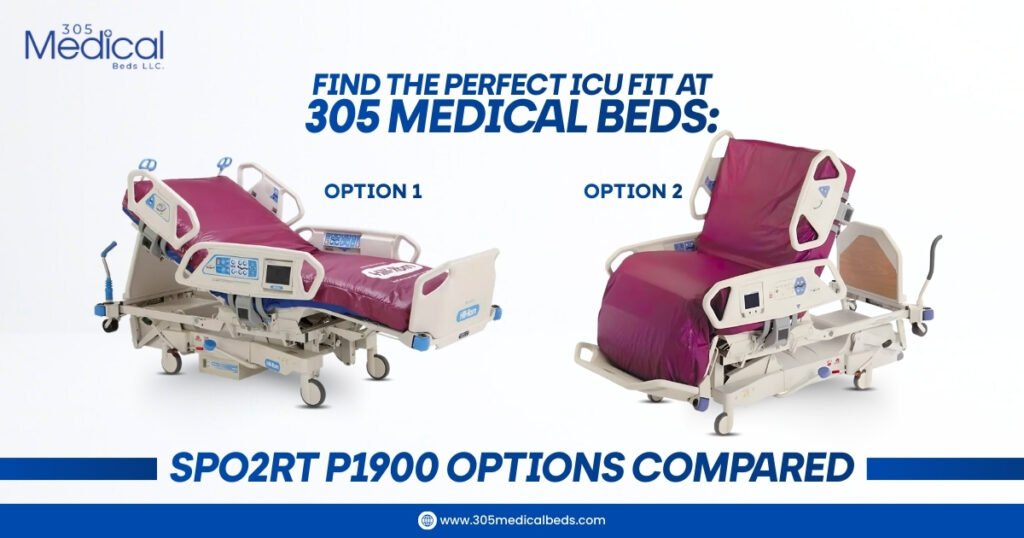
Find the Perfect ICU Fit at 305 Medical Beds: Spo2rt P1900 Options Compared
About 305 Medical Beds, Comparisons, Spo2rt P1900 ICU Bed (Option 1)

Find the Perfect ICU Fit at 305 Medical Beds: Spo2rt P1900 Options Compared

Choosing an ICU bed is never just a purchasing decision; it is a patient-care decision. Every adjustment, therapy function, and support feature directly impacts recovery, safety, and staff efficiency. At 305 Medical Beds, we work closely with hospitals and care facilities every day, and one question comes up often: Which Spo2rt P1900 option is truly right for ICU use? This guide was created to answer that question clearly. Below, we compare Spo2rt P1900 ICU bed options using real clinical needs, not marketing language, so you can confidently choose the right configuration for your facility. Why 305 Medical Beds Compare Spo2rt P1900 Options Differently At 305 Medical Beds, we do more than list features. We evaluate ICU beds based on: This approach ensures that every Spo2rt P1900 ICU bed option is matched to the environment it was designed for. Overview of Spo2rt P1900 ICU Bed Options The Spo2rt P1900 platform appears across multiple configurations. While the core bed frame remains consistent, therapy systems and ICU readiness vary significantly. Core Specifications Across Spo2rt P1900 Options These shared features make Spo2rt P1900 a strong baseline ICU bed. The real difference lies in therapy and support systems. Spo2rt P1900 Option 1: Full ICU-Capable Configuration Option 1 is the most advanced Spo2rt P1900 ICU bed option available and is designed for high-acuity critical care. 305 Medical Beds Verdict: This is the best Spo2rt P1900 option for full ICU use when patient acuity and pressure injury risk are high. Spo2rt P1900 Option 2: Balanced ICU Performance Option 2 retains many ICU-level therapies but removes some long-term healing features. 305 Medical Beds Verdict: A strong mid-level ICU solution that balances performance and cost. Quick Comparison Verdict by 305 Medical Beds This summary helps clinical teams make faster, safer decisions. Pressure Injury Prevention and Patient Safety Pressure injuries remain one of the biggest challenges in ICU settings. Advanced Spo2rt P1900 ICU bed options address this through: Facilities managing fully immobilized patients should prioritize these features to reduce complications and length of stay. Ease of Use for Nursing and Clinical Staff An ICU bed should reduce caregiver strain, not add to it. Staff-Friendly Features These features improve workflow efficiency and reduce manual handling risks. How to Choose the Right Spo2rt P1900 ICU Bed Option Ask these questions before deciding: If most answers are yes, Option 1 is the safest choice. For moderate ICU needs, Option 2 delivers strong performance. Why Buy Through 305 Medical Beds? Hospitals and care facilities choose 305 Medical Beds because we provide: We focus on clinical fit, not upselling. Final Recommendation from 305 Medical Beds Not every Spo2rt P1900 bed is built for ICU-level care. The difference lies in therapy, support, and safety features. By matching patient needs with the right configuration, facilities can improve outcomes while protecting staff and resources. Talk to 305 Medical Beds Need help selecting the right Spo2rt P1900 ICU bed option for your facility? Speak with the ICU bed specialists at 305 Medical Beds to get expert guidance tailored to your clinical environment. Frequently Asked Questions

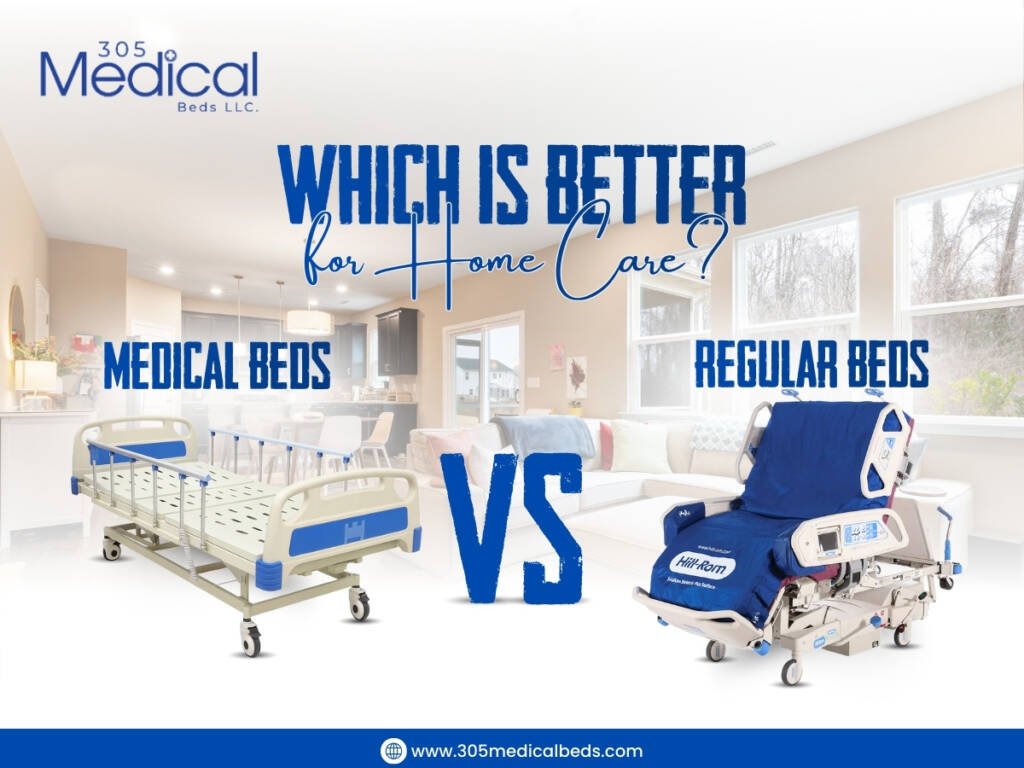
Medical Beds VS Regulard Beds which is better for homecare
Comparisons, Medical Beds Comparison, Regular Hospital Beds Comparison

Medical Beds vs Regular Beds: Which Is Better for Home Care?

Choosing the right bed for home care is not just about comfort—it’s about safety, independence, and daily quality of life. Many families initially assume a regular bed will be enough. However, once mobility issues, caregiving needs, or long-term recovery enter the picture, that assumption often changes. Understanding medical beds vs regular beds for home care helps families make a smarter decision—one that protects the patient, supports caregivers, and creates a safer home environment. Understanding Home Care Needs Home care patients often face challenges that standard furniture is not designed to handle, such as: The bed becomes the center of care. Choosing the wrong one can increase risks, while selecting the right one can dramatically improve safety and comfort. What Is a Regular Bed? A regular bed is designed for everyday sleep, not medical care. While it may look appealing and feel familiar, it lacks essential safety and support features. Limitations of Regular Beds in Home Care For short-term rest with full mobility, a regular bed may work. For true home care, its limitations quickly become clear. What Is a Medical Bed? A medical bed—often called a hospital bed for home use—is designed specifically for patients who require medical support outside of a clinical setting. Key Features of Medical Beds These features directly address the challenges of home care. Feature Medical Bed Regular Bed Height Adjustment Yes No Head & Foot Positioning Yes No Fall Prevention Support Yes No Caregiver Assistance Easy & Safe Difficult Long-Term Home Care Ideal Limited Medical Mattress Support Yes No Safety and Fall Prevention Falls are one of the most common home care risks. Medical beds reduce this risk through: Regular beds offer no such protection, making them a higher-risk option for patients with mobility issues. Adjustability and Positioning Benefits Medical beds allow patients to: Regular beds remain fixed, forcing patients into uncomfortable or unsafe positions that can worsen health conditions. Comfort for Long-Term Use While regular beds may feel comfortable at first, they are not designed for extended medical use. Medical beds paired with pressure-relief mattresses provide: Comfort directly affects recovery and daily well-being. Caregiver Support and Ease of Care Caregivers are often overlooked when choosing home care equipment. Medical beds support caregivers by: Regular beds increase physical strain and the risk of caregiver injury over time. Mattress Compatibility and Pressure Relief Medical beds are designed to work with specialized mattresses that improve safety. Best Mattress Options for Medical Beds Standard mattresses used on regular beds may increase the risk of pressure sores and discomfort. When a Regular Bed Might Be Acceptable In limited cases, a regular bed may work: However, these situations are uncommon in long-term home care. When a Medical Bed Is the Better Choice A medical bed is the right option when: In most real-world scenarios, medical beds vs regular beds for home care is a clear decision in favor of medical beds. Cost Comparison: Short-Term vs Long-Term Value At first glance, regular beds appear cheaper. Over time, they often cost more due to: Refurbished medical beds offer a cost-effective solution, providing hospital-grade safety and performance at a lower price. Many families across the United States choose refurbished options for long-term value. Space and Home Compatibility Modern medical beds are designed to fit residential spaces: With proper placement, medical beds integrate smoothly into home care environments. Conclusion When comparing medical beds vs regular beds for home care, the difference is clear. Medical beds are built to protect patients, support caregivers, and improve daily comfort—making them the better choice for most home care situations. While regular beds may work temporarily, medical beds provide long-term safety, dignity, and peace of mind. Choosing the right bed is not just about sleep—it’s about creating a safer, more supportive home care environment. Frequently Asked Questions

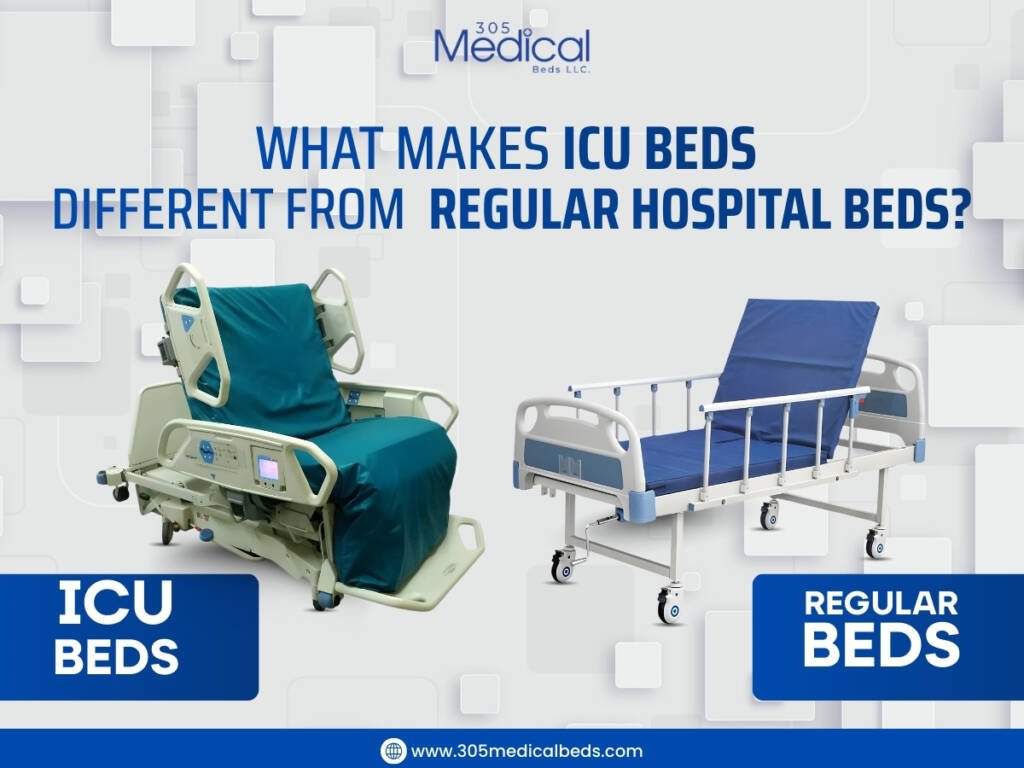
what makes ICU-beds different from regular hospital beds
ICU Beds Comparison, Regular Hospital Beds Comparison

What Makes ICU Beds Different from Regular Hospital Beds

When it comes to hospital care, the type of bed a patient uses plays a crucial role in their recovery. ICU beds and regular hospital beds may seem similar at first glance, but they have significant differences that make ICU beds ideal for patients requiring critical care and constant monitoring. In this blog, we’ll explore the key features that differentiate ICU beds from regular hospital beds, explaining why ICU beds are a vital part of intensive care units and critical care settings. What is an ICU Bed? An ICU bed (Intensive Care Unit bed) is a specialized bed designed for patients who are critically ill and require constant monitoring, frequent position changes, and advanced medical interventions. ICU beds are often equipped with advanced features that help healthcare providers closely monitor the patient’s condition and provide life-saving care. These beds are designed to provide maximum comfort and safety for patients who may be in a life-threatening situation. ICU beds also come with unique features such as built-in monitoring systems, adjustable side rails, and pressure-relieving mattresses to provide the necessary care for patients who are often in need of intensive and long-term medical attention. What is a Regular Hospital Bed? A regular hospital bed, on the other hand, is designed for patients who are generally in less critical or stable conditions. While they also offer adjustability and comfort, regular hospital beds don’t have the same specialized features needed for intensive monitoring and medical care. These beds are suitable for recovery after surgery, childbirth, or treatment for non-life-threatening conditions. Regular hospital beds are typically used for post-operative recovery or care for patients in need of basic medical attention or rehabilitation. Key Differences Between ICU Beds and Regular Hospital Beds Let’s dive into the main features that distinguish ICU beds from regular hospital beds. While both beds are designed with patient comfort in mind, ICU beds come with several unique features that cater to patients in critical care. 1. Adjustability and Positioning 2. Advanced Monitoring and Support Features 3. Weight Capacity and Durability 4. Mobility and Ease of Use 5. Infection Control and Hygiene 6. Patient Access and Comfort Why Are ICU Beds Necessary for Critical Care? ICU beds are crucial in providing the highest level of care for critically ill patients. The advanced monitoring systems, adjustability features, and durability make them indispensable for intensive care units where patients require constant supervision and advanced medical interventions. These beds are designed to enhance patient comfort, improve recovery, and make it easier for medical professionals to provide life-saving care. Conclusion While both ICU beds and regular hospital beds are essential in healthcare settings, ICU beds are specifically designed to cater to the needs of critically ill patients. With their advanced features for positioning, monitoring, and patient comfort, ICU beds play a pivotal role in critical care environments, making them far more specialized than regular hospital beds. Understanding the differences between these two types of beds can help you make informed decisions, whether you’re a healthcare professional or a patient seeking care options for a loved one. ICU beds are engineered for intensive care, providing safety, monitoring, and comfort for patients in need of constant care. FAQs: 1. What are the main features of an ICU bed? ICU beds offer advanced adjustability, built-in monitoring, and pressure-relieving mattresses. These beds also come with higher weight capacities and more durable frames compared to regular hospital beds. 2. Can ICU beds be used in regular hospital rooms? While ICU beds are designed for critical care settings, they can be used in regular hospital rooms if needed. However, they are typically more expensive and are primarily intended for use in intensive care units. 3. How do ICU beds help prevent pressure ulcers? ICU beds are equipped with specialized mattresses that redistribute body weight to prevent pressure sores (bedsores). Some ICU beds feature alternating pressure systems or air-flow mattresses that help maintain circulation and comfort. 4. What is the weight capacity of an ICU bed? ICU beds typically have a weight capacity of around 500-600 pounds, depending on the model. This is significantly higher than regular hospital beds, which usually have a weight capacity of 350-450 pounds.

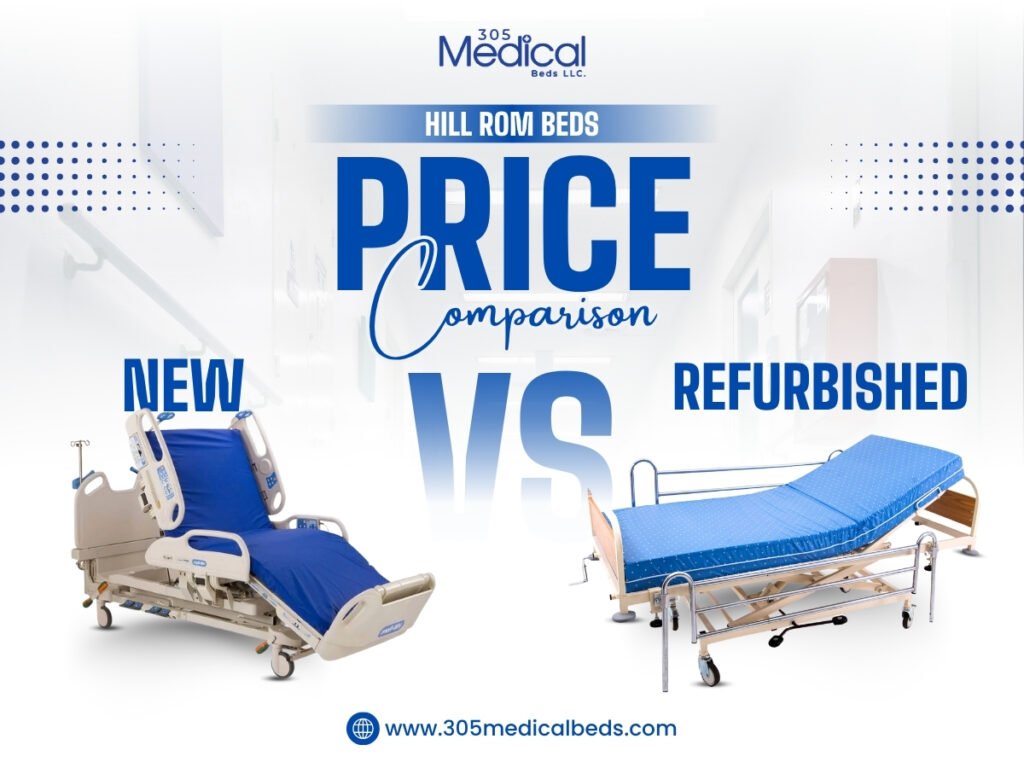
Blog Featured Image showcasing two price comparison of two different hospital hill rom beds; one new hill rom hospital bed and second hill rom refurbished bed
Comparisons, New Hill Rom Bed Price Comparison, Refurbished Hill Rom Bed Price Comparison, Uncategorized

Price Comparison: New vs. Refurbished Hill Rom Beds

When purchasing Hill Rom beds, the price difference between new and refurbished models is one of the biggest factors healthcare facilities must consider. Whether you’re a small healthcare provider or a large institution, balancing quality and budget is critical. But how do the costs stack up? Should you invest in a new Hill Rom bed with all the latest features, or is a refurbished Hill Rom bed a more cost-effective option that still meets your needs? In this guide, we’ll dive deep into a price comparison between new and refurbished Hill Rom beds. By the end of this article, you’ll understand the cost difference, the factors that influence the price, and how to determine which option fits your budget while still delivering excellent patient care. What Are Hill Rom Beds and Why Are They So Important? Before we break down the pricing, let’s quickly touch on what makes Hill Rom beds such an essential piece of equipment in healthcare. Hill Rom beds are designed to provide comfort, safety, and support to patients in medical settings. They come equipped with features like adjustable height, electronic controls, side rails, and even integrated patient monitoring systems to improve care efficiency. Whether used in hospitals, nursing homes, or home care, Hill Rom beds are built to meet the high standards of the healthcare industry, ensuring both patient safety and comfort. With these benefits in mind, it’s easy to see why price is an important consideration for any healthcare facility purchasing a Hill Rom bed. Price of New Hill Rom Beds: What to Expect When considering new Hill Rom beds, you’re paying for the latest technology, warranty, and premium features. These beds come straight from the manufacturer and are in pristine condition, but that also comes with a higher price tag. Why Choose New Hill Rom Beds? What’s the Price Range of New Hill Rom Beds? On average, new Hill Rom beds range between $5,000 and $15,000, depending on the model, features, and specifications. However, certain high-end models or specialized beds can cost upwards of $20,000. Here’s a quick breakdown: Additional Costs: Price of Refurbished Hill Rom Beds: A More Affordable Option Opting for a refurbished Hill Rom bed offers a more budget-friendly solution while still providing the same reliable care. These beds are previously owned, carefully restored, and tested to ensure they meet safety standards. Why Choose Refurbished Hill Rom Beds? What’s the Price Range of Refurbished Hill Rom Beds? Refurbished Hill Rom beds typically range between $2,000 and $7,000, which is significantly more affordable than their new counterparts. Prices can vary depending on the condition of the bed, its age, and the level of refurbishment it underwent: Additional Considerations for Refurbished Beds: Price Comparison Table: New vs. Refurbished Hill-Rom Beds Let’s break down the price differences between new and refurbished Hill-Rom beds in a simple comparison table: Feature New Hill Rom Bed Refurbished Hill Rom Bed Price Range $5,000 to $15,000 $2,000 to $7,000 Warranty Full Manufacturer Warranty Limited Warranty (varies) Technology Latest Features Older Features (may vary) Condition Brand New Restored to Original Condition Longevity Long-Term Durability May have some wear and tear Which Option is Best for Your Budget? When to Choose New Hill Rom Beds: When to Choose Refurbished Hill Rom Beds: Conclusion: Making the Right Cost-Effective Choice Ultimately, the decision between a new or refurbished Hill Rom bed will depend on your specific needs, budget, and long-term plans. New beds offer the latest features, extensive warranties, and long-term durability, but they come at a higher price point. Refurbished beds, on the other hand, are an affordable and sustainable alternative that can provide excellent patient care without breaking the bank. If cost is a primary concern, refurbished Hill Rom beds are an excellent way to save significantly while still ensuring quality care. However, if you need the latest technology and are willing to invest more upfront, new HillRom beds may be the best choice.

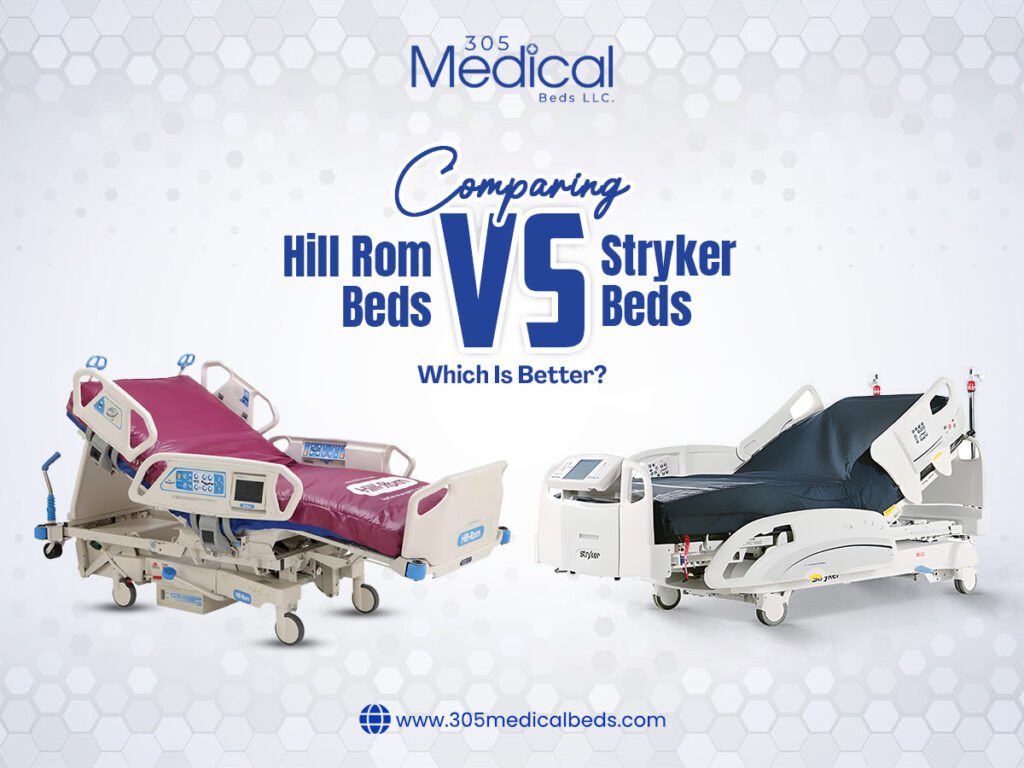
Comparison of Hill Rom hospital bed vs Stryker hospital bed showing features and design differences
Comparisons, Hill Rom Beds Comparison, Stryker Beds Comparison, Uncategorized

Comparing Hill-Rom vs. Stryker Beds: Which Is Better?

When it comes to patient care, the right hospital bed can make all the difference in comfort, safety, and recovery. Whether you’re equipping a hospital, clinic, or home care setup, two brands dominate the market: Hill-Rom beds and Stryker beds. Both are known for durability, advanced features, and patient comfort—but which is the right choice for your needs? In this comprehensive guide, we’ll break down Hill-Rom vs. Stryker beds, comparing features, safety, comfort, mattress compatibility, price, and caregiver convenience. By the end, you’ll have a clear understanding of which bed fits your care requirements. Overview of Hill-Rom Beds Hill-Rom has been a trusted name in hospital beds for decades. Known for innovation, safety, and patient comfort, Hill-Rom beds are used widely in ICUs, long-term care facilities, and home care. Key Features Pros Cons Overview of Stryker Beds Stryker beds are designed for versatility, ergonomic use, and patient safety. They are popular in hospitals, surgical units, and home care settings. Key Features Pros Cons Hill-Rom vs. Stryker Beds: Feature Comparison Feature Hill-Rom Beds Stryker Beds Patient Comfort Advanced pressure relief, low air loss options Compatible with air or foam mattresses, good pressure management Adjustability Electric controls, Trendelenburg, and more Electric controls, Trendelenburg, semi-Fowler, and more Safety Side rails, fall-prevention, bed exit alarms Side rails, fall-prevention, optional bed exit alarms Caregiver Ease Ergonomic, programmable positions, mobility Ergonomic design, smooth maneuverability Durability High High Price Higher Moderate to high Maintenance Professional setup recommended for advanced features Easier setup, fewer advanced built-ins This table can help you match your patient needs and budget with the features that matter most. Mattress Compatibility Patient comfort depends heavily on mattress choice. Both Hill-Rom and Stryker beds support: Who Should Choose Hill-Rom Beds? Who Should Choose Stryker Beds? Cost Considerations Tip: Pairing refurbished beds from 305 Medical Beds with compatible mattresses can save money without sacrificing comfort. Long-Term Maintenance Hospital Bed Accessories Accessories enhance both patient comfort and caregiver efficiency: Conclusion: Hill-Rom vs. Stryker Beds Choosing between Hill-Rom and Stryker beds depends on your patient’s needs, budget, and care environment: Pair either brand with a high-quality foam or air mattress for hospital beds to maximize patient comfort and support. Combining Comfort with Refurbished Beds At 305 Medical Beds, our refurbished Hill-Rom and Stryker beds provide: Frequently Asked Questions Q1: Which bed is better for preventing pressure sores? A: Hill-Rom beds often feature integrated low-air-loss or alternating-pressure systems. Stryker beds support external air mattresses for pressure relief. Q2: Can I use these beds at home? A: Yes, both Hill-Rom and Stryker beds are compatible with home care setups, especially when purchased as refurbished hospital beds from 305 Medical Beds. Q3: Are these beds compatible with all hospital mattresses? A: Yes. Both brands support foam mattresses, air mattresses, and low-air-loss mattresses. Q4: Which is more affordable? A: Stryker beds are generally more cost-effective upfront, while Hill-Rom beds offer more built-in features. Q5: Are there bariatric options? A: Yes, both brands offer bariatric beds designed for higher weight capacities.

Foam mattress vs air mattress comparison on a hospital bed to evaluate patient comfort
Air Mattresses Comparison, Comparisons, Foam Mattresses Comparison, Uncategorized

Foam vs. Air Mattresses: Which Is Better for Patient Comfort?

When it comes to patient care, comfort is not a luxury—it’s a necessity. Whether your patient is recovering from surgery, bedridden, or needs long-term care, the right mattress for a hospital bed can make a huge difference in preventing pressure sores, improving sleep quality, and supporting overall recovery. Two of the most common options are foam mattresses for hospital beds and air mattresses for hospital beds, but which one provides the best patient comfort? In this guide, we’ll explore the differences, benefits, drawbacks, and practical considerations so caregivers, hospitals, and home care providers can make informed decisions. Understanding Foam Mattresses for Hospital Beds Foam mattresses, including memory foam hospital bed mattresses, are designed to contour to a patient’s body. They distribute weight evenly, reduce pressure points, and provide consistent support. Benefits of Foam Mattresses Drawbacks Suggested Image Placement 1 Understanding Air Mattresses for Hospital Beds Air mattresses use adjustable air chambers to provide customizable support. They are particularly effective for patients at high risk of developing pressure sores. Advanced options, like low-air-loss mattresses for hospital beds, automatically alternate pressure to enhance blood circulation and reduce skin breakdown. Benefits of Air Mattresses Drawbacks Suggested Image Placement 2 Foam vs. Air Mattresses: Key Differences Feature Foam Mattress Air Mattress Comfort Contours to body Adjustable firmness Pressure Relief Good Excellent with alternating pressure Temperature Can retain heat Cooler due to airflow Durability Long-lasting Requires maintenance Weight Heavy Lightweight Noise Silent Pump noise possible Cost Moderate Higher for advanced models Special Considerations for Hospital Beds When selecting a mattress, especially for refurbished hospital beds, consider the following: Who Should Choose Foam Mattresses? Foam mattresses are ideal for: Recommended Foam Mattress Options Who Should Choose Air Mattresses? Air mattresses are ideal for: Recommended Air Mattress Options Long-Term Care & Maintenance Tips Proper maintenance ensures longevity and patient safety: Combining Comfort with Refurbished Medical Beds At 305 Medical Beds, our refurbished hospital beds are compatible with both foam and air mattresses, ensuring: Conclusion: Choosing the Right Mattress When deciding between foam vs. air mattresses for hospital beds: The best approach often combines refurbished hospital beds with a high-quality mattress, ensuring both comfort and affordability. Frequently Asked Questions Q1: Which mattress is better for bedridden patients? A: Air mattresses with alternating pressure or low air loss features are generally better for long-term bedridden patients, while foam is suitable for moderate care. Q2: Can foam mattresses prevent bedsores? A: High-density memory foam mattresses help reduce pressure but may not be as effective as specialized air mattresses for high-risk patients. Q3: Are air mattresses suitable for bariatric patients? A: Yes, bariatric air mattresses for hospital beds provide adjustable support for heavier patients and prevent pressure-related injuries.

305 Medical Beds LLC |  2739 W 79 St, Unit 15, Hialeah, Florida 33016 |  Phone: 1.305.562.7960
© Copyright 2012 – 2024 | All Rights Reserved.

You have been successfully Subscribed! Ops! Something went wrong, please try again.

About Us

We are passionate about our customer service, assuring that our equipment is in appropriate conditions and operating correctly. We also offer guidance before purchasing any equipment, making sure that your purchase is the best choice for your needs.

305 Medical Beds LLC |  2739 W 79 St, Unit 15, Hialeah, Florida 33016 |  Phone: 1.305.562.7960
© Copyright 2012 – 2024 | All Rights Reserved.