
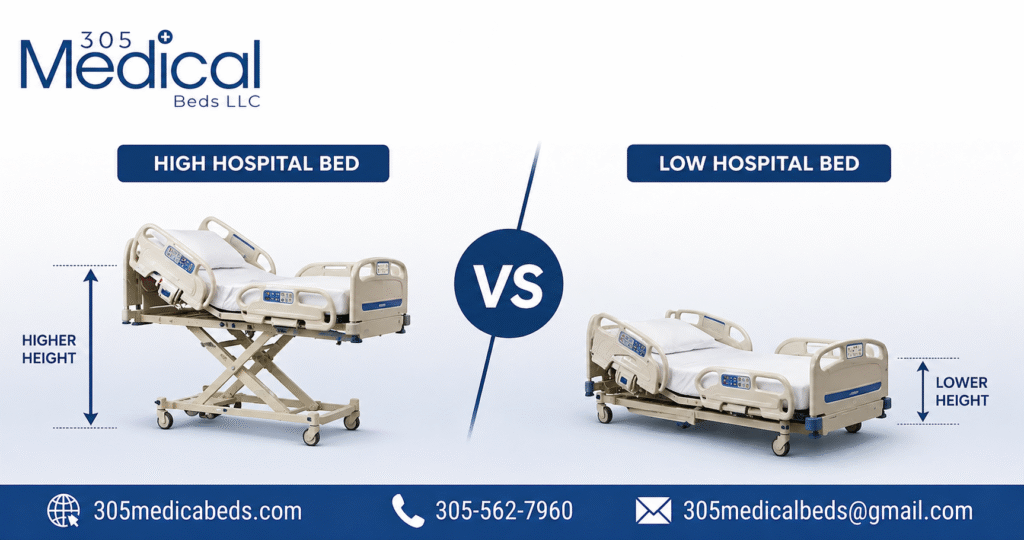
What is the difference between high and low hospital beds?
Quick Answer High hospital beds are elevated to a working height (typically 24″–36″) that allows caregivers and nurses to perform medical tasks comfortably without bending. Low hospital beds sit close to the floor (as low as 7″–15″) and are specifically designed to reduce fall-related injury risk for patients who are at high risk of rolling or climbing out of bed. Most modern hospital beds are height-adjustable and can function as both. Whether you’re purchasing a bed for a hospital, nursing home, rehabilitation facility, or home care — this guide breaks down exactly what sets these two bed types apart, who needs each one, and what to consider before you buy. What Is a High Hospital Bed? A high hospital bed refers to the elevated position that an adjustable medical bed can reach — typically between 24 and 36 inches from the floor. In clinical language, this is often called the “caregiver height” or “working height.” When a bed is raised to its highest position, nurses, doctors, and care aides can perform medical procedures, wound care, repositioning, and personal hygiene tasks without having to bend over repeatedly. This protects both the patient and the caregiver from unnecessary strain. High Hospital Bed Height Range: 24″ – 36″ from floor Important: Using an incompatible mattress can void your adjustable bed’s warranty. Always check your bed frame’s compatibility guidelines before purchasing a mattress. What Is a Low Hospital Bed? A low hospital bed is designed to sit as close to the floor as possible — often between 7 and 15 inches in height. These beds are primarily used for patients who have a high risk of falling out of bed, including elderly patients, those with dementia, individuals with neurological conditions, or anyone who is restless and disoriented during sleep or recovery. The core idea is simple: if a patient does fall from a very low bed, the distance to the floor is minimal — which dramatically reduces the severity of any potential injury. In some setups, floor mats are placed alongside a low bed to further cushion any accidental exit. Low Hospital Bed Height Range: 7″ – 15″ from floor Side-by-Side Comparison: High vs Low Hospital Beds Feature High Hospital Bed Low Hospital Bed Primary Purpose Caregiver access & medical tasks Patient fall prevention Height Range 24″ – 36″ 7″ – 15″ Best For Active treatment, post-surgery Dementia, fall-risk, elderly care Caregiver Ergonomics ✓ Excellent ✗ Poor (at lowest position) Patient Fall Safety ✗ Higher risk if not lowered ✓ Significantly reduced Patient Independence Easier for mobile patients Harder for independent exit Used In Hospitals, surgical units, ICUs Geriatric wards, home care, dementia units Adjustable? ✓ Yes (motorized) ✓ Yes (motorized) Floor Mats Recommended? Optional ✓ Highly recommended Not Sure Which Hospital Bed Height Is Right for You? Our specialists at 305 Medical Beds help hospitals, care facilities, and families choose the right bed for every care level and patient need. Who Should Use a High Hospital Bed? High hospital beds — or beds used primarily at an elevated working height — are best suited for situations where hands-on medical care is a frequent need and where the patient is not at immediate fall risk. Hospital Wards Active treatment areas where nurses and doctors need frequent access to the patient for monitoring and procedures Surgical Recovery Post-operative patients often require frequent repositioning, wound care, and IV management — all easier at raised heights. ICU & Critical Care Critical care patients need rapid-access positioning so care teams can respond quickly without physical barriers. Rehabilitation Centers Physical therapists and rehab staff need beds at ergonomic heights during transfer training and exercise sessions Who Should Use a Low Hospital Bed? Low hospital beds are a targeted safety solution. They are prescribed or recommended when fall prevention is the primary concern — typically for patients who cannot be relied upon to call for help before attempting to get up. Dementia & Cognitive Impairment Patients who are disoriented or confused often try to leave the bed unexpectedly. A low position means a fall is far less dangerous. Elderly & Frail Patients Older adults with fragile bones face severe consequences from falls. A low bed significantly reduces fracture risk. Home Care Settings Families caring for loved ones at home often choose low beds for overnight safety when caregivers are not constantly present. Neurological Conditions Patients with Parkinson’s, MS, or stroke-related mobility issues may have unpredictable movement — low beds limit injury exposure. Did you know? Falls are one of the most common and costly patient safety incidents in healthcare settings. Low hospital beds, when used correctly and paired with floor mats, are one of the most effective non-pharmacological interventions for high fall-risk patients. Are Most Modern Hospital Beds Both High and Low? Yes — and this is one of the most important things to understand when shopping for a hospital bed. The vast majority of quality medical beds sold today are height-adjustable, which means they can function as both a high bed and a low bed depending on what the patient needs at any given moment. A modern electric hospital bed typically adjusts between a minimum floor clearance of around 7–10 inches (ultra-low position) and a maximum working height of 30–36 inches. This flexibility is essential in real-world care settings where the patient’s needs constantly change throughout the day. Safety Protocol Reminder: After every caregiving session, the bed must be returned to its lowest safe position. This is a documented standard of care in most hospital fall-prevention protocols and should be followed in home care settings too. Looking for a height-adjustable medical bed for home or facility use? Key Features to Look for in a Height-Adjustable Hospital Bed Whether you need a bed that goes very low, very high, or both, here are the most important features to evaluate before purchasing a hospital or medical bed: High vs Low Hospital Beds: Which One Do You Need? If you’re trying to decide between prioritizing a high or low hospital bed, here’s a simple decision framework based on the patient’s situation: Patient Situation Recommended Bed Height