Uncategorized

Do You Need A Special Mattress for An Adjustable Bed
Adjustable Hospital Beds, Uncategorized

Do You Need A Special Mattress for An Adjustable Bed?

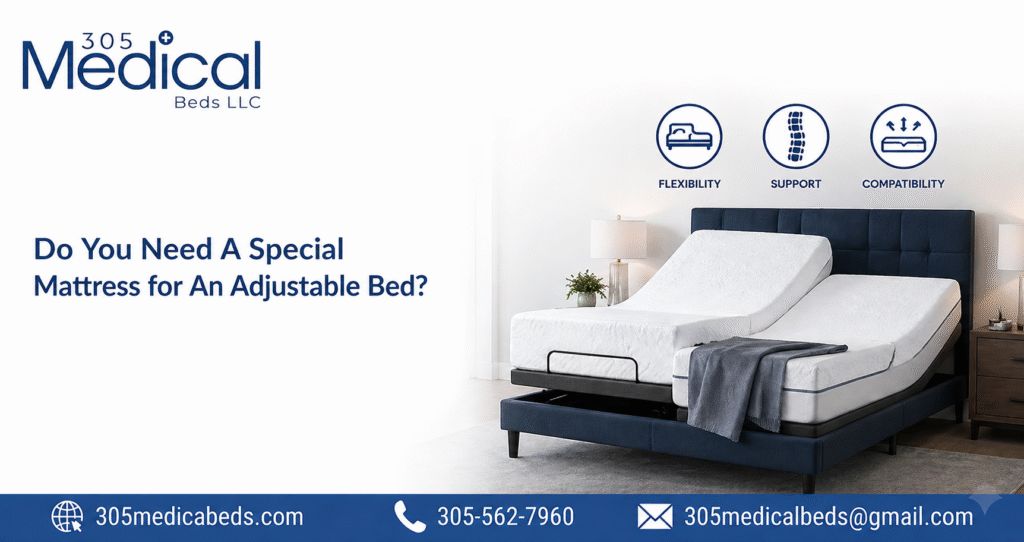
Quick Answer Yes, adjustable beds require a flexible, compatible mattress. Not all mattresses can bend with the adjustable base. Memory foam, latex, and air mattresses are the top compatible types. Traditional innerspring and thick pillow-top mattresses are generally not recommended for adjustable beds, as they can crack, sag, or void your warranty. If you’re shopping for adjustable beds or already own one, understanding mattress compatibility is essential — not just for comfort, but also to avoid costly mistakes. This guide walks you through everything you need to know to make the right choice. Why Can’t You Use Any Mattress on an Adjustable Bed? Adjustable beds are designed to move. They bend, flex, elevate the head, raise the foot, and sometimes do both at once. A mattress that sits on top needs to move with the base — not fight against it. A traditional mattress with rigid internal coil springs was designed to lie flat and stay flat. When you try to bend it, the springs resist — and over time, they break. You end up with a mattress that feels lumpy, develops pressure points, and loses structural integrity much faster than expected. Beyond damage, a rigid mattress also reduces the actual benefit of your adjustable bed. If the mattress can’t flex to match the raised position, your body doesn’t get the therapeutic support the adjustable base is designed to provide. You’re essentially paying for a feature you can’t use. Important: Using an incompatible mattress can void your adjustable bed’s warranty. Always check your bed frame’s compatibility guidelines before purchasing a mattress. What Types of Mattresses Work Best with Adjustable Beds? The good news is that several excellent mattress types are designed specifically for adjustable bases. Here’s what works — and why. Memory Foam The most popular and reliable choice. Memory foam is highly flexible, contours to body shape, and bends easily with the base without losing structure. Latex Foam Natural or synthetic latex is durable, flexible, and responsive. It works well with adjustable bases and is a great option for those who prefer eco-friendly materials. Air Mattress (Sleep Number style) Adjustable air chambers pair perfectly with adjustable beds. Air doesn’t resist bending — it simply conforms to the base position naturally. Hybrid Mattress A hybrid (foam + coils) can work if it uses pocketed micro-coils. The key is flexibility. Some hybrids are adjustable-base certified — always check before buying. Not Sure Which Mattress Fits Your Adjustable Bed? Our specialists at 305 Medical Beds can help you find the right compatible mattress for your base — no guesswork needed. Mattresses to Avoid on an Adjustable Base Just as important as knowing what works — you need to know what doesn’t. Using the wrong mattress type is one of the most common and expensive mistakes people make when buying an adjustable bed. Traditional Innerspring Interconnected coil springs are rigid by design. They resist bending, causing the mattress to crack internally over time when used on an adjustable base. Thick Pillow-Top Mattresses Extra thick comfort layers prevent the mattress from bending naturally. They can shift, bunch up, or separate from the base when elevated. Rigid Foam Slabs (Very Firm) Ultra-high-density foam blocks that don’t flex can crack under repeated bending. Flexibility matters as much as density here. Waterbeds Traditional water mattresses are not designed for adjustable frames. Their rigid chambers and weight distribution don’t flex safely with a motorized base. Key Features to Look for in an Adjustable Bed Mattress When shopping for a special mattress for an adjustable bed, these are the features that matter most. Don’t just look at comfort — look at how the mattress is engineered to move. Adjustable Bed Mattress Compatibility at a Glance Mattress Type Adjustable Base Compatible? Recommended Thickness Best For Memory Foam ✓ Yes 8–12 inches Pressure relief, back pain Latex Foam ✓ Yes 8–12 inches Eco-conscious buyers, bounce Air Mattress ✓ Yes Varies Customizable firmness Hybrid (pocketed coils) ✓ Sometimes 10–12 inches Those who prefer coil feel Traditional Innerspring ✗ No — Not suitable Pillow-Top (very thick) ✗ No — Not recommended Do Medical Adjustable Beds Have Different Mattress Requirements? If you’re looking at a medical or hospital-style adjustable bed — such as those used for post-surgery recovery, elderly care, or managing chronic conditions — the mattress requirements are even more specific. Medical adjustable beds often have more articulation points than consumer models. They may have knee-break positions, Trendelenburg tilts, and weight-rated motors. This means: At 305 Medical Beds, we carry adjustable beds and compatible mattress solutions designed specifically for both home users and medical environments. Can You Keep Your Current Mattress? Here’s How to Tell Before spending money on a new mattress, do a quick compatibility check with your existing one. Here’s a simple way to evaluate it: Need help finding the right adjustable bed setup? Health Benefits You’re Missing Without the Right Mattress Pairing your adjustable bed with the right mattress isn’t just about avoiding damage — it’s about actually getting the health benefits you invested in. With a compatible mattress and an adjustable base working together, users commonly report: None of these benefits are fully achievable if your mattress is fighting the base rather than working with it. A mismatched mattress creates pressure points, restricts elevation, and forces your body into unnatural positions. How Much Does an Adjustable Bed Mattress Cost? Pricing for adjustable-compatible mattresses varies widely, but here’s a realistic breakdown by category: Mattress Type Price Range (Queen) Lifespan Memory Foam (Entry Level) $400 – $800 7–10 years Memory Foam (Premium) $900 – $2,000+ 10–15 years Latex Foam $800 – $2,500 12–20 years Hybrid (Adjustable Compatible) $900 – $2,500 8–12 years Medical-Grade Foam $300 – $1,200 5–8 years (clinical use) Keep in mind that a quality compatible mattress is a long-term investment. Buying an incompatible mattress and damaging your adjustable base motor or frame ends up costing far more than getting the right mattress upfront. Shop Adjustable Beds & Compatible Mattresses 305 Medical Beds specializes in adjustable bases for home care, post-surgery recovery, and everyday comfort —
Costs of Hospital Beds for Sale
Hospital Beds, Uncategorized

What are the Costs of Hospital Beds for Sale?

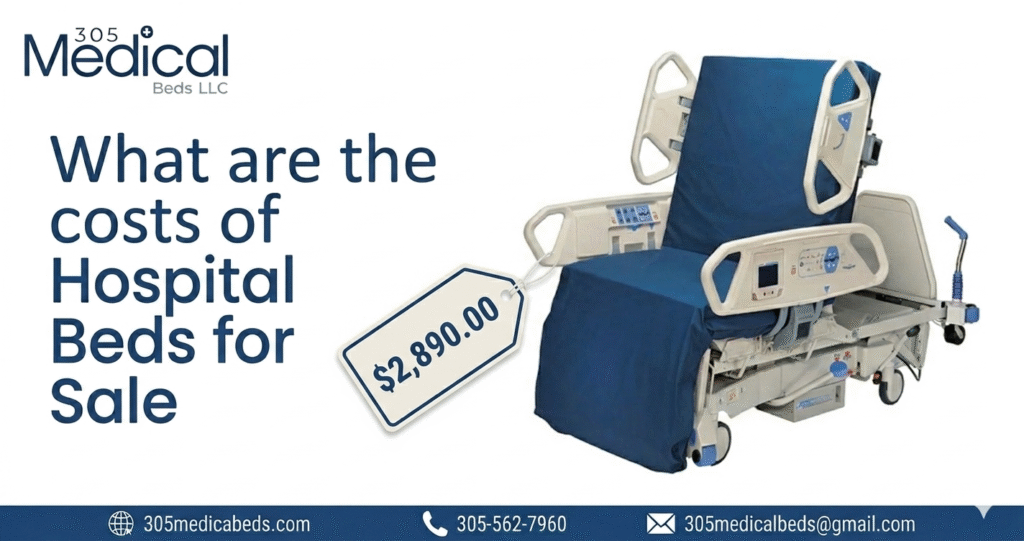
When people start searching for hospital beds for sale, the first question that usually comes up is:How much does a hospital bed actually cost? The truth is, there is no single fixed price. Hospital bed costs vary depending on the type of bed, features, and level of care required. This guide explains everything in a simple way so you can understand what affects pricing and how to choose the right option within your budget. Average Cost of Hospital Beds for Sale The cost of hospital beds depends mainly on their category and functionality. General price structure: 👉 In simple terms:More features = higher price Key Factors That Affect Hospital Bed Cost When comparing hospital beds for sale, pricing is influenced by several important factors: 1. Type of Hospital Bed Different bed types come with different pricing levels: 👉 Bed type is the biggest price factor. 2. Features and Technology The more advanced the features, the higher the cost. Common features that affect price: 👉 More technology = higher investment 3. Build Quality and Material Hospital beds are built with medical-grade materials. 👉 Durability directly affects price. 4. Weight Capacity Beds designed for higher weight capacity require stronger materials. 5. Brand and Medical Grade Standards Medical-grade certified beds are priced higher because they meet strict safety standards. 👉 Certified hospital beds offer better reliability and safety. Cost Overview Based on Bed Types Here is a simple breakdown based on commonly available hospital beds for sale: Manual Hospital Beds 👉 Most affordable optionBest for short-term or basic care needs Electric Hospital Beds 👉 Mid to high price rangeBest for home care and long-term patients Bariatric Hospital Beds 👉 Higher price rangeBest for overweight patients requiring extra support ICU / Advanced Care Beds (e.g., TotalCare, Progressa types) 👉 Premium price rangeBest for hospitals and critical care units Cost Differences in Real Use Understanding cost is not just about price—it’s about value over time. For example: 👉 Over time, electric beds often provide better value for long-term care. Hospital Beds in Your Product Range Based on your hospital beds for sale, pricing also depends on specific models: 👉 Each model is designed for a specific medical requirement, which directly impacts cost. How to Choose a Hospital Bed Within Budget When selecting from hospital beds for sale, follow this simple approach: 1. Identify patient needs 2. Match features with necessity Avoid paying for features you don’t need. 3. Focus on durability A strong bed saves money in the long run. 4. Think long-term value Comfort and ease of care often matter more than initial price. Common Mistakes When Considering Cost Avoid these mistakes when evaluating hospital beds for sale: Final Thoughts The cost of hospital beds for sale depends on more than just price—it depends on features, safety, durability, and patient needs. Choosing the right bed is not about spending more—it’s about choosing the right value for the patient’s condition. Frequently Asked Questions

Electric VS Manual Hospital Beds
Comparisons, Uncategorized

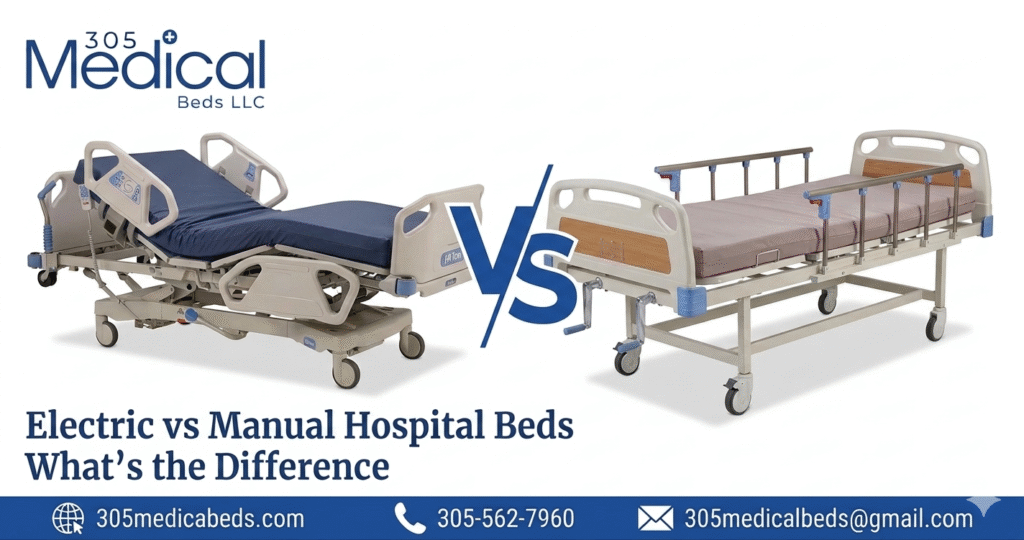
Electric vs Manual Hospital Beds What’s the Difference

When people search for hospital beds for sale, one of the most important decisions is choosing between electric and manual hospital beds. Both types are widely used in hospitals and home care, but they are designed for very different needs. The right choice depends on patient condition, caregiver support, and budget. This guide explains the difference in a simple and practical way so you can make the right decision without confusion. What is a Manual Hospital Bed? A manual hospital bed is operated using hand cranks. These cranks control the movement of different parts of the bed. How it works: Key Features: Best Use Case: Manual beds are practical and reliable, especially when simplicity is more important than automation. What is an Electric Hospital Bed? An electric hospital bed uses a motor system controlled by a remote or buttons. Instead of physical effort, adjustments are done automatically. How it works: Key Features: Best Use Case: Electric beds are designed for comfort, convenience, and reduced caregiver effort. Key Differences Between Electric and Manual Hospital Beds Understanding these differences is essential when choosing from available hospital beds for sale. 1. Operation Method Electric beds are much easier and faster to use. 2. Comfort and Adjustability Electric beds provide higher patient comfort. 3. Caregiver Effort Electric beds reduce caregiver workload significantly. 4. Cost Manual beds are budget-friendly, electric beds are feature-rich. 5. Maintenance Manual beds are easier to maintain in basic setups. 6. Long-Term Use Electric beds are more suitable for ongoing patient care. Pros and Cons Manual Hospital Beds Pros: Cons: Electric Hospital Beds Pros: Cons: Which One Should You Choose? When looking at hospital beds for sale, the best choice depends on patient needs. Choose Manual Hospital Beds if: Choose Electric Hospital Beds if: Practical Buying Insight In real situations, buyers often focus only on price. But in healthcare, daily usability matters more than initial cost. Final Thoughts Choosing between electric and manual hospital beds for sale comes down to one key question: how much support does the patient need daily? For modern patient care, electric beds are increasingly preferred because they improve both patient comfort and caregiver efficiency. Frequently Asked Questions

Hospital Beds for Sale Types and Key Features Explained
Hospital Beds, Uncategorized

Hospital Beds for Sale: Types and Key Features Explained

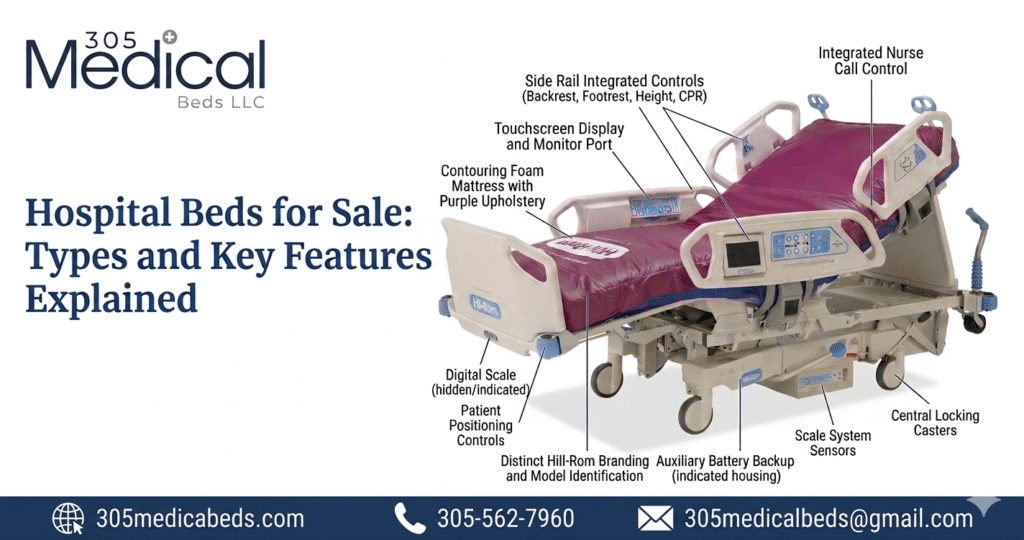
Quick Answer 305 Medical Beds offers five types of certified refurbished hospital beds for sale — ICU beds, bariatric ICU beds, pulmonary ICU beds, general hospital beds, and versatile med-surg beds — all from Hill-Rom and priced 40–60% below new. Finding the right hospital bed for sale can feel overwhelming — especially when you’re trying to care for a loved one at home, manage a nursing facility, or equip an ICU on a tight budget. There are dozens of models, spec sheets full of jargon, and prices that range from $1,500 to over $15,000. This guide cuts through all of that. We’ll walk you through every type of hospital bed for sale at 305 Medical Beds, explain what each model is designed for, and highlight the key features that matter most for patient safety, caregiver ease, and clinical outcomes. Why Choosing the Right Hospital Bed for Sale Matters A hospital bed isn’t just a piece of furniture — it’s a clinical tool. The right bed directly affects pressure injury prevention, patient mobility, fall risk, caregiver strain, and even respiratory outcomes. Choosing the wrong type can cost you more in complications than the bed itself. At 305 Medical Beds, every hospital bed for sale undergoes a rigorous 47-point inspection by certified technicians. That means you get clinical-grade performance at a fraction of the cost of buying new. Whether you’re outfitting a hospital ICU, a long-term care facility, or setting up home care for a family member, there’s a right bed for your situation. All beds listed below are certified refurbished Hill-Rom models. Each includes professional delivery, full installation, and a complete demonstration of all functions — at no extra charge. 05 Bed Types Available 40–60% Savings vs. New 47-pt Inspection Checklist Same Day Miami delivery Types of Hospital Beds for Sale at 305 Medical Beds Here is a complete breakdown of every type of hospital bed for sale in our current inventory, with key features explained for each model. 1. Hill-Rom TotalCare Spo2rt ICU Bed — Critical Care’s Gold Standard Available in two certified refurbished configurations (Option 1 and Option 2) From $3,690 From $3,490 The Hill-Rom TotalCare Spo2rt is one of the most trusted ICU beds in clinical settings globally. Designed specifically for intensive care, it integrates Spo2rt therapy technology that provides continuous patient monitoring and therapeutic support directly from the bed frame. This is the hospital bed for sale most frequently chosen by hospitals and nursing facilities managing critically ill patients. Best for: Hospitals, ICUs, and nursing homes managing ventilated, critically ill, or post-surgical patients who require continuous monitoring and repositioning therapy. 2. Hill-Rom TotalCare Bariatric Plus ICU Bed Bariatric / Heavy-Duty $6,490 $5,890 Not every patient fits a standard hospital bed, and attempting to use one that isn’t rated for bariatric patients creates serious safety risks — for both the patient and caregiving staff. The Hill-Rom TotalCare P1840 Bariatric Plus ICU Bed is purpose-built for patients requiring additional structural support and wider surface area. Best for: Hospitals with bariatric wards, long-term care facilities, and home care situations where the patient requires a heavier-duty sleep and care surface. 3. Hill-Rom Progressa P7500 Pulmonary ICU Bed — Best Seller for Respiratory Care Pulmonary / Respiratory ICU $7,890 $7,290 Our best-selling hospital bed for sale, the Hill-Rom Progressa P7500 is specifically engineered for patients with complex pulmonary and respiratory conditions. It’s the preferred choice for ICUs managing patients with ARDS, COPD exacerbations, pneumonia, and post-intubation recovery — where positioning and airway management directly impact outcomes. Best for: Pulmonary ICUs, medical-surgical units managing respiratory patients, and facilities where ventilator-associated complications are a primary concern. Why Buy Certified Refurbished Hospital Beds? One question we hear constantly: “Is a refurbished hospital bed really as good as a new one?” The short answer is yes — when it’s been properly recertified. At 305 Medical Beds, every hospital bed for sale goes through a 47-point inspection covering all mechanical, electrical, and structural components before delivery. The result is clinical-grade performance at 40–60% lower cost than buying new — with immediate availability rather than 4–12 week lead times for new orders. For context, a new Hill-Rom Progressa P7500 typically sells for $18,000–$22,000. Our certified refurbished version is available for $7,290 — saving facilities and families over $10,000 per unit without compromising safety or performance. Same-day delivery available in Miami. Nationwide shipping with 1–5 business day lead times for most orders. Every delivery includes professional installation and a full demonstration of all bed functions. Ready to Find the Right Hospital Bed for Sale? Whether you’re a hospital procurement manager sourcing a fleet of ICU beds, a nursing home director expanding capacity, or a family setting up home care — 305 Medical Beds has the right hospital bed for sale at the right price. Our team provides free pre-purchase consulting. Tell us your patient’s condition, your facility type, and your budget, and we’ll match you with the best option — often within the hour. Frequently Asked Questions

Hospital beds for Sale Guide
Hospital Beds for Sale, Uncategorized

Hospital Beds for Sale: Complete Buying Guide for Beginners

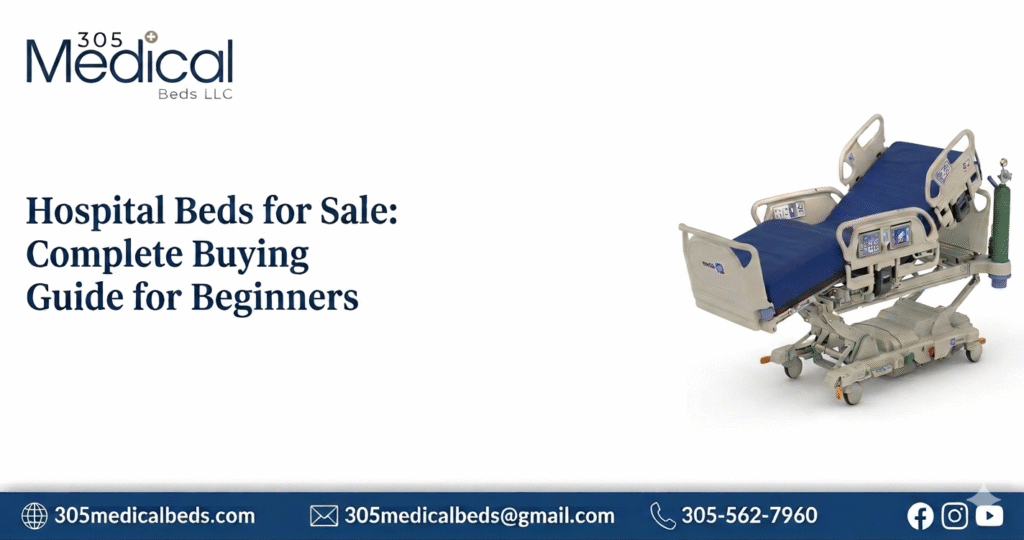
Choosing the right hospital bed can feel confusing at first—especially if you’ve never bought one before. With so many options available, it’s easy to feel overwhelmed. But here’s the good news: finding the right hospital beds for sale doesn’t have to be complicated. Once you understand the basics—types, features, and pricing—you can make a confident and informed decision. This guide will walk you through everything in a simple and practical way. What Are Hospital Beds and Who Needs Them? Hospital beds are specially designed beds that provide comfort, safety, and medical support for patients. They are commonly used for: Unlike regular beds, hospital beds offer adjustable positions, making it easier for both patients and caregivers. Types of Hospital Beds for Sale When searching for hospital beds for sale, understanding the different types is the first step. Manual Hospital Beds Manual beds use hand cranks to adjust positions. Best for: Key benefits: Semi-Electric Hospital Beds These beds combine manual and electric controls. Best for: Key benefits: Fully Electric Hospital Beds Fully electric beds offer complete control through a remote. Best for: Key benefits: Bariatric Hospital Beds Designed for heavier patients requiring extra support. Key benefits: Key Features to Look for in Hospital Beds Not all hospital beds for sale are the same. Focus on these important features: Adjustable Positioning Allows raising the head, legs, or entire bed for better comfort. Safety Rails Prevent falls and improve patient safety, especially at night. Mobility and Locking Wheels Make it easy to move the bed and keep it stable when needed. Mattress Support A good mattress helps prevent pressure sores and improves comfort. Weight Capacity Always match the bed with the patient’s weight for safety. Hospital Bed Price Guide How much do hospital beds cost? The cost of hospital beds for sale depends on features and type. General pricing structure: What affects the price? Important tip:Always focus on value over price. A slightly higher investment can provide better long-term comfort and durability. How to Choose the Right Hospital Bed Choosing from different hospital beds for sale becomes easier when you follow a simple process: 1. Assess Patient Needs 2. Pick the Right Type Match the bed with usage (short-term vs long-term). 3. Measure Your Space Ensure the bed fits comfortably in the room. 4. Think About Caregiver Ease Electric beds reduce effort and save time. 5. Set a Realistic Budget Balance features and affordability. Common Mistakes to Avoid When buying hospital beds for sale, avoid these mistakes: Where to Buy Hospital Beds for Sale You can find hospital beds for sale through: Final Thoughts Finding the right hospital beds for sale is about understanding needs, comparing options, and focusing on comfort and safety. When you choose wisely, a hospital bed becomes more than just equipment—it becomes a key part of recovery and daily care. Take your time, evaluate your options, and invest in a solution that truly supports both the patient and caregiver. Frequently Asked Questions

Evolution of hospital beds
Hospital Beds, Uncategorized

The Evolution of Hospital Bed Technology: From Basic Frames to Smart ICU Beds

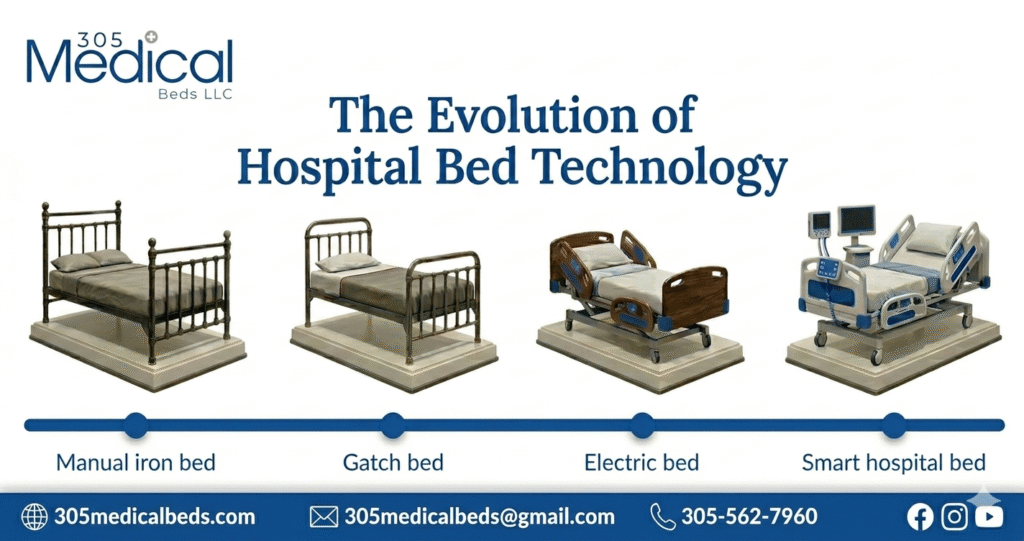
Key Takeaways Introduction Think about the last time you adjusted a recliner with a button or slept on a mattress that adapts to your body. Imagine that same level of precision applied to a bed, where someone’s recovery—or even their life—depends on it. That’s exactly what hospital bed technology has become. What started as little more than a wooden frame with a thin mattress has evolved into one of the most sophisticated pieces of medical equipment in any healthcare facility. Today, hospital bed technology not only supports patient comfort but actively contributes to clinical outcomes, caregiver safety, and infection control. Whether you’re a healthcare administrator, a home caregiver, or someone exploring options for a loved one, understanding how hospital beds have evolved helps you make a smarter, more informed purchase decision. At 305 Medical Beds, we’ve helped hundreds of healthcare facilities and home care families access hospital bed technology that meets ICU standards through certified refurbished equipment. This guide contains all the information we have, presented clearly and without jargon. Where It All Started: The Early History of Hospital Beds For most of human history, patients lay on whatever surface was available tframes in the floor, straw mats, or basic wooden cots. The idea that a bed itself could be a medical tool simply didn’t exist. The first meaningful shift came in the early 1800s when hospitals began using iron-framed beds. These were sturdier and easier to clean than wood — a critical advancement during a time when germ theory was just beginning to emerge. Florence Nightingale, the founder of modern nursing, was one of the first to insist that hospital environments — including beds — needed to be sanitary, well-ventilated, and designed for healing. By the late 1800s, the first adjustable hospital beds appeared. These early models featured hinged backrests that nurses could prop up manually using bolts or pins. It was a simple mechanism, but it represented a turning point: the recognition that bed position directly affects patient health. Key milestones in early hospital bed technology history: → 1874 First U.S. patent issued for an adjustable hospital bed backrest → 1900s Iron and steel frames replace wooden construction across hospitals → 1920s Spring-coil mattresses introduced for improved patient comfort → 1930s Manual crank mechanisms allow height and angle adjustment without moving the patient The Mid-20th Century: Manual Cranks and the First Standardization After World War II, hospital infrastructure expanded rapidly across the United States. The urgent need to care for injured veterans at scale pushed manufacturers to standardize hospital bed design for the first time. The iconic “manual crank bed” emerged during this period. Nurses could now raise the head of the bed, elevate the foot section, and adjust overall height — with 1930s Manual—without physically moving the patient. This was a significant improvement for both patient comfort and caregiver efficiency. The Trendelenburg position (feet elevated above the head) became widely used in surgical recovery during this era, and beds were specifically engineered to achieve it safely and consistently. → Side rails to prevent patient falls during sleep or confusion → Locking caster wheels for safer patient transport between rooms → Standardized frame dimensions for compatibility with IV poles, overbed tables, and monitoring equipment → Improved mattress materials including high-density foam and rubber composites While these beds were a major step forward, every adjustment still required manual effort from nursing staff — and the beds offered no monitoring, no alerts, and no patient autonomy. When Did Electric Hospital Beds Become Standard? The shift to electric hospital bed technology is one of the most transformative moments in medical equipment history — amaterials,—andnd it happened faster than most people realize. General Electric developed an early push-button hospital bed concept in the 1940s. Hill-Rom released its first fully electric hospital bed in 1956, and Dr. Homer Stryker developed his revolutionary Circ-O’lectric rotating bed — design—and—designeded for spinal and burn patients — —designed—inin 1958. These weren’t incremental upgrades. They fundamentally changed what a hospital bed could do. For the first time, patients could adjust their own bed position using a simple handheld remote givingng them autonomy and reducing demands on nursing staff. That shift from nurse-controlled to patient-controlled positioning had measurable effects on recovery time, patient satisfaction, and staff injury rates. As the technology matured through the 1980s and 1990s, electric hospital bed technology advanced rapidly: By the 1990s, Hill-Rom and Stryker had emerged as the dominant innovators in hospital bed technology. Their beds went from being simple furniture to complex medical devices with multiple integrated systems. This is the era that gave rise to the models many healthcare facilities still rely on today — includiconditions.—includingng the Hill-Rom TotalCare and Versacare series, which remain some of the most trusted platforms in clinical settings worldwide. Shop Hill Rom Electric Hospital Beds Certified refurbished. ICU-grade. Fully tested. What Does ICU-Grade Hospital Bed Technology Actually Include? Modern ICU hospital beds represent the pinnacle of what hospital bed technology has achieved. These are not just beds — they are patient management platforms. Every component is engineered to directly support clinical outcomes. Today’s advanced hospital beds, like the Hill-Rom Progressa P7500 and TotalCare Spo2rt P1900, include features that were unimaginable just 30 years ago. Continuous patient monitoring Pulmonary and respiratory support This is where modern hospital bed technology has perhaps its greatest clinical impact. Caregiver safety features According to the CDC’s safe patient handling guidlines, overexertion injuries from patient handling are among the most common workplace injuries in healthcare. Modern hospital bed technology directly addresses this. Smart connectivity How Mattress Technology Evolved Alongside the Bed Frame It would be incomplete to discuss hospital bed technology without addressing the mattress. The two systems work together, and ignoring one undermines the other. Early hospital mattresses were basic foam pads — function—a—functionalal but offering no pressure redistribution, moisture management, or therapeutic benefit. Today’s hospital mattresses are engineered medical devices in their own right: The right mattress is just as important as the right bed frame. At 305 Medical Beds,

Manual Patient Transfer Safely and Effectively
Hospital Beds, Uncategorized

How to Manually Transfer Patient to Bed Safely and Effectively?

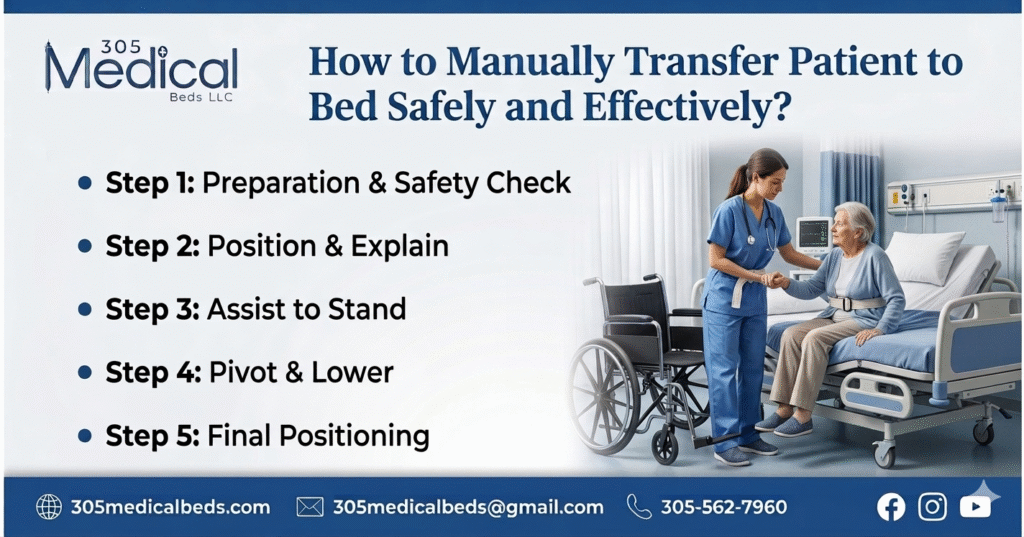
Quick Answer: A manual transfer bed is used safely by preparing the environment, locking all wheels, adjusting the bed height so the patient’s feet touch the floor, using assistive tools like transfer belts, and maintaining proper body mechanics. Clear communication and slow, controlled movements are essential to prevent falls and caregiver injuries. Introduction If you’re caring for someone with limited mobility at home or in a care facility, you already know that moving a patient is one of the riskiest moments of any caregiving day. A manual transfer bed changes that. Done right, it keeps your patient comfortable and your back intact. Whether you’re a professional caregiver, a nurse, or a family member stepping into a new role, this guide walks you through everything you need to know about using a manual transfer bed safely, avoiding the most common mistakes, and getting the most out of every transfer. Let’s get into it — step by step, no fluff. What Is a Manual Transfer Bed? A manual transfer bed is a specially designed medical bed that allows caregivers to safely move, reposition, or transfer patients — without the need for electric motors or powered mechanisms. It relies on manual adjustments, side rails, and often a low-height feature to make patient movement safe, controlled, and strain-free for both parties. Unlike standard hospital beds, manual transfer beds are built with the mechanics of safe patient handling in mind. They’re commonly used in home care settings, nursing homes, rehabilitation centers, and long-term care facilities. According to the CDC’s National Institute for Occupational Safety and Health, musculoskeletal injuries from patient handling are one of the leading causes of caregiver injuries — making proper transfer technique not just helpful, but essential. Why Safe Transfers Matter More Than You Think Poor transfer technique causes injuries on both sides — patients can suffer falls, skin tears, or joint stress, while caregivers risk serious back and shoulder injuries. A manual transfer bed gives you the tools to reduce those risks — but only if used correctly. Step-by-Step: How to Use a Manual Transfer Bed Safely Follow this process every time to ensure the safest possible transfer experience for both patient and caregiver. Step 1 — Prepare the environment before anything else Before touching the bed, set your workspace up for success. Clear the area of obstacles, ensure the floor is dry, and have all transfer equipment (transfer belt, slide sheet, wheelchair if needed) within arm’s reach. Lock all wheels on both the bed and any receiving equipment. Step 2 — Adjust the bed to the right height One of the greatest advantages of a manual transfer bed is its height adjustability. Lower the bed so that when the patient sits at the edge, their feet touch the floor flat. This reduces the risk of falls and gives the patient a sense of stability and control. A bed that is too high or too low increases fall risk significantly. Step 3 — Raise the head of the bed first If your patient is lying flat, use the manual crank or lever to raise the head of the bed to approximately 30–45 degrees before beginning repositioning. This makes it easier for the patient to shift their weight and reduces the effort required from the caregiver. Step 4 — Position yourself correctly This is where most caregiver injuries happen. Stand with your feet shoulder-width apart, bend your knees — not your back — and keep the patient as close to your body as possible during any lift or slide. Never reach across the bed or twist your torso while supporting a patient’s weight. Step 5 — Use a transfer belt or slide sheet For patients with limited strength, a gait/transfer belt around the patient’s waist gives you a firm, safe grip. For bed-to-bed or lateral transfers, a slide sheet reduces friction dramatically and allows two caregivers to move a patient in a single smooth motion. Always use assistive devices — they exist for a reason. Step 6 — Communicate every move Tell your patient exactly what you’re about to do before you do it. “I’m going to help you sit up now — on three, we’ll move together.” This reduces patient anxiety, improves cooperation, and results in safer, more controlled transfers every time. 01Prepare WorkspaceClear area, dry floor, equipment ready, wheels locked 02Adjust Bed HeightFeet flat on floor when patient sits at edge 03Raise Head of Bed30–45 degrees before repositioning begins 04Position YourselfFeet wide, knees bent, patient close to your body 05Use Assistive ToolsTransfer belt or slide sheet for every move 06Communicate ClearlyExplain each step before it happens Looking for a quality manual transfer bed? Browse our full selection of refurbished and new medical beds — built for safety, comfort, and durability at every care level. Critical Safety Rules You Should Never Break Important Safety Reminders How to Reposition a Patient in a Manual Transfer Bed Repositioning is just as important as transferring. Patients who remain in one position for extended periods are at high risk for pressure ulcers (bedsores), poor circulation, and respiratory complications. For most patients, repositioning every 2 hours is the clinical standard. Pro tip A body pillow or wedge foam behind the back is one of the most underused tools in repositioning. It maintains the patient in a supported lateral position without requiring the caregiver to hold them in place, reducing fatigue during long care shifts. Bed-to-Wheelchair Transfer: A Common Scenario Done Right The bed-to-wheelchair transfer is one of the most frequent — and most mishandled — moves in patient care. Here’s how to do it correctly using a manual transfer bed: Common Mistakes Caregivers Make with Manual Transfer Beds Even experienced caregivers fall into these habits — here’s what to watch for: Maintaining Your Manual Transfer Bed for Long-Term Safety A well-maintained manual transfer bed will perform safely for years. A neglected one becomes a liability. Make these checks part of your routine: Did you know? Refurbished hospital beds from trusted suppliers like 305 Medical Beds are fully inspected and restored to meet manufacturer standards —

qualification for hospital bed at home
Hospital Beds, Uncategorized

What You Need to Qualify for a Hospital Bed at Home?

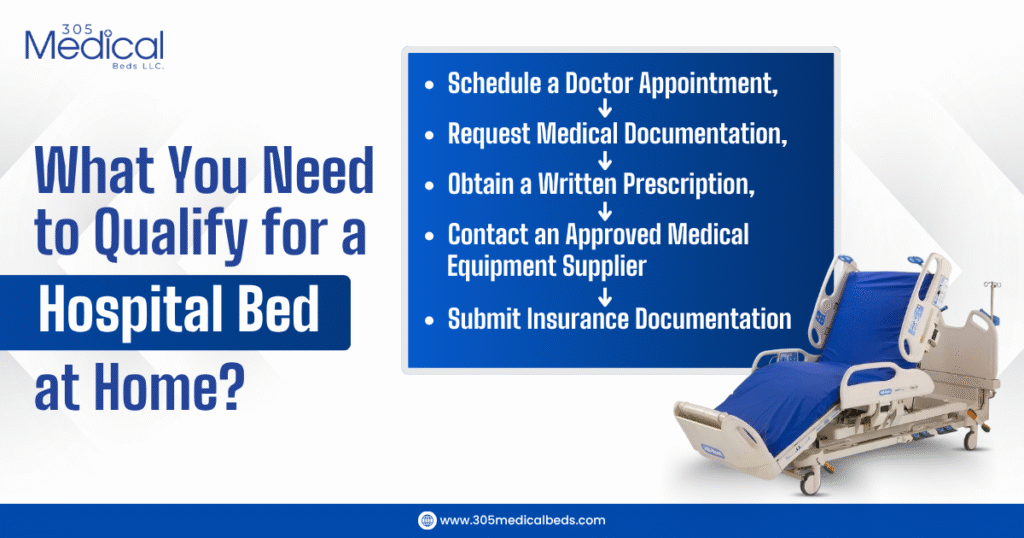
Bringing a hospital bed into your home can dramatically improve comfort, safety, and recovery. But many families ask the same important question: How Do You Actually Qualify for a Home Hospital Bed? To qualify for a hospital bed at home, you typically need: Most insurance providers, including Medicare, require proof of medical necessity. In Short: A patient qualifies for a hospital bed at home when a doctor determines that special positioning, elevation, or safety features are medically necessary and cannot be achieved with a standard bed. Why Medical Necessity Is Required Insurance companies do not approve hospital beds for convenience. Approval is based on medical need. You may qualify for a hospital bed at home if you: A physician must clearly document medical necessity. Medicare Requirements to Qualify for a Hospital Bed at Home If you are using Medicare, hospital beds fall under Durable Medical Equipment (DME). To qualify under Medicare Part B, you must: 1. Have a Face-to-Face Evaluation A doctor must examine you and document the need. 2. Receive a Written Prescription The prescription must include: 3. Use a Medicare-Approved Supplier The supplier must accept Medicare assignment. 4. Meet Coverage Criteria Medicare typically covers: Luxury or full-electric beds may not be fully covered unless justified. Conditions That May Help You Qualify You may qualify for a hospital bed at home if you have: The key factor is whether positioning or adjustability is medically required. Types of Hospital Beds and Qualification Differences Bed Type Usually Covered? Qualification Level Manual Hospital Bed Yes Standard medical need Semi-Electric Bed Often Must justify electric adjustment Full-Electric Bed Rarely Requires strong medical justification Bariatric Bed Case-by-case Based on weight and condition Insurance approval depends on documented medical necessity. Private Insurance Requirements If you are not using Medicare, private insurance providers often follow similar rules: Always verify: Steps to Qualify for a Hospital Bed at Home (Simple Process) Here’s how to move forward: Step 1: Schedule a Doctor Appointment Discuss symptoms, mobility limitations, and sleeping challenges. Step 2: Request Medical Documentation Ensure the doctor clearly states why a standard bed is insufficient. Step 3: Obtain a Written Prescription The prescription must specify the type of bed needed. Step 4: Contact an Approved Medical Equipment Supplier Choose a licensed DME provider. Step 5: Submit Insurance Documentation Your supplier usually helps handle paperwork. Common Reasons for Denial Understanding denial risks helps prevent delays. You may be denied if: Proper documentation dramatically improves approval chances. Can You Rent Instead of Buy? Yes. In many cases: Rental is common for short-term recovery needs. Do You Need Additional Accessories to Qualify? Sometimes. Accessories such as: May require separate justification depending on the patient’s condition. Each accessory must also meet medical necessity standards. Summary: To qualify for a hospital bed at home, you need: The most important factor is clear documentation of medical necessity. Frequently Asked Questions

5 must have hospital bed accessories
Hospital Bed Accessories, Uncategorized

5 Must-Have Hospital Bed Accessories for Better Patient Comfort

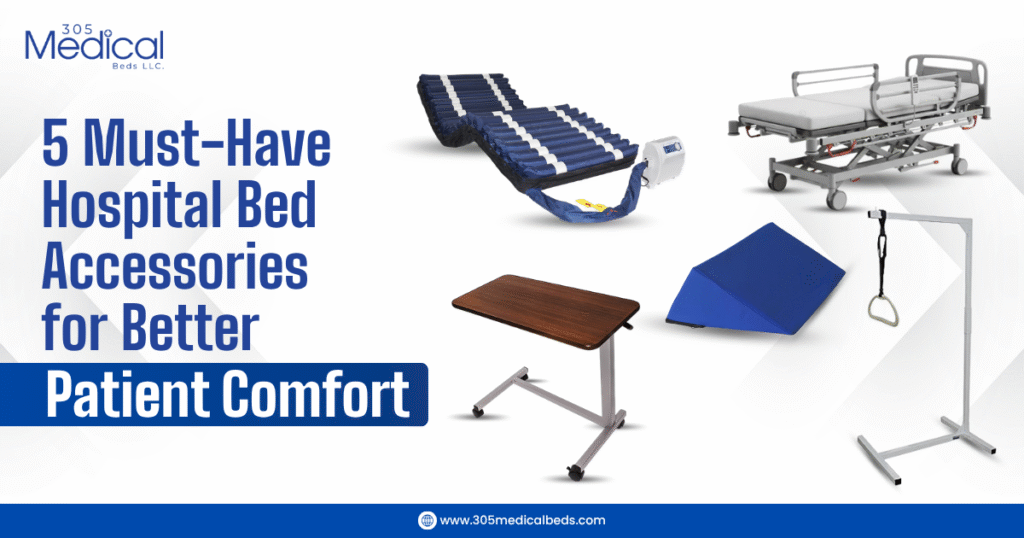
Recovery is never just about treatment. It’s about comfort, safety, and dignity. Whether you’re caring for a loved one at home or setting up a medical facility, the right hospital bed accessories for better patient comfort can dramatically improve daily life. A hospital bed alone provides adjustability — but accessories transform it into a complete care solution. What Are the Best Hospital Bed Accessories for Better Patient Comfort? The most important hospital bed accessories for better patient comfort include: These accessories reduce pressure sores, improve mobility, increase safety, and support faster recovery at home or in healthcare settings. Why Hospital Bed Accessories Matter for Recovery Patients who spend extended time in bed face several challenges: Adding the right hospital bed comfort accessories helps prevent complications and improves overall recovery outcomes. According to health authorities like the CDC, pressure injury prevention is critical for long-term bed patients. The right accessories play a major role in prevention. 1. Pressure-Relief Mattress (Most Important Accessory) A standard mattress does not provide adequate support for patients who remain in bed for long periods. Benefits: Alternating pressure mattresses and memory foam options are especially effective for long-term care. 2. Bed Rails for Safety and Stability Falls are one of the biggest risks in patient care. Bed rails improve safety without sacrificing comfort. Why They’re Essential: Properly fitted safety rails are one of the most important hospital bed accessories for better patient comfort and peace of mind. 3. Overbed Table for Independence An overbed table restores autonomy. Patients can: This simple addition significantly improves daily experience and reduces caregiver strain. 4. Positioning Pillows & Bed Wedges Remaining in one position increases discomfort and health risks. Positioning aids help by: These adjustable bed accessories for patients are especially helpful in home hospital bed setups. 5. Bedside Trapeze Bar for Mobility Support For patients with upper body strength, trapeze bars improve independence. Advantages: Mobility support accessories enhance both comfort and long-term recovery outcomes. Best Hospital Bed Accessories at a Glance Accessory Primary Benefit Best For Pressure-Relief Mattress Prevents bed sores Long-term patients Bed Rails Fall prevention Limited mobility Overbed Table Promotes independence Home recovery Positioning Pillows Pressure redistribution Pain management Trapeze Bar Mobility assistance Rehab patients How to Choose the Right Hospital Bed Accessories When selecting hospital bed accessories for better patient comfort, consider: Not every patient needs every accessory. However, every patient needs safety and comfort. Trusted Solutions for Hospital Bed Comfort At 305 Medical Beds, we specialize in hospital bed systems and compatible accessories designed for home care and medical facilities. Our experience helping families choose the right medical bed accessories allows us to recommend practical, recovery-focused solutions that truly improve patient comfort. Frequently Asked Questions

305 Medical Beds LLC |  2739 W 79 St, Unit 15, Hialeah, Florida 33016 |  Phone: 1.305.562.7960
© Copyright 2012 – 2024 | All Rights Reserved.

You have been successfully Subscribed! Ops! Something went wrong, please try again.

About Us

305 Medical Beds LLC is a certified supplier of refurbished hospital, ICU, and adjustable medical beds. Serving healthcare facilities and home care patients across Florida and the United States since 2020

305 Medical Beds LLC |  2739 W 79 St, Unit 15, Hialeah, Florida 33016 |  Phone: 1.305.562.7960
© Copyright 2012 – 2026 | All Rights Reserved.