
Quick Answer
305 Medical Beds offers five types of certified refurbished hospital beds for sale — ICU beds, bariatric ICU beds, pulmonary ICU beds, general hospital beds, and versatile med-surg beds — all from Hill-Rom and priced 40–60% below new.
Table of Contents
Finding the right hospital bed for sale can feel overwhelming — especially when you’re trying to care for a loved one at home, manage a nursing facility, or equip an ICU on a tight budget. There are dozens of models, spec sheets full of jargon, and prices that range from $1,500 to over $15,000.
This guide cuts through all of that. We’ll walk you through every type of hospital bed for sale at 305 Medical Beds, explain what each model is designed for, and highlight the key features that matter most for patient safety, caregiver ease, and clinical outcomes.
Why Choosing the Right Hospital Bed for Sale Matters
A hospital bed isn’t just a piece of furniture — it’s a clinical tool. The right bed directly affects pressure injury prevention, patient mobility, fall risk, caregiver strain, and even respiratory outcomes. Choosing the wrong type can cost you more in complications than the bed itself.
At 305 Medical Beds, every hospital bed for sale undergoes a rigorous 47-point inspection by certified technicians. That means you get clinical-grade performance at a fraction of the cost of buying new. Whether you’re outfitting a hospital ICU, a long-term care facility, or setting up home care for a family member, there’s a right bed for your situation.
All beds listed below are certified refurbished Hill-Rom models. Each includes professional delivery, full installation, and a complete demonstration of all functions — at no extra charge.
05
Bed Types Available
40–60%
Savings vs. New
47-pt
Inspection Checklist
Same Day
Miami delivery
Types of Hospital Beds for Sale at 305 Medical Beds
Here is a complete breakdown of every type of hospital bed for sale in our current inventory, with key features explained for each model.
1. Hill-Rom TotalCare Spo2rt ICU Bed — Critical Care’s Gold Standard
Available in two certified refurbished configurations (Option 1 and Option 2)
From $3,690 From $3,490
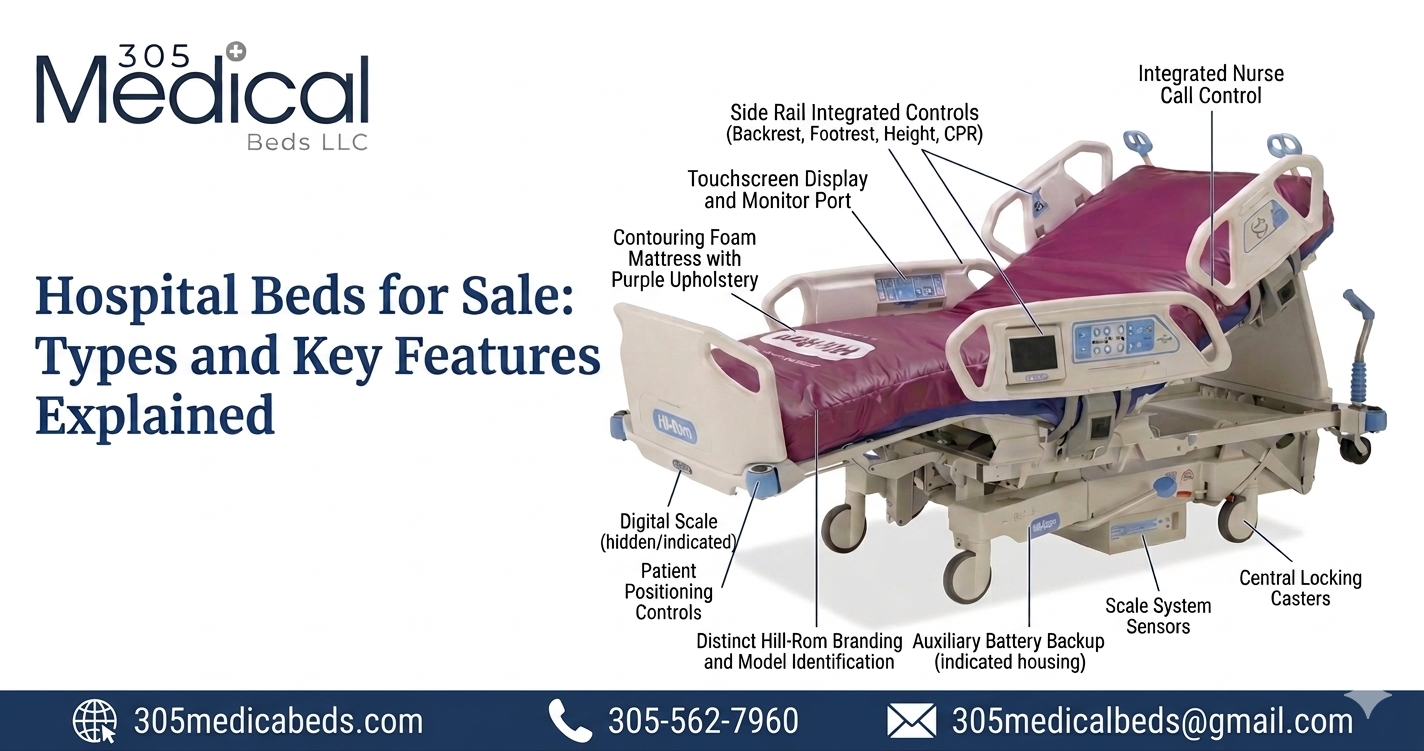
The Hill-Rom TotalCare Spo2rt is one of the most trusted ICU beds in clinical settings globally. Designed specifically for intensive care, it integrates Spo2rt therapy technology that provides continuous patient monitoring and therapeutic support directly from the bed frame. This is the hospital bed for sale most frequently chosen by hospitals and nursing facilities managing critically ill patients.
Key features of the TotalCare Spo2rt:
- Intuitive caregiver controls on both sides of the bed
- Advanced air mattress system with low air loss for pressure ulcer prevention
- Lateral rotation therapy to reduce pneumonia risk in ventilated patients
- Percussion and vibration for pulmonary hygiene
- Integrated patient scale for accurate daily weight monitoring without transfer
- Multiple position adjustability for Trendelenburg, reverse Trendelenburg, and chair position

Best for:
Hospitals, ICUs, and nursing homes managing ventilated, critically ill, or post-surgical patients who require continuous monitoring and repositioning therapy.
2. Hill-Rom TotalCare Bariatric Plus ICU Bed
Bariatric / Heavy-Duty
$6,490 $5,890
Not every patient fits a standard hospital bed, and attempting to use one that isn’t rated for bariatric patients creates serious safety risks — for both the patient and caregiving staff. The Hill-Rom TotalCare P1840 Bariatric Plus ICU Bed is purpose-built for patients requiring additional structural support and wider surface area.
Key features of the Bariatric Plus ICU Bed:
- Certified refurbished and immediately available
- Heavy-duty frame engineered for higher weight capacities
- Wider sleep surface for improved comfort and dignity
- Air mattress system with integrated pressure redistribution
- Built-in patient scale — critical for medication dosing in bariatric care
- All standard TotalCare adjustability features retained
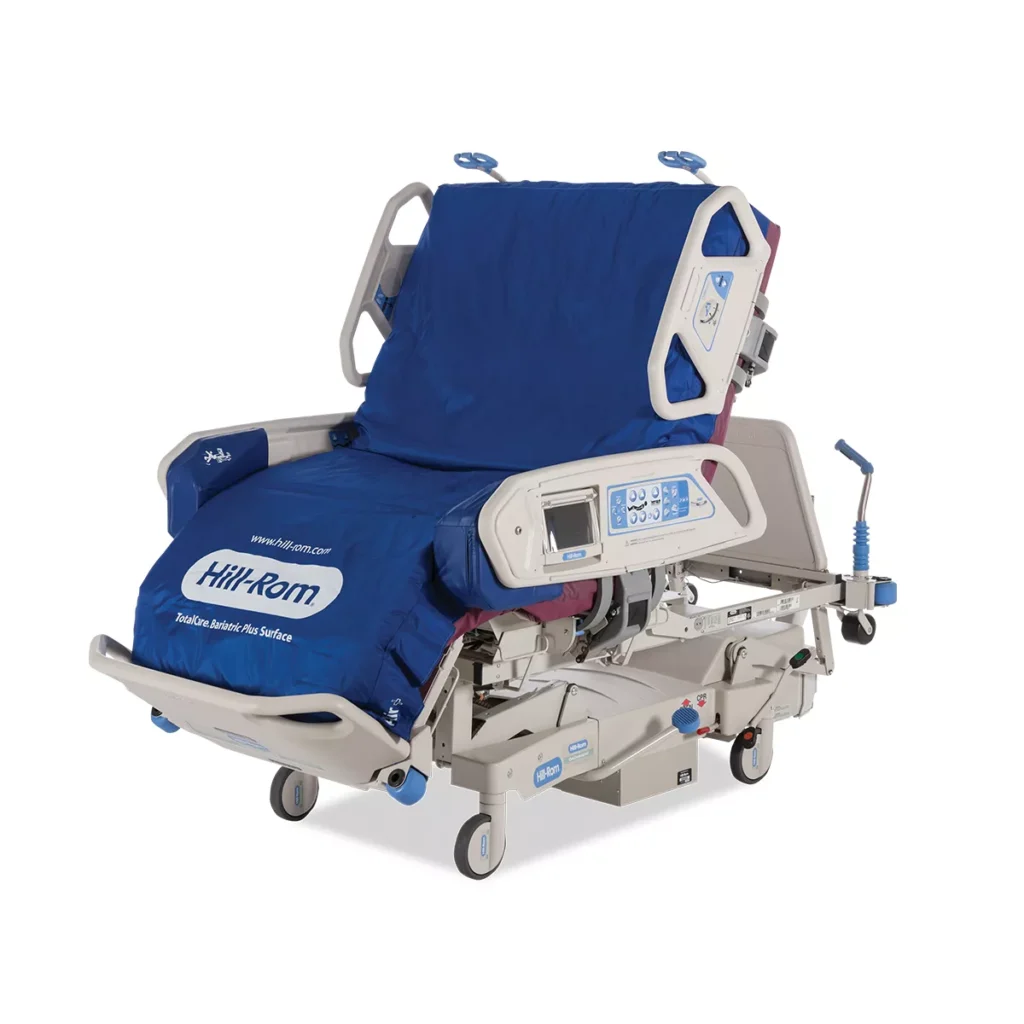
Best for: Hospitals with bariatric wards, long-term care facilities, and home care situations where the patient requires a heavier-duty sleep and care surface.
3. Hill-Rom Progressa P7500 Pulmonary ICU Bed — Best Seller for Respiratory Care
Pulmonary / Respiratory ICU
$7,890 $7,290
Our best-selling hospital bed for sale, the Hill-Rom Progressa P7500 is specifically engineered for patients with complex pulmonary and respiratory conditions. It’s the preferred choice for ICUs managing patients with ARDS, COPD exacerbations, pneumonia, and post-intubation recovery — where positioning and airway management directly impact outcomes.
Key features of the Progressa P7500:
- Chair egress position allows patients to sit upright at the bedside for rehabilitation
- Continuous lateral rotation therapy to mobilize secretions and reduce ventilator-associated pneumonia
- Percussion and vibration modes for targeted pulmonary physiotherapy
- Low air loss mattress system to prevent pressure injuries during prolonged ICU stays
- Integrated hand control for patient-initiated positioning
- Built-in scale for accurate weight monitoring without unsafe transfers
- Chair egress position allows patients to sit upright at the bedside for rehabilitation
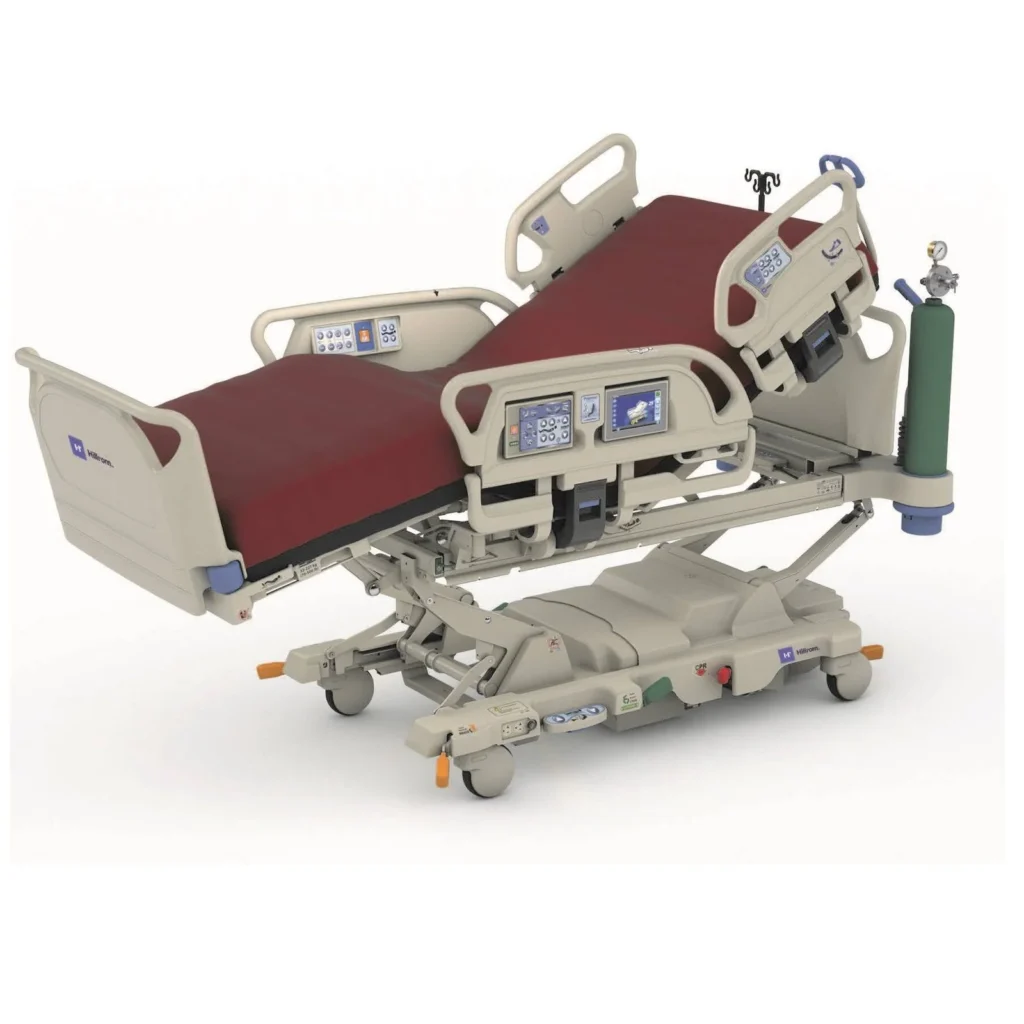
Best for: Pulmonary ICUs, medical-surgical units managing respiratory patients, and facilities where ventilator-associated complications are a primary concern.
Why Buy Certified Refurbished Hospital Beds?
One question we hear constantly: “Is a refurbished hospital bed really as good as a new one?” The short answer is yes — when it’s been properly recertified.
At 305 Medical Beds, every hospital bed for sale goes through a 47-point inspection covering all mechanical, electrical, and structural components before delivery. The result is clinical-grade performance at 40–60% lower cost than buying new — with immediate availability rather than 4–12 week lead times for new orders.
For context, a new Hill-Rom Progressa P7500 typically sells for $18,000–$22,000. Our certified refurbished version is available for $7,290 — saving facilities and families over $10,000 per unit without compromising safety or performance.
Same-day delivery available in Miami. Nationwide shipping with 1–5 business day lead times for most orders. Every delivery includes professional installation and a full demonstration of all bed functions.
Ready to Find the Right Hospital Bed for Sale?
Whether you’re a hospital procurement manager sourcing a fleet of ICU beds, a nursing home director expanding capacity, or a family setting up home care — 305 Medical Beds has the right hospital bed for sale at the right price.
Our team provides free pre-purchase consulting. Tell us your patient’s condition, your facility type, and your budget, and we’ll match you with the best option — often within the hour.
Frequently Asked Questions
What is the difference between an ICU bed and a regular hospital bed for sale?
ICU beds like the Hill-Rom Progressa P7500 and TotalCare Spo2rt include advanced therapy features — air mattresses with lateral rotation, percussion, vibration, and low air loss — designed for critically ill patients who cannot reposition themselves. Regular hospital beds (like the TotalCare P1900 or Versacare P3200) focus on adjustability and comfort for patients who are more mobile and clinically stable.
What is the best hospital bed for home use?
For most home care situations, the Hill-Rom Versacare P3200 (foam option) at $1,990 or the TotalCare P1900 Option 5 at $2,290 are the most practical choices. Both include integrated scales, full adjustability, and hospital-grade safety features in a form factor that works in standard home bedrooms. For patients at higher pressure injury risk, the air mattress versions of either model are worth the upgrade.
Do you offer financing for hospital beds?
Yes. We accept PayPal, major credit cards, and bank transfers. Flexible payment plans and financing options are available for qualifying healthcare facilities and home care patients. Call 305-562-7960 to discuss options.
Are refurbished hospital beds safe?
Absolutely. Every hospital bed for sale at 305 Medical Beds is recertified through a 47-point inspection by trained technicians, meeting the same safety and performance standards as new equipment. Our beds come from the Hill-Rom brand family — the most trusted name in hospital bed manufacturing.
How quickly can I get a hospital bed delivered?
Same-day delivery is available throughout Miami-Dade County. Nationwide shipping takes 1–5 business days for most orders. Call 305-562-7960 to confirm availability and scheduling for your location.