
Hospital Home Care

When Do You Need Hospital Bed at Home
Hospital Home Care, Uncategorized

When Do You Need a Hospital Bed at Home?

Knowing When Home Comfort Needs Medical Support Home is where most people feel safest and most comfortable. Whether recovering from illness, caring for an aging parent, or supporting a loved one after surgery, staying at home often feels like the best choice. However, there comes a point when a regular bed no longer meets medical or caregiving needs. Pain increases, mobility becomes difficult, or daily care starts feeling unsafe. This is when many families begin asking an important and practical question: When do you need a hospital bed at home? A hospital bed at home is not only for critical patients. It is a medical solution designed to improve comfort, safety, and recovery while allowing patients to remain in a familiar environment. Understanding when it’s needed can make a meaningful difference in health outcomes and quality of life. What ‘s a Hospital Bed at Home? A hospital bed at home is a medical-grade bed designed for patients who require special positioning, mobility assistance, or ongoing care at home. Unlike a standard bed, it offers: These features make a hospital bed at home essential when daily comfort, safety, and medical support become priorities. When Do You Need a Hospital Bed at Home? 1. After Surgery or Hospital Discharge Many patients are discharged earlier than expected, but recovery continues long after leaving the hospital. A hospital bed at home is often needed after: Why it helps: For post-surgical recovery, a hospital bed at home reduces strain and lowers the risk of complications. 2. Limited Mobility or Physical Disabilities When a person struggles with movement, even simple tasks like sitting up or turning in bed can become challenging. A hospital bed at home is commonly required for: Key benefits include: In these situations, a hospital bed at home becomes a vital part of daily living. 3. Chronic illnesses or Long-Term Medical Conditions Chronic conditions often require ongoing positioning, symptom management, and comfort support. A hospital bed at home is beneficial for patients with: Adjustable positioning helps: For long-term care, a hospital bed at home provides consistent medical-grade comfort. 4. Elderly Care and Aging at Home As people age, balance, strength, and mobility naturally decline. This increases the risk of falls and injuries, especially when getting in and out of bed. A hospital bed at home for elderly care provides several benefits, including: For families choosing to age in place, having a hospital bed at home is often a preventive and safety-focused decision. 5. Palliative or Hospice Care at Home During serious illness or end-of-life care, comfort and dignity are essential. A hospital bed at home allows: In palliative care, a hospital bed at home is not just helpful—it is often necessary. 6. Risk of Pressure Sores or Extended Bed Rest Patients who spend long periods in bed are at risk of developing pressure ulcers. A hospital bed at home helps prevent this by: This is especially important for patients with limited mobility or chronic illness. How a Hospital Bed at Home Improves Daily Life Benefits for Patients Benefits for Caregivers A hospital bed at home supports both physical health and emotional well-being. Signs: You May Need a Hospital Bed at Home You may need a hospital bed at home if: Recognizing these signs early can prevent injuries and improve outcomes. Hospital Bed at Home: Renting vs. Buying Rent a Hospital Bed at home. If: Buy a Hospital Bed at Home. If: Choosing the right option depends on medical needs, duration of care, and budget. Why a Hospital Bed at Home Is Better Than a Regular Bed A regular bed is designed for comfort, not care. A hospital bed at home offers: When health and safety matter, a hospital bed at home provides the right level of support. Conclusion: Making the Right Decision at the Right time. Understanding when you need a hospital bed at home helps families make informed, confident care decisions. Whether it’s for post-surgery recovery, chronic illness management, elderly care, or hospice support, a hospital bed at home improves safety, comfort, and quality of life—without leaving the comfort of home. Choosing the right time to transition can ease recovery, protect caregivers, and ensure proper care every day. Frequently Asked Questions Q1: When do you need a hospital bed at home? You need a hospital bed at home when medical positioning, mobility support, or safe caregiving is required beyond what a regular bed can provide. Q2: Who typically needs a hospital bed at home? Patients recovering from surgery, seniors aging at home, people with limited mobility, and individuals with chronic or long-term medical conditions often need a hospital bed at home. Q3: Why is a hospital bed at home better than a regular bed? A hospital bed at home offers adjustable positioning, safer transfers, and better caregiver access, which a regular bed cannot provide. Q4: How does a hospital bed at home help caregivers? It reduces physical strain by allowing easier repositioning, safer transfers, and better access during daily care routines. Q15: Should a hospital bed at home be rented or purchased? Renting is best for short-term recovery, while buying is more suitable for long-term or ongoing care needs.
How to Set Up and Maintain a Hospital Bed at Home
Hospital Beds, Hospital Home Care, Uncategorized

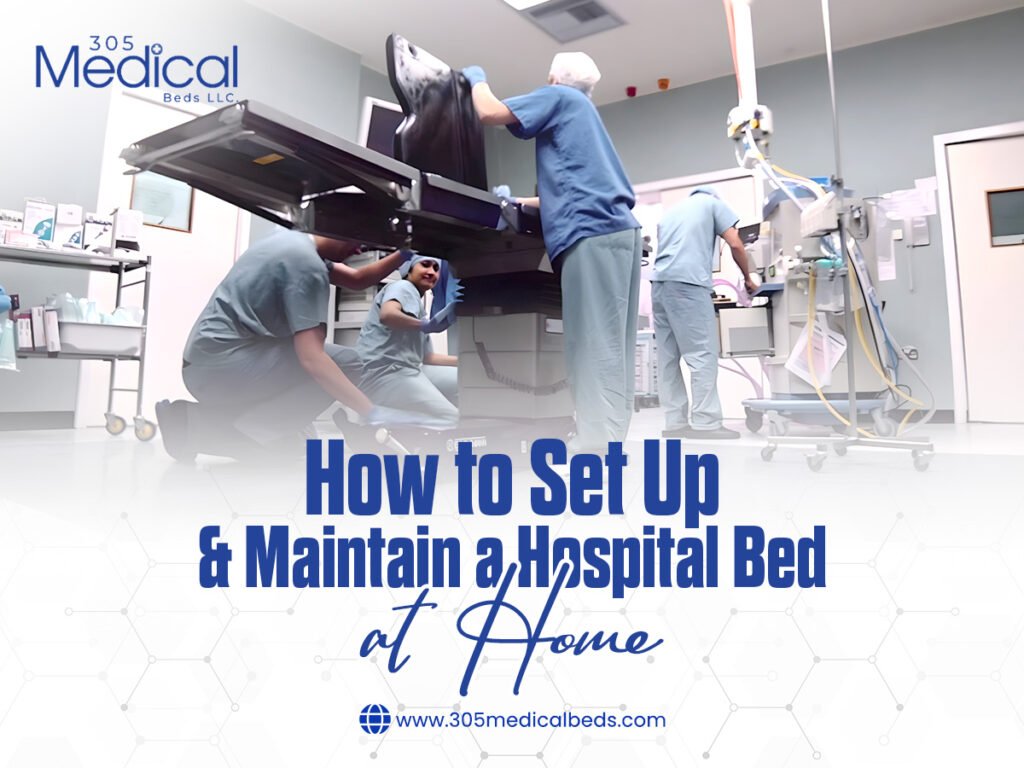
How to Set Up and Maintain a Hospital Bed at Home

Introduction Caring for a loved one at home often means creating a safe, comfortable, and supportive environment — and the right hospital bed can make all the difference. Whether you’re preparing for post-surgery recovery, long-term care, or mobility assistance, understanding how to select the right bed and knowing how to set it up and maintain it properly are equally important. Choosing an option that aligns with your care needs is a key part of selecting the best hospital bed for home care, ensuring both comfort and safety for the patient and ease for the caregiver. At 305 Medical Beds, we specialize in providing refurbished Hill-Rom hospital beds, offering professional installation, maintenance, and consulting services to help you create a hospital-quality care setup in your home. In this detailed guide, you’ll learn everything from the step-by-step setup process to essential maintenance tips, ensuring your hospital bed stays reliable, hygienic, and functional for years to come. Why Proper Setup and Maintenance Are Crucial Setting up a hospital bed properly is more than just assembling a frame — it’s about ensuring patient comfort, safety, and effective care. Even the most well-designed bed can underperform if it’s not selected thoughtfully or installed correctly. That’s why proper setup goes hand in hand with choosing a bed that fits the patient’s medical and mobility needs, especially in home environments where space, access, and caregiver support vary. A well-set-up hospital bed helps: Likewise, regular maintenance extends the lifespan of your hospital bed, prevents costly repairs, and maintains hygiene standards — all crucial in home healthcare. Proper setup and consistent upkeep are key to getting the most out of your Hill-Rom hospital bed investment. Preparing for Setup: What You’ll Need Before setting up your hospital bed, make sure you have all the tools and essentials ready. Preparation ensures a smooth installation and avoids unnecessary frustration later. This step is especially important for home caregivers who may be setting up a bed for the first time after carefully evaluating which model best suits the patient’s condition and daily care requirements. Here’s what you’ll need: Setup tip: Avoid placing the bed near windows, heaters, or damp areas. Always ensure the power cord and controls are safely positioned to prevent tripping hazards or damage. Pro Tip: Before starting, visualize the room layout — ensure caregivers can access both sides of the bed and that the patient has easy access to essentials like lighting, remotes, and personal care items. Step-by-Step Guide: How to Set Up a Hospital Bed at Home Setting up a hospital bed for home care may seem complicated, but following a structured process makes it simple and safe. Here’s a detailed step-by-step breakdown to help you: Step 1: Choose the Right Location Pick a room with enough space for movement around the bed. The floor should be level, and the area should allow for electrical connections without creating clutter or hazards. Step 2: Assemble the Frame Follow the manufacturer’s guide (especially if you’re setting up a Hill-Rom hospital bed). Attach the base sections, frame, and side supports using the provided bolts or screws. Step 3: Attach the Headboard, Footboard, and Side Rails Secure all parts tightly to avoid instability. The side rails provide added safety, especially for patients prone to rolling or falling during sleep. Step 4: Install the Mattress Place the mattress evenly on the frame. Depending on the bed type, you may use: Step 5: Connect Electrical Components For electric or semi-electric beds, connect the motor unit, control box, and hand remote. Plug the power cord into a grounded outlet and test the functions. Step 6: Adjust Bed Height and Features Set the height for easy caregiver access and ensure that the raising, lowering, and tilt functions work properly. Step 7: Test and Secure Finally, test all mechanical and electrical functions. Lock wheels when stationary and double-check all connections. Maintenance Tips to Keep Your Hospital Bed in Top Condition Maintaining your hospital bed ensures smooth functionality, hygiene, and longevity. Learn more about cleaning and maintaining your home hospital bed Daily Care Weekly Maintenance Monthly or Quarterly Maintenance Mattress Care Tip: For Hill-Rom hospital bed mattresses, always follow manufacturer guidelines. Keep air mattresses inflated correctly and avoid using harsh chemicals during cleaning. Common Setup & Maintenance Problems (and How to Fix Them) Even the best hospital beds can face occasional issues. Here are common problems and their quick fixes: Problem Possible Cause Quick Fix Bed not moving up/down Power not connected, or motor failure Check the plug, test the outlet, or reset the motor. Uneven surface or tilting Loose bolts or unbalanced legs Tighten frame bolts and level bed feet. Remote control not working Damaged wire or battery Replace or inspect the remote connection. Noisy movement Dry joints or debris Clean and apply light lubrication. If the problem persists — especially electrical ones — it’s best to contact a professional technician. Need help? Contact our experts for Hill-Rom bed repair and maintenance Hospital Bed Safety Tips for Home Use Safety is crucial for both patients and caregivers. Follow these hospital bed safety practices to prevent injuries or accidents: Hill-Rom beds are designed with anti-entrapment technology and adjustable safety features, but regular checks ensure everything functions properly. When to Call a Professional Even with regular maintenance, some issues require expert attention. Contact a professional technician or your supplier when: At 305 Medical Beds, we offer expert installation and maintenance services for all major hospital bed models, including Hill-Rom, Stryker, and Invacare. Why Choose 305 Medical Beds When it comes to hospital beds for home use, trust and quality matter. Here’s why 305 Medical Beds is your best choice: Explore more: Visit 305 Medical Beds for affordable refurbished hospital beds Conclusion Learning how to set up and maintain a hospital bed at home empowers you to provide quality care in a comfortable environment. Proper setup ensures safety and functionality, while regular maintenance keeps your equipment reliable for years. At 305 Medical Beds, we make home healthcare easier by offering

clean and maintain hospital bed
Bed Cleaning, Bed Maintenance, Hospital Beds, Hospital Home Care, Uncategorized

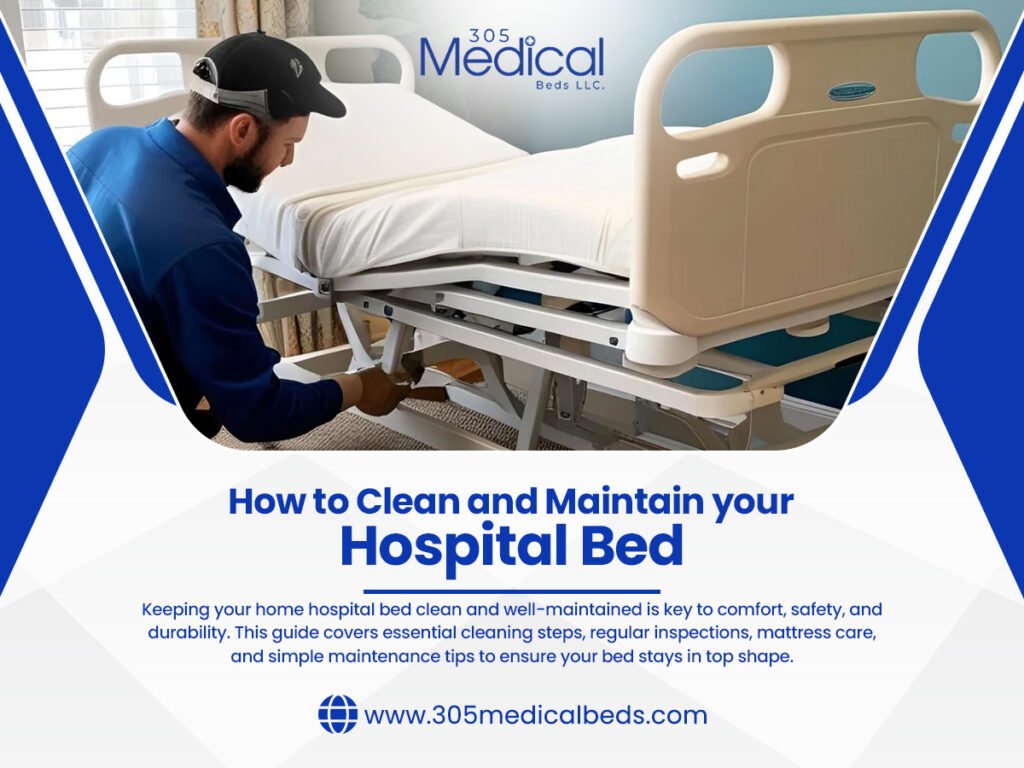
How To Clean and Maintain Your Home Hospital Bed

Maintaining a clean and well-functioning home hospital bed is essential for the comfort and health of patients, as well as for ensuring the longevity of the equipment. Whether you’re caring for a loved one at home or managing your own health needs, keeping the hospital bed hygienic and in top shape will create a more comfortable environment, prevent complications, and extend the lifespan of the equipment. In this comprehensive guide, we’ll walk you through the essential steps to clean and maintain your home hospital bed properly, so you can provide the best care possible and avoid costly repairs. Why Is It Important to Clean and Maintain a Home Hospital Bed? Hospital beds in a home care setting often come equipped with features such as adjustable positions, wheels, and specialized mattresses to facilitate easier patient care. However, these features also require regular cleaning and maintenance. Here’s why it’s important: For guidance on selecting the right hospital bed for your home, check out our complete guide to choosing a hospital bed. How to Clean Your Home Hospital Bed: Step-by-Step Guide Step 1: Gather Necessary Cleaning Supplies Before you start, ensure you have the right supplies: Step 2: Prepare the Bed for Cleaning Step 3: Clean the Bed Frame and Structure Step 4: Clean the Mattress The mattress plays a crucial role in patient comfort, and maintaining it is vital. Follow these steps to keep your mattress in good shape: Step 5: Clean and Sanitize the Bed’s Mechanical Components Hospital bed mechanical parts, such as motors, control panels, and adjustable sections, require special attention: Step 6: Regular Maintenance Tips In addition to cleaning, regular maintenance ensures the bed continues to function properly and lasts longer. Here are some tips: For more detailed maintenance instructions, see our home hospital bed setup and maintenance guide. Additional Tips for Maintaining a Safe and Comfortable Home Hospital Bed Conclusion: A Clean Hospital Bed = Better Care Regular cleaning and maintenance of your home hospital bed not only ensures a hygienic and safe environment for your patient but also contributes to the bed’s durability and function. By following these simple steps, you can keep your hospital bed in top condition, providing both comfort and peace of mind for those who rely on it. By taking the time to clean and maintain your home hospital bed properly, you’re ensuring that it serves its purpose effectively while improving the quality of life for both the patient and the caregiver. Remember, consistency is key—so make these tasks part of your routine for optimal results. Frequently Asked Questions (FAQs) 1. How often should I clean my home hospital bed? Clean the bed at least once a week, or more often if there are spills or incontinence issues. 2. Can I use regular cleaning products for the bed? Use mild soap or disinfectant. Avoid harsh chemicals to protect the bed’s materials. 3. How do I clean the mattress? Vacuum it, spot clean stains with mild detergent, and lightly disinfect with a fabric-safe solution. Let it air dry completely. 4. How can I prevent bed sores? Reposition the patient regularly, use pressure-relieving mattresses, and keep the skin clean and dry. 5. What should I do if the bed’s wheels aren’t rolling smoothly? Clean the wheels and check for debris. If necessary, lubricate or replace any worn-out parts. 6. When should I replace the mattress? Replace it if it’s sagging, uncomfortable, or hard to clean, or if there’s visible damage.

Benefits of Refurbished Hospital Beds at Home
Hospital Beds, Hospital Home Care, Refurbished Hospital Beds, Uncategorized

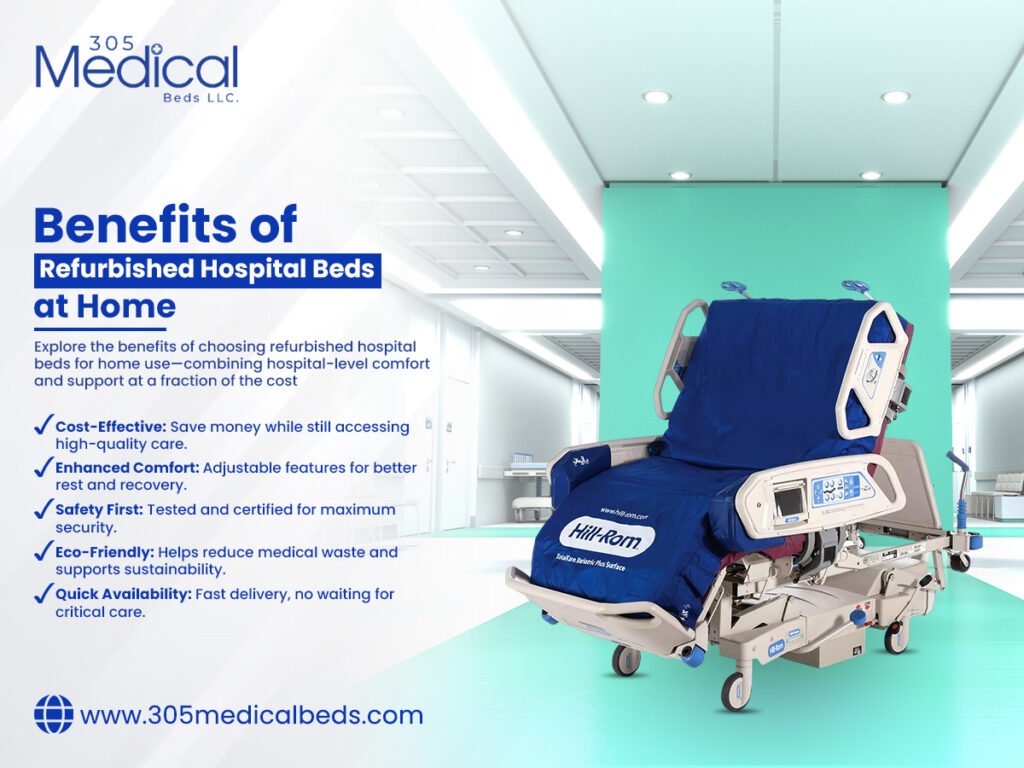
Benefits of Refurbished Hospital Beds at Home

If you or a loved one requires long-term care, investing in a hospital bed can be life-changing. However, new hospital beds can be expensive. That’s why many families are turning to refurbished hospital beds at home as a smart and budget-friendly alternative. These beds offer hospital-level support and safety while allowing patients to heal in the comfort of their own space. Why Choose Refurbished Hospital Beds at Home? Refurbished hospital beds are previously used beds that have been professionally restored to like-new condition. They undergo thorough inspections, part replacements, and cleaning to meet strict safety and hygiene standards. Choosing them for home care provides several key benefits, especially when families understand the process of setting up and maintaining a hospital bed at home to ensure long-term safety and performance. Top Benefits of Refurbished Hospital Beds at Home 1. Cost-Effective Solution 2. Enhanced Comfort and Support 3. Safe and Reliable 4. Eco-Friendly Choice 5. Quick Availability How to Choose the Right Refurbished Hospital Bed When shopping for a refurbished hospital bed, keep these factors in mind. Understanding how to choose the best hospital bed for home care can help families make informed decisions based on patient needs and long-term usability. Warranty and service: Look for a supplier who offers warranties and after-sales support. Bed type: Manual, semi-electric, or fully electric. Weight Capacity: Ensure it supports the patient’s weight. Mattress Quality: Choose pressure-relief or foam mattresses for comfort. Pro Tip: At 305 Medical Beds, you can find professionally refurbished hospital beds with warranties and delivery options. Maintenance Tips for Home Hospital Beds Regular care is essential to keep hospital beds functioning safely over time. Following proper home hospital bed cleaning and maintenance practices helps extend equipment life while maintaining hygiene standards for patient care. Where to Buy Refurbished Hospital Beds Many reliable suppliers and medical equipment stores offer refurbished beds. Always check for: You can also explore options at eBay Store for more variety. Conclusion Choosing refurbished hospital beds at home is a practical and compassionate decision. They combine comfort, safety, and affordability—helping patients recover with dignity while easing the financial burden on families. Get Your Refurbished Hospital Bed Today! Find high-quality, affordable refurbished hospital beds for your home today!

Best Hospital Beds for Home Use Adjustable, Manual or Electric
Adjustable Hospital Beds, Electric Hospital Bed, Hospital Beds, Hospital Home Care, Manual Hospital Bed, Uncategorized

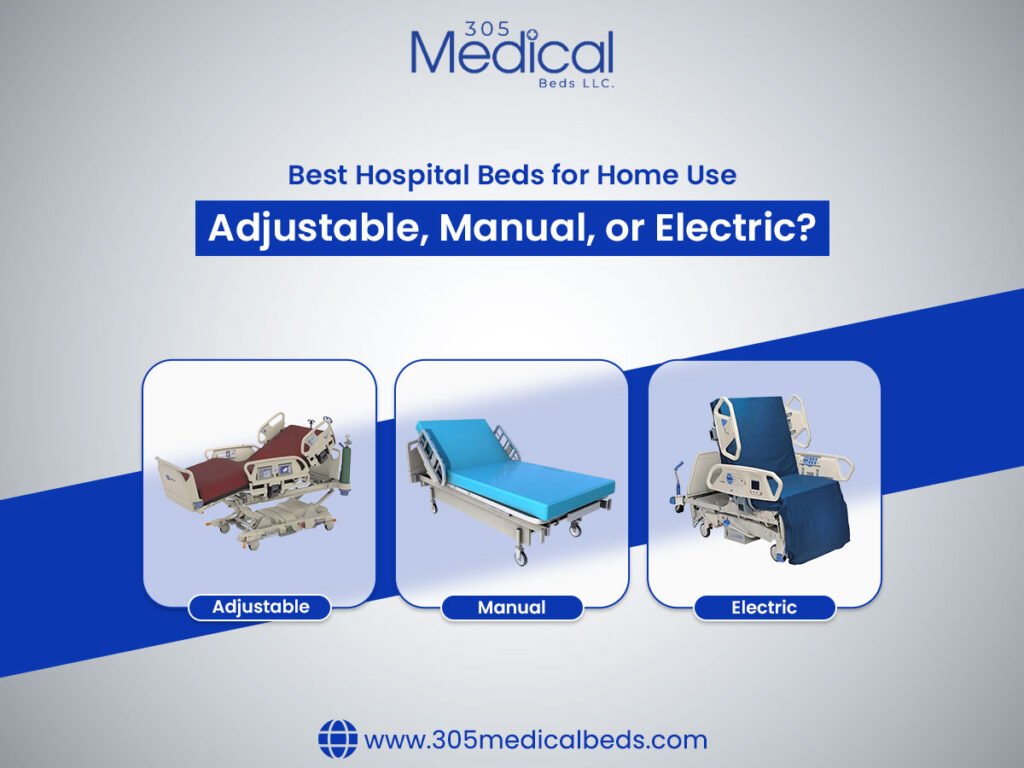
Best Hospital Beds for Home Use: Adjustable, Manual or Electric?

Choosing the right hospital bed for home care ensures that the patient remains safe, supported, and comfortable throughout recovery or long-term treatment. At 305 Medical Beds, we offer Hill-Rom hospital beds that are refurbished to like-new condition—ready for home use at an affordable price. Let’s explore the bed types, their benefits, and our top recommendations for creating a hospital-grade recovery experience at home. Why Home Hospital Beds Matter for Recovery and Comfort When mobility is limited, even simple movements like sitting up, repositioning, or getting in and out of bed can become difficult. The right home hospital bed helps by: Reducing the risk of pressure ulcers Supporting proper posture and breathing Helping caregivers reposition patients Promoting faster healing and better sleep Preventing falls with low height and side rails For these reasons, choosing a high-quality adjustable or electric bed isn’t just a luxury—it’s essential for care. Manual vs Adjustable vs Electric Hospital Beds Manual Beds:These beds require hand cranks to adjust height and positioning. They’re more affordable but less convenient for caregivers and patients. Adjustable Beds:Allow head and foot elevation manually or electrically. Ideal for improving circulation and positioning. Electric Beds:Fully motorized beds controlled with a handset. Features include height adjustment, Trendelenburg positioning, and advanced surface options. At 305 Medical Beds, we primarily recommend electric and adjustable Hill-Rom beds for home use due to their ease, comfort, and safety. Best Hill-Rom Beds for Home Use We’ve handpicked the following Hill-Rom beds as ideal for in-home care. Each one is fully refurbished, tested, and patient-ready. Hill-Rom VersaCare Bed The Hill-Rom VersaCare is one of the most versatile beds for home use. With fully electric controls, this bed is perfect for patients needing frequent repositioning. Key Features: Electric head, foot, and bed height adjustment Advanced pressure redistribution surface options SlideGuard® technology to reduce skin shearing Compact design suitable for home settings Ideal for home caregivers looking for a balance of advanced functionality and affordability. Products: Hill-Rom Versacare P3200 – Foam Mattress (Option 4) Hill-Rom Versacare P3200 – Air Mattress (Option 4A) Hill-Rom TotalCare Bed The Hill-Rom TotalCare Bed offers additional safety and comfort features—perfect for patients with more serious or long-term needs. Top Benefits: Turn Assist and Lateral Rotation Therapy Low height for easier transfer Optional air surface for pressure injury prevention One-button cardiac chair positioning It’s a top-tier solution for home users needing hospital-grade care at home. Products: Refurbished Hill-Rom Total Care P1900 Hospital Bed (Option 3) Refurbished Hill-Rom Total Care P1900 Hospital Bed (Option 5) Hill-Rom Progressa Bed The Progressa Bed is primarily an ICU bed but also works for home care, especially for pulmonary or immobile patients. Key Features: Percussion, vibration, and lateral rotation therapy Advanced mobility support with one-touch controls In-bed scale and full bed articulation Ideal for patients with respiratory issues This is the ultimate choice for critical care at home—if the budget and space allow. Products: Refurbished Hill-Rom Progressa P7500 Pulmonary ICU Bed (Option 1A)   Hill-Rom Spo2rt Bed The Hill-Rom Spo2rt Bed (P1900) is designed to support patient movement and rehabilitation, making it ideal for post-surgery or physical therapy at home. Benefits Include: Electric operation with mobility-focused design Comfortable surface with advanced adjustability Promotes independence and early mobilization Compact enough for home environments A great fit for users transitioning from hospital to home. Products: Refurbished Hill-Rom TotalCare Spo2rt 2 P1900 ICU Bed (Option 1)   Refubished Hill-Rom Total Care Spo2rt P1900 ICU Bed (Option 2) Hill-Rom Bariatric Plus Bed The Hill-Rom Bariatric Plus Bed is ideal for obese patients needing extra space, weight capacity, and strong frame support. Key Advantages: Supports up to 1,000 lbs Wider surface for enhanced comfort Low bed height and side rails for safety Full electric controls for easy adjustments If you’re managing bariatric care at home, this bed ensures both safety and dignity. Products: Refurbished Hill-Rom TotalCare P1840 Bariatric Plus ICU Bed (Option 1B) Benefits of Choosing Refurbished Beds for Home Care Refurbished beds offer all the features of new beds—at a lower price. At 305 Medical Beds, our process includes: Deep cleaning and sanitation Electrical and mechanical inspections Replacing worn components Testing for compliance and safety You get:✔️ Hospital-grade equipment✔️ Warranty-backed quality✔️ Savings of up to 60% Why Choose 305 Medical Beds for Home Use Hospital Beds We stand out for more than just our product range. Our home care clients get: Expert guidance on selecting the right bed Nationwide delivery and optional setup Warranty coverage for peace of mind Friendly customer support before and after purchase We’re trusted by caregivers, families, and medical professionals alike. Conclusion When it comes to home healthcare, the bed you choose matters. At 305 Medical Beds, we offer top-performing Hill-Rom electric and adjustable hospital beds that bring hospital-grade care to your home. Whether you need advanced ICU features, bariatric support, or mobility assistance, we have the right solution—refurbished, affordable, and ready to use. FAQs Q1: Which hospital bed is best for home use?The Hill-Rom VersaCare and TotalCare beds are top picks for home care due to their balance of features and compact design. Q2: Are electric hospital beds safe for home?Yes, they are tested for safety, provide ease of use, and reduce caregiver strain. Q3: Can you deliver and install the bed at my home?Yes. We offer nationwide delivery and optional installation support. Q4: What’s the difference between electric and adjustable beds?Electric beds offer motorized height and position control. Adjustable beds may use manual or partial electric systems for head/foot movement. Q5: Do you offer financing or rentals?Contact us to explore current offers, financing, or rental options based on availability.  

How to choose the best hospital bed for home care
Hospital Beds, Hospital Home Care, Uncategorized

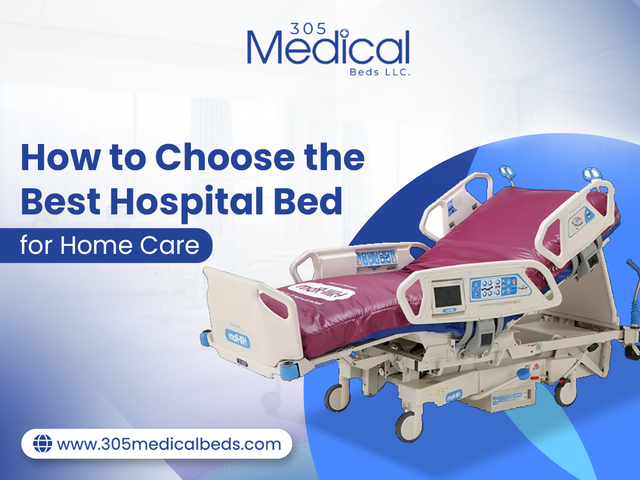
How to Choose the Best Hospital Bed for Home Care

When caring for a loved one at home, the need for extra support in terms of mobility, comfort, and medical care can be both rewarding and challenging. A specialized bed can significantly enhance comfort, safety, and convenience for both the patient and the caregiver. However, with the multitude of options available, it can be daunting to choose the right one. Understanding not only the types of beds available but also how they are installed and maintained at home is an important part of this decision, especially when planning a safe and long-term care environment. This guide will empower you with everything you need to know, including the different types of beds, important features, cost considerations, and where to find the best options. With this knowledge, you can confidently make the best decision for your loved one’s care. Why Consider a Hospital-Style Bed for Home Use? Unlike standard beds, adjustable medical beds provide better positioning, reduce the risk of bedsores, and make caregiving easier. They are especially helpful for recovering from surgery, dealing with chronic illnesses, or experiencing mobility challenges. Key Benefits: If someone in your home has difficulty getting in and out of bed, needs frequent repositioning, or requires special medical support, investing in a proper setup can significantly improve their quality of life. It also provides much-needed relief and ease for the caregiver, making the daily care tasks more manageable. Types of Beds for Home Care There are several types of adjustable beds designed for different needs and budgets. Here’s a breakdown of the most common options: 1. Manual Beds 2. Semi-Electric Beds 3. Fully Electric Beds 4. Bariatric Beds 5. Beds With Air Mattresses What to Look for When Choosing a Home Care Bed 1. Adjustability & Controls 2. Size & Weight Capacity 3. Mattress Compatibility 4. Safety Features 5. Wheels & Mobility How Much Does a Home Care Bed Cost? Pricing varies depending on features, materials, and brand. However, it’s important to note that there are affordable options available. Here’s a general cost breakdown: Average Prices: Manual Models: $500 – $1,200Semi-Electric Models: $800 – $2,500Fully Electric Models: $1,500 – $5,000Heavy-Duty Models: $2,000 – $7,000Mattresses: $200 – $2,000 Ways to Save Money: Where to Find the Right Bed for Home Use If you’re looking for a bed designed for home care, there are several purchasing options: Final Thoughts: Choosing the Right Bed for Your Needs A well-designed adjustable bed can significantly improve comfort, mobility, and overall well-being for individuals receiving care at home. Whether you choose a basic manual model or a fully electric option, the right choice depends on the patient’s medical needs, available space, and budget. Just as important as selecting the right bed is knowing how to care for it over time, which is why understanding the proper setup and maintenance of a hospital bed at home helps ensure long-term safety, reliability, and peace of mind for both patients and caregivers.

305 Medical Beds LLC |  2739 W 79 St, Unit 15, Hialeah, Florida 33016 |  Phone: 1.305.562.7960
© Copyright 2012 – 2024 | All Rights Reserved.

You have been successfully Subscribed! Ops! Something went wrong, please try again.

About Us

We are passionate about our customer service, assuring that our equipment is in appropriate conditions and operating correctly. We also offer guidance before purchasing any equipment, making sure that your purchase is the best choice for your needs.

305 Medical Beds LLC |  2739 W 79 St, Unit 15, Hialeah, Florida 33016 |  Phone: 1.305.562.7960
© Copyright 2012 – 2024 | All Rights Reserved.