
Electric Hospital Bed

Electric Hospital Bed Controls Explained (1)
Electric Hospital Bed, Hospital Beds

How Do Electric Hospital Bed Controls Work?

Electric hospital beds are designed to make patient positioning, bed height adjustment, and everyday care tasks easier for patients and healthcare professionals. Unlike manual hospital beds that rely on hand cranks, electric hospital beds use powered mechanisms operated through buttons, hand controls, or integrated control panels. Understanding how electric hospital bed controls work can help hospitals, nursing facilities, rehabilitation centers, and home-care providers choose equipment that meets their needs. It can also help staff identify basic operating issues and understand which features are available on a particular bed model. Electric hospital bed controls vary by manufacturer and model. Some beds provide basic head and foot positioning, while advanced hospital and intensive care beds may offer additional positioning functions, staff controls, and specialized safety features. In this guide, we explain how electric hospital bed controls operate, the functions they provide, common control problems, and what healthcare facilities should consider when selecting an electric hospital bed. What Are Electric Hospital Bed Controls? Electric hospital bed controls are the buttons, switches, or electronic interfaces used to operate a bed’s powered adjustment mechanisms. They allow authorized users to change the bed’s position without manually turning a crank. Most electrically adjustable hospital beds use electric motors connected to mechanical components that raise, lower, or reposition different sections of the bed. When a user presses a control button, the system activates the appropriate mechanism to perform the requested movement. Depending on the model, controls may be available through: Some advanced beds also include electronic locking functions, position indicators, or additional controls for specialized clinical applications. The exact arrangement depends on the manufacturer and the intended use of the bed. How Do Electric Hospital Bed Controls Work? Electric hospital bed controls operate through a combination of electrical components, motors, mechanical linkages, and control switches. When a user presses a button, the control system sends a command to the relevant motor or actuator. The motor then moves the associated mechanism, changing the position of the bed or one of its sections. For example, pressing the head-up button may activate an actuator that raises the backrest. Pressing the height-adjustment button may activate a different mechanism that raises or lowers the entire bed frame. The process generally involves four main components. 1. Control Buttons or Panels The control interface allows the patient or healthcare professional to request a specific movement. Each button is assigned to a particular function, such as raising the head section or adjusting the bed height. 2. Electrical Control System The control system interprets the button input and directs power to the appropriate motor. Depending on the design, it may also manage control locking, movement limits, or other protective functions. 3. Electric Motors and Actuators Motors and linear actuators convert electrical energy into mechanical movement. They move the bed’s adjustable sections or lifting mechanisms according to the selected function. 4. Mechanical Components The bed frame, joints, linkages, and lifting mechanisms transfer the actuator’s movement to the relevant section of the bed. Together, these components allow users to adjust the bed with minimal physical effort compared with manual adjustment systems. What Functions Can Electric Hospital Bed Controls Operate? The functions available depend on the bed’s design and configuration. Before purchasing an electric hospital bed, healthcare facilities should verify which adjustments are included in the specific model. 1. Head and Backrest Adjustment Head and backrest controls raise or lower the upper section of the bed. This allows users to adjust the patient’s upper-body position for comfort, meals, reading, examinations, or other care activities as appropriate. Some beds provide a wide range of backrest positions, while others offer more limited adjustment. Healthcare staff should follow the patient’s care plan and the manufacturer’s instructions when selecting a position. 2. Knee and Foot Section Adjustment Some electric hospital beds allow the knee or foot section to move independently or in coordination with the backrest. This feature can help staff adjust the patient’s posture and provide different positioning options. The available movements vary by model, so users should check the control labels and operating manual before making adjustments. 3. Bed Height Adjustment Height controls raise or lower the entire bed frame. Lowering the bed can help with certain patient transfers and may support facility-specific fall-prevention procedures. Raising the bed can make some nursing tasks and examinations easier for staff. The appropriate bed height depends on the patient, the care activity, and the facility’s safety procedures. 4. Trendelenburg and Reverse Trendelenburg Positioning Certain hospital beds offer Trendelenburg and reverse Trendelenburg positioning. Trendelenburg positioning tilts the bed so the patient’s head is lower than the feet. Reverse Trendelenburg tilts it in the opposite direction. These functions are generally found on beds designed for clinical environments where specialized positioning is required. They are not available on every electric hospital bed. Such positions should only be used when appropriate for the clinical situation and in accordance with professional guidance and the manufacturer’s instructions. 5. Bed Position Memory and Preset Functions Some advanced beds offer preset positions or programmable controls that help staff move the bed into predefined configurations. Depending on the model, these may include a chair-like position, a flat position, or other manufacturer-defined settings. Preset functions can simplify routine adjustments, but users should verify that the intended movement is safe and suitable for the patient before activating it. 6. Lockout Controls Some electric hospital beds include control-locking features that restrict selected functions. These may be used to prevent unintended adjustments or limit access to certain controls. Lockout arrangements differ across models. Staff should understand which controls can be locked, how to activate or deactivate the lock, and how the feature is intended to be used. What Is the Difference Between Patient Controls and Staff Controls? Electric hospital beds may provide separate controls for patients and healthcare professionals. Feature Patient Controls Staff Controls Typical location Handheld remote or accessible side-rail panel Integrated staff panel or designated control interface Main purpose Allow permitted bed adjustments Support clinical care and bed management Common functions Head and foot positioning,
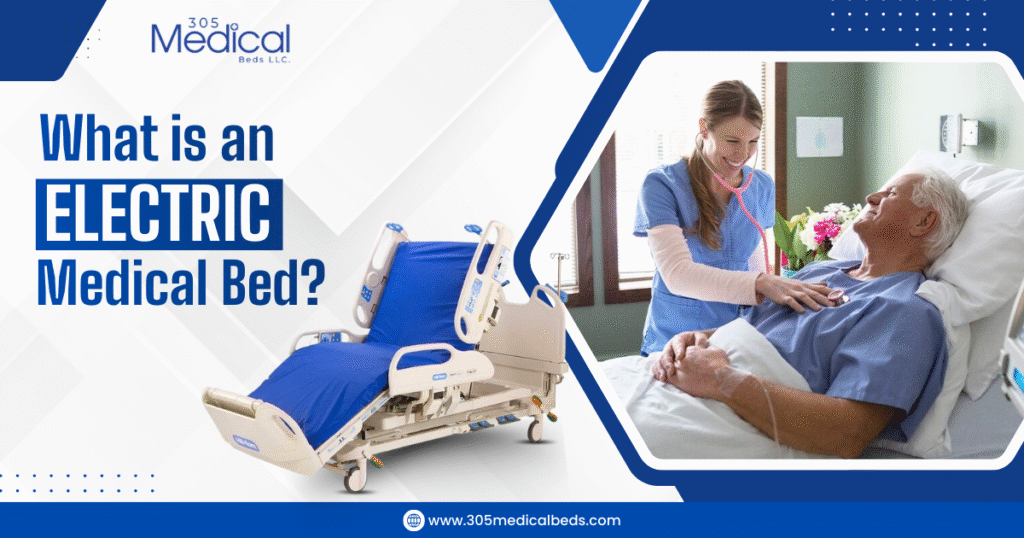
Electric Hospital Bed

What is an Electric Bed?

When someone is recovering from surgery, living with limited mobility, or receiving long-term care at home, a regular bed often doesn’t provide the support they need. Comfort, safety, and easy movement become essential parts of everyday life. This is where an electric medical bed becomes incredibly useful. Designed specifically for patient care, these beds can be adjusted using electric controls to help patients sit up, elevate their legs, or change positions without physical strain. Whether used in hospitals or at home, an electric medical bed helps improve patient comfort, caregiver efficiency, and overall safety. In this guide, you’ll learn what an electric medical bed is, how it works, its main features, benefits, and who can benefit from using one. What is an Electric Medical Bed? An electric medical bed is an adjustable hospital-style bed powered by electric motors that allow patients or caregivers to change the bed’s position using a remote control. The bed typically allows adjustments such as: These adjustments make it easier for patients to sit, lie down, or reposition themselves without physical effort. Electric medical beds are commonly used in: Healthcare organizations like the World Health Organization emphasize the importance of proper patient positioning for comfort and recovery. How Does an Electric Medical Bed Work? Electric medical beds use built-in motors and control systems to adjust different sections of the bed frame. Patients or caregivers can control these adjustments using a handheld remote or side control panel. Key Components of an Electric Medical Bed Key Features of an Electric Medical Bed Electric medical beds are designed with features that improve both patient comfort and caregiver convenience. Adjustable Head Position The head section can be raised to help patients sit up comfortably. Benefits include: This feature is especially helpful for patients with respiratory conditions or mobility limitations. Adjustable Leg Elevation Electric medical beds allow the leg section to be raised. This helps: Patients recovering from surgery often benefit from this feature. Height Adjustment Many electric medical beds allow caregivers to raise or lower the entire bed height. This improves safety by: Safety Side Rails Side rails are an important safety feature that helps prevent accidental falls. They also help patients: Easy Remote Control Operation One of the biggest advantages of an electric medical bed is the simple control system. Patients can adjust their own position without assistance, which increases comfort and independence. Benefits of Using an Electric Medical Bed Electric medical beds provide several benefits for both patients and caregivers. 1. Improved Patient Comfort Patients who spend extended time in bed can easily change positions throughout the day. This helps reduce: Proper positioning significantly improves overall comfort. 2. Increased Safety Safety is a major reason why electric medical beds are widely used in healthcare settings. Safety features include: These features help reduce the risk of falls. Organizations such as the U.S. Food and Drug Administration recommend safe medical bed use to reduce patient injuries. 3. Easier Caregiving Caregivers often need to reposition patients multiple times per day. Electric adjustments help by: This improves efficiency in both hospitals and home care settings. 4. Greater Patient Independence Electric medical beds allow patients to control their own positioning. This means they can: Maintaining independence can have positive emotional and psychological benefits. 5. Better Recovery Support Proper positioning is essential for recovery. Electric medical beds allow caregivers to position patients for: These benefits make them essential for modern patient care. Electric Medical Bed vs Manual Hospital Bed Understanding the difference between electric and manual hospital beds can help when choosing the right option. Feature Electric Medical Bed Manual Hospital Bed Adjustment Motorized controls Hand crank Ease of Use Very easy Requires effort Patient Independence High Low Caregiver Effort Minimal Higher Convenience Advanced Basic Electric beds are generally preferred because they provide greater convenience and comfort. Who Should Use an Electric Medical Bed? Electric medical beds are beneficial for many individuals. Elderly Individuals Older adults with limited mobility often require adjustable beds for safety and comfort. Surgery Recovery Patients Patients recovering from surgery may need assistance adjusting their position frequently. Individuals with Mobility Limitations People with mobility challenges benefit from easy bed positioning. Long-Term Care Patients Patients who spend long periods in bed can reduce discomfort and pressure sores with adjustable positioning. Electric Medical Beds for Home Healthcare Electric medical beds are becoming increasingly popular for home healthcare environments. Families are choosing these beds to provide hospital-level care while allowing patients to remain in the comfort of their homes. Benefits include: If you are exploring options, you can also browse electric hospital beds available on our website to find solutions designed for home care. You may also want to explore: These internal resources can help you choose the best setup for patient care. Conclusion An electric medical bed is a vital piece of healthcare equipment designed to improve patient comfort, safety, and caregiving efficiency. With adjustable positioning, easy remote controls, and built-in safety features, these beds help patients maintain proper posture and reduce discomfort during recovery. Whether used in hospitals, rehabilitation centers, or home healthcare environments, electric medical beds play a crucial role in modern patient care. For families caring for loved ones at home or healthcare providers supporting patient recovery, investing in a high-quality electric medical bed can significantly improve comfort, safety, and overall quality of life. Frequently Asked Questions An electric medical bed allows patients or caregivers to adjust the bed’s position using motorized controls. This improves patient comfort, safety, and ease of caregiving. Yes. Electric medical beds are widely used for home healthcare because they provide adjustable positioning, improved safety, and greater comfort for patients recovering at home. Electric hospital beds use motorized adjustments controlled by a remote, while manual beds require a hand crank. Electric beds are easier to use and require less physical effort. Electric medical beds are ideal for elderly individuals, surgery recovery patients, people with limited mobility, and patients requiring long-term care.

Best Hospital Beds for Home Use Adjustable, Manual or Electric
Adjustable Hospital Beds, Electric Hospital Bed, Hospital Beds, Hospital Home Care, Manual Hospital Bed

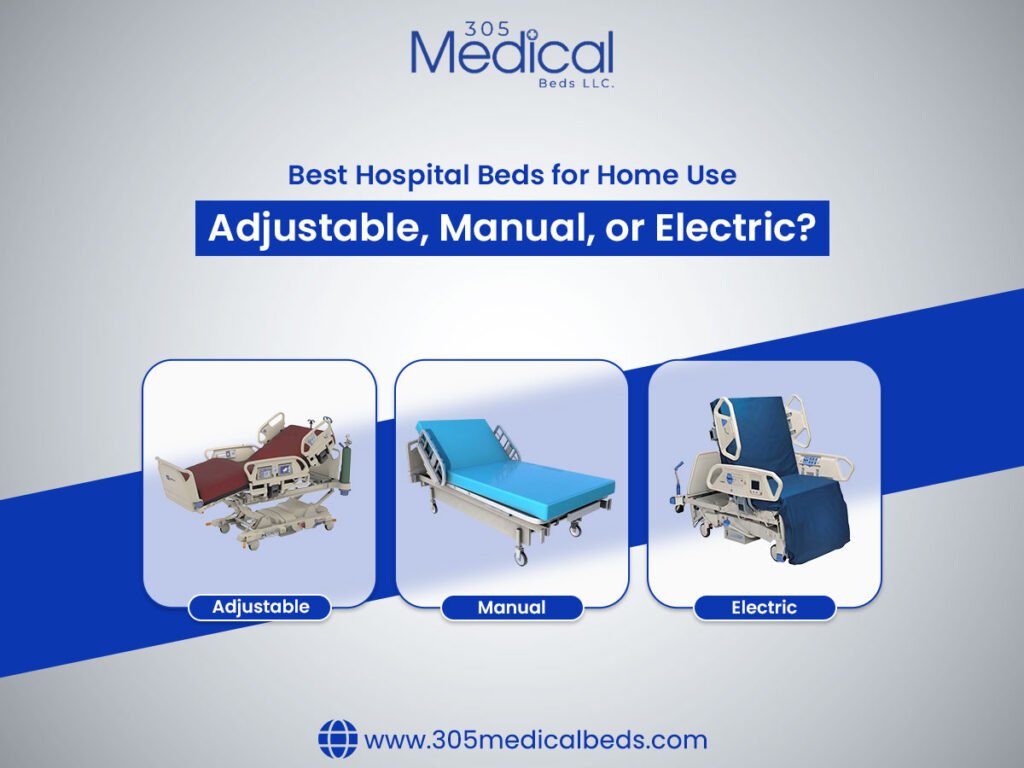
Best Hospital Beds for Home Use: Adjustable, Manual or Electric?

Choosing the right hospital bed for home care ensures that the patient remains safe, supported, and comfortable throughout recovery or long-term treatment. At 305 Medical Beds, we offer Hill-Rom hospital beds that are refurbished to like-new condition—ready for home use at an affordable price. Let’s explore the bed types, their benefits, and our top recommendations for creating a hospital-grade recovery experience at home. Why Home Hospital Beds Matter for Recovery and Comfort When mobility is limited, even simple movements like sitting up, repositioning, or getting in and out of bed can become difficult. The right home hospital bed helps by: Reducing the risk of pressure ulcers Supporting proper posture and breathing Helping caregivers reposition patients Promoting faster healing and better sleep Preventing falls with low height and side rails For these reasons, choosing a high-quality adjustable or electric bed isn’t just a luxury—it’s essential for care. Manual vs Adjustable vs Electric Hospital Beds Manual Beds:These beds require hand cranks to adjust height and positioning. They’re more affordable but less convenient for caregivers and patients. Adjustable Beds:Allow head and foot elevation manually or electrically. Ideal for improving circulation and positioning. Electric Beds:Fully motorized beds controlled with a handset. Features include height adjustment, Trendelenburg positioning, and advanced surface options. At 305 Medical Beds, we primarily recommend electric and adjustable Hill-Rom beds for home use due to their ease, comfort, and safety. Best Hill-Rom Beds for Home Use We’ve handpicked the following Hill-Rom beds as ideal for in-home care. Each one is fully refurbished, tested, and patient-ready. Hill-Rom VersaCare Bed The Hill-Rom VersaCare is one of the most versatile beds for home use. With fully electric controls, this bed is perfect for patients needing frequent repositioning. Key Features: Electric head, foot, and bed height adjustment Advanced pressure redistribution surface options SlideGuard® technology to reduce skin shearing Compact design suitable for home settings Ideal for home caregivers looking for a balance of advanced functionality and affordability. Products: Hill-Rom Versacare P3200 – Foam Mattress (Option 4) Hill-Rom Versacare P3200 – Air Mattress (Option 4A) Hill-Rom TotalCare Bed The Hill-Rom TotalCare Bed offers additional safety and comfort features—perfect for patients with more serious or long-term needs. Top Benefits: Turn Assist and Lateral Rotation Therapy Low height for easier transfer Optional air surface for pressure injury prevention One-button cardiac chair positioning It’s a top-tier solution for home users needing hospital-grade care at home. Products: Refurbished Hill-Rom Total Care P1900 Hospital Bed (Option 3) Refurbished Hill-Rom Total Care P1900 Hospital Bed (Option 5) Hill-Rom Progressa Bed The Progressa Bed is primarily an ICU bed but also works for home care, especially for pulmonary or immobile patients. Key Features: Percussion, vibration, and lateral rotation therapy Advanced mobility support with one-touch controls In-bed scale and full bed articulation Ideal for patients with respiratory issues This is the ultimate choice for critical care at home—if the budget and space allow. Products: Refurbished Hill-Rom Progressa P7500 Pulmonary ICU Bed (Option 1A)   Hill-Rom Spo2rt Bed The Hill-Rom Spo2rt Bed (P1900) is designed to support patient movement and rehabilitation, making it ideal for post-surgery or physical therapy at home. Benefits Include: Electric operation with mobility-focused design Comfortable surface with advanced adjustability Promotes independence and early mobilization Compact enough for home environments A great fit for users transitioning from hospital to home. Products: Refurbished Hill-Rom TotalCare Spo2rt 2 P1900 ICU Bed (Option 1)   Refubished Hill-Rom Total Care Spo2rt P1900 ICU Bed (Option 2) Hill-Rom Bariatric Plus Bed The Hill-Rom Bariatric Plus Bed is ideal for obese patients needing extra space, weight capacity, and strong frame support. Key Advantages: Supports up to 1,000 lbs Wider surface for enhanced comfort Low bed height and side rails for safety Full electric controls for easy adjustments If you’re managing bariatric care at home, this bed ensures both safety and dignity. Products: Refurbished Hill-Rom TotalCare P1840 Bariatric Plus ICU Bed (Option 1B) Benefits of Choosing Refurbished Beds for Home Care Refurbished beds offer all the features of new beds—at a lower price. At 305 Medical Beds, our process includes: Deep cleaning and sanitation Electrical and mechanical inspections Replacing worn components Testing for compliance and safety You get:✔️ Hospital-grade equipment✔️ Warranty-backed quality✔️ Savings of up to 60% Why Choose 305 Medical Beds for Home Use Hospital Beds We stand out for more than just our product range. Our home care clients get: Expert guidance on selecting the right bed Nationwide delivery and optional setup Warranty coverage for peace of mind Friendly customer support before and after purchase We’re trusted by caregivers, families, and medical professionals alike. Conclusion When it comes to home healthcare, the bed you choose matters. At 305 Medical Beds, we offer top-performing Hill-Rom electric and adjustable hospital beds that bring hospital-grade care to your home. Whether you need advanced ICU features, bariatric support, or mobility assistance, we have the right solution—refurbished, affordable, and ready to use. FAQs Q1: Which hospital bed is best for home use?The Hill-Rom VersaCare and TotalCare beds are top picks for home care due to their balance of features and compact design. Q2: Are electric hospital beds safe for home?Yes, they are tested for safety, provide ease of use, and reduce caregiver strain. Q3: Can you deliver and install the bed at my home?Yes. We offer nationwide delivery and optional installation support. Q4: What’s the difference between electric and adjustable beds?Electric beds offer motorized height and position control. Adjustable beds may use manual or partial electric systems for head/foot movement. Q5: Do you offer financing or rentals?Contact us to explore current offers, financing, or rental options based on availability.  

Bank of America logo
PayPal logo
QuickBooks logo
Google logo
Bank of America logo

305 Medical Beds LLC |  2739 W 79 St, Unit 15, Hialeah, Florida 33016 |  Phone: 1.305.562.7960
© Copyright 2012 – 2024 | All Rights Reserved.

You have been successfully Subscribed! Ops! Something went wrong, please try again.

About Us

305 Medical Beds LLC is a certified supplier of refurbished hospital, ICU, and adjustable medical beds. Serving healthcare facilities and home care patients across Florida and the United States since 2020

305 Medical Beds LLC |  2739 W 79 St, Unit 15, Hialeah, Florida 33016 |  Phone: 1.305.562.7960
© Copyright 2012 – 2026 | All Rights Reserved.