
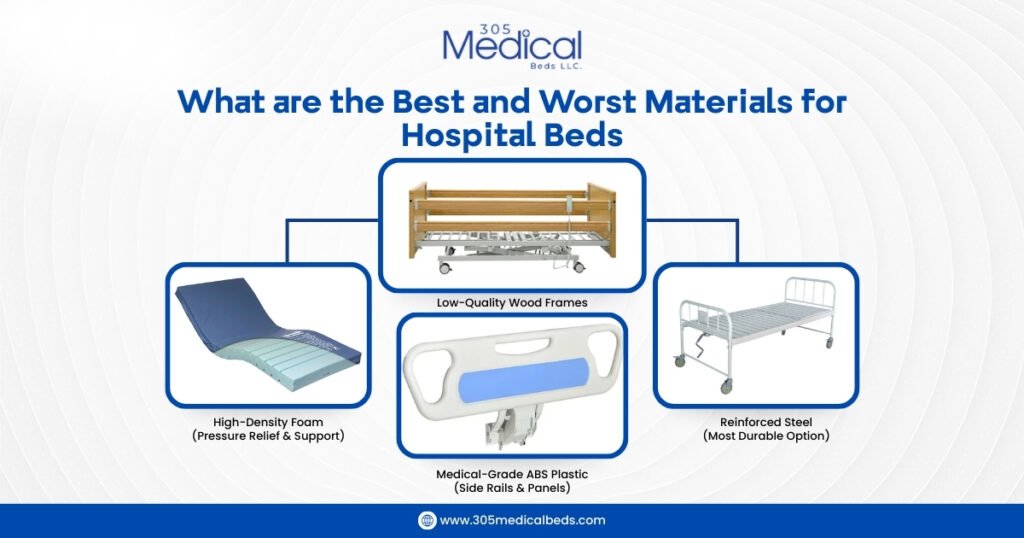
What are the Best and Worst Materials for Hospital Beds
The best materials for hospital beds are reinforced steel, high-grade aluminium, medical-grade ABS plastic, and high-density foam mattresses. The worst materials are low-quality wood, thin lightweight metals, untreated fabrics, and low-density foam that breaks down quickly. Choosing the right hospital bed material affects safety, durability, hygiene, comfort, and long-term cost. Whether for home care, recovery, or long-term medical use, understanding material quality is essential. Why Hospital Bed Material Matters Hospital beds are not ordinary furniture. They must: Material quality directly impacts patient safety and caregiver convenience. Best Materials for Hospital Bed Frames 1. Reinforced Steel (Most Durable Option) Reinforced steel is widely considered the strongest and most reliable material for hospital bed frames. 2. High-Grade Aluminium (Lightweight & Rust-Resistant) Aluminium offers a balance between durability and portability. 3. Medical-Grade ABS Plastic (Side Rails & Panels) ABS (Acrylonitrile Butadiene Styrene) plastic is commonly used for bed rails and head/footboards. Best Mattress Materials for Hospital Beds High-Density Foam (Pressure Relief & Support) High-density foam mattresses provide proper spinal alignment and pressure redistribution. 5. Alternating Pressure Air Mattresses These mattresses use air cells that inflate and deflate automatically. Worst Materials for Hospital Beds Understanding what to avoid is just as important. 1. Low-Quality Wood Frames Wooden frames may look attractive, but are rarely suitable for medical-grade support. Problems: Wood is more common in decorative adjustable beds, not clinical-grade hospital beds. 2. Thin or Lightweight Metal Some lower-cost beds use thin metal that bends over time. Risks: Durability matters when frequent adjustments are required. 3. Low-Density Foam Mattresses Low-density foam is one of the most common problems in budget beds. Issues: Over time, this becomes more expensive than investing in quality foam. 4. Non-Medical Fabrics Non-waterproof covers can absorb moisture and bacteria. Look for: Hygiene is essential in home care environments. How to Choose the Right Material When selecting a hospital bed, consider: For long-term care, reinforced steel frames with high-density or air mattresses are typically the safest investment. For short-term recovery, aluminium frames with quality foam mattresses may be sufficient. Visit 305 Medical Beds and get the right Medical Bed for your need. Final Thoughts The best hospital bed materials prioritise: Reinforced steel frames, aluminium components, medical-grade plastic, and high-density foam mattresses are typically the most reliable choices. Avoid low-density foam, untreated wood, and thin lightweight metals that compromise safety and lifespan. Choosing the right materials ensures better patient comfort and fewer long-term issues. Frequently Asked Questions