
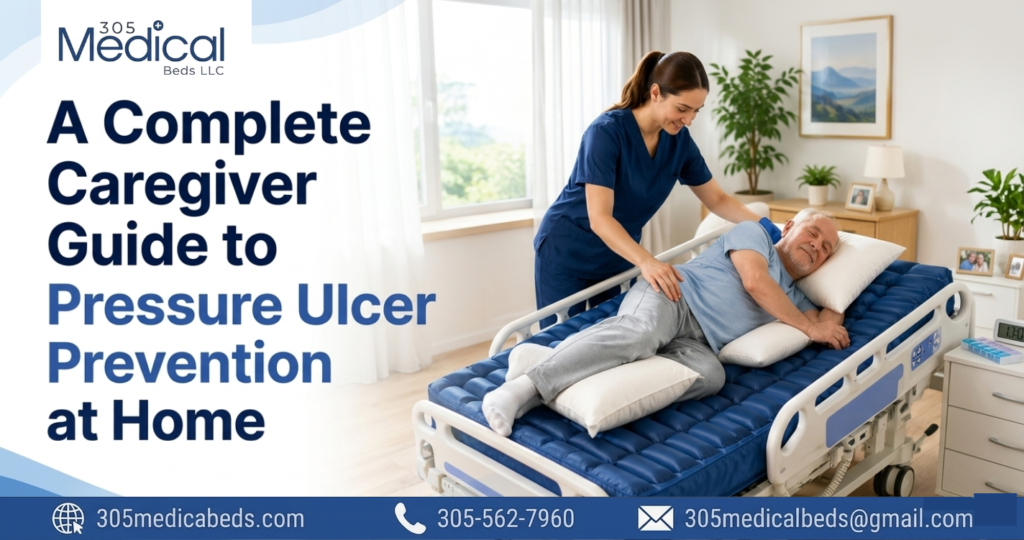
How to Prevent Bedsores: A Complete Caregiver Guide to Pressure Ulcer Prevention at Home
Quick Answer To prevent bedsores (pressure ulcers), reposition the patient every 2 hours, use a pressure-relief mattress (air or alternating-pressure), keep skin clean and dry, ensure adequate nutrition and hydration, and inspect bony areas daily. A properly equipped hospital bed with adjustable positioning and a compatible pressure-relief mattress is the single most effective tool caregivers have for prevention at home. Why Bedsores Are One of the Most Serious Risks for Bed-Bound Patients If you’re caring for someone at home who spends most of their time in bed whether they’re recovering from surgery, living with a chronic condition, or receiving end-of-life care pressure ulcers are one of the most urgent threats you face. They can develop in as little as 2 to 6 hours on at-risk skin. They’re painful, can become life-threatening if infected, and are almost entirely preventable with the right equipment and routine. Yet most caregivers aren’t taught this until it’s too late. This guide covers everything: what causes bedsores, how to spot them early, a daily prevention routine, and how the right hospital bed and mattress reduce your risk dramatically. What Are Bedsores (Pressure Ulcers)? A bedsore also called a pressure ulcer or pressure injury forms when sustained pressure cuts off blood flow to skin and underlying tissue. Without blood flow, the tissue begins to break down. They most commonly develop over bony prominences: heels, the tailbone (sacrum/coccyx), hips, ankles, elbows, shoulder blades, and the back of the head. The National Pressure Injury Advisory Panel (NPIAP) classifies pressure injuries into four stages plus two additional categories (unstageable and deep tissue injury). Understanding the stages helps caregivers recognize problems before they become serious. The 4 Stages of Pressure Ulcers Quick Reference Stage Appearance Skin Intact? Action Needed Stage 1 Red/pink area that doesn’t blanch Yes Increase repositioning; use pressure-relief surface Stage 2 Shallow open wound or blister Partial loss Clean wound; protect; notify clinician Stage 3 Full-thickness tissue loss, visible fat No Medical wound care required immediately Stage 4 Exposed bone, tendon, or muscle No Urgent medical intervention; hospitalization may be needed Important: Stage 1 and early Stage 2 injuries can be reversed with proper care. Stage 3 and Stage 4 injuries require medical wound care and can take months to heal. Who Is Most At Risk for Bedsores? Risk is not equal across all patients. The following conditions significantly increase vulnerability: Clinical Note: The Braden Scale is the most widely used clinical tool for assessing pressure ulcer risk. It scores patients across six factors: sensory perception, moisture, activity, mobility, nutrition, and friction/shear. A score of 18 or below indicates risk. Ask your patient’s doctor if this assessment has been done. Clinical Note The Braden Scale is the most widely used clinical tool for assessing pressure ulcer risk. It scores patients across six factors: sensory perception, moisture, activity, mobility, nutrition, and friction/shear. A score of 18 or below indicates risk. Ask your patient’s doctor if this assessment has been done. The 6 Pillars of Bedsore Prevention at Home 1. Repositioning The Most Important Thing You Can Do No mattress, no cream, and no supplement replaces the act of regularly moving a bed-bound patient. Repositioning redistributes pressure from vulnerable skin areas. Situation Recommended Interval Notes Standard home care Every 2 hours Use clock or phone alarm High-risk patient (diabetes, poor circulation) Every 1–1.5 hours Document each turn Using active air mattress Every 4 hours minimum Mattress reduces does not eliminate need Wheelchair-bound hours Every 15–30 minutes (shift weight) Pressure relief cushion recommended How to reposition correctly: When turning a patient, use a 30-degree lateral tilt rather than a full 90-degree side position. This avoids direct pressure on the hip bone (greater trochanter). Use pillows to support the position. For the heel one of the highest-risk areas float it off the mattress entirely using a pillow placed under the calf. 2. The Right Mattress Your Most Important Equipment Decision A standard mattress concentrates pressure at bony prominences. A pressure-relief mattress redistributes body weight across a larger surface area, reducing the intensity of pressure at any single point. There are two main categories relevant to home care: At 305 Medical Beds, our Hill-Rom hospital beds are fully compatible with both foam and alternating-pressure air mattress overlays. The adjustable height and head/foot positioning on models like the Hill-Rom Versacare P3200 and TotalCare P1900 also lets caregivers use therapeutic positioning (like reverse Trendelenburg) that further reduces sacral pressure without manual repositioning. 3. Skin Inspection Catch Problems Before They Become Serious Check the skin at every repositioning and at least twice daily. Use a flashlight or handheld mirror for hard-to-see areas like the sacrum and heels. What to look for: If you see Stage 1 changes, act immediately increase repositioning frequency, apply a protective barrier, and do not massage reddened areas (massage can worsen tissue damage). 4. Skin Care Moisture Management Moisture from incontinence, sweat, or wound drainage softens and weakens skin, making it far more susceptible to breakdown. A structured skin care routine is essential: 5. Nutrition and Hydration Skin integrity depends on adequate protein, calories, and micronutrients. Malnourished patients develop ulcers faster and heal more slowly. Key nutritional targets for at-risk patients: If the patient has poor appetite, consult a registered dietitian. High-protein oral supplements (like Ensure or Boost) can help bridge the gap. 6. Friction and Shear Reduction Friction occurs when skin rubs against a surface. Shear occurs when the skeleton moves in one direction while the skin stays put the classic example is a patient sliding down in bed while the head is elevated. How to reduce friction and shear: Hospital Bed Tip The Hill-Rom TotalCare P1900 ICU bed includes a built-in microclimate management system and a low air loss mattress option that actively reduces skin temperature and moisture two of the most significant contributors to skin breakdown. These features are typically found only in ICU settings but are available through 305 Medical Beds for home use. How the Right Hospital Bed Reduces Pressure Ulcer Risk Not all beds offer