
Quick Answer
To prevent bedsores (pressure ulcers), reposition the patient every 2 hours, use a pressure-relief mattress (air or alternating-pressure), keep skin clean and dry, ensure adequate nutrition and hydration, and inspect bony areas daily. A properly equipped hospital bed with adjustable positioning and a compatible pressure-relief mattress is the single most effective tool caregivers have for prevention at home.
Why Bedsores Are One of the Most Serious Risks for Bed-Bound Patients
If you’re caring for someone at home who spends most of their time in bed whether they’re recovering from surgery, living with a chronic condition, or receiving end-of-life care pressure ulcers are one of the most urgent threats you face.
They can develop in as little as 2 to 6 hours on at-risk skin. They’re painful, can become life-threatening if infected, and are almost entirely preventable with the right equipment and routine.
Yet most caregivers aren’t taught this until it’s too late.
This guide covers everything: what causes bedsores, how to spot them early, a daily prevention routine, and how the right hospital bed and mattress reduce your risk dramatically.
What Are Bedsores (Pressure Ulcers)?
A bedsore also called a pressure ulcer or pressure injury forms when sustained pressure cuts off blood flow to skin and underlying tissue. Without blood flow, the tissue begins to break down.
They most commonly develop over bony prominences: heels, the tailbone (sacrum/coccyx), hips, ankles, elbows, shoulder blades, and the back of the head.
The National Pressure Injury Advisory Panel (NPIAP) classifies pressure injuries into four stages plus two additional categories (unstageable and deep tissue injury). Understanding the stages helps caregivers recognize problems before they become serious.
The 4 Stages of Pressure Ulcers Quick Reference
| Stage | Appearance | Skin Intact? | Action Needed |
| Stage 1 | Red/pink area that doesn’t blanch | Yes | Increase repositioning; use pressure-relief surface |
| Stage 2 | Shallow open wound or blister | Partial loss | Clean wound; protect; notify clinician |
| Stage 3 | Full-thickness tissue loss, visible fat | No | Medical wound care required immediately |
| Stage 4 | Exposed bone, tendon, or muscle | No | Urgent medical intervention; hospitalization may be needed |
Important: Stage 1 and early Stage 2 injuries can be reversed with proper care. Stage 3 and Stage 4 injuries require medical wound care and can take months to heal.
Who Is Most At Risk for Bedsores?
Risk is not equal across all patients. The following conditions significantly increase vulnerability:
- Limited or no mobility (paralysis, post-surgical immobility, severe weakness)
- Diabetes or peripheral vascular disease (poor circulation impairs healing)
- Incontinence (moisture breaks down skin faster)
- Malnutrition or dehydration (skin loses elasticity and resilience)
- Cognitive impairment (patients can’t self-report pain or discomfort)
- Thin or fragile skin, common in the elderly
- Previous pressure ulcers (scarred tissue is weaker)
| Clinical Note: The Braden Scale is the most widely used clinical tool for assessing pressure ulcer risk. It scores patients across six factors: sensory perception, moisture, activity, mobility, nutrition, and friction/shear. A score of 18 or below indicates risk. Ask your patient’s doctor if this assessment has been done. |
Clinical Note
The Braden Scale is the most widely used clinical tool for assessing pressure ulcer risk. It scores patients across six factors: sensory perception, moisture, activity, mobility, nutrition, and friction/shear. A score of 18 or below indicates risk. Ask your patient’s doctor if this assessment has been done.
The 6 Pillars of Bedsore Prevention at Home
1. Repositioning The Most Important Thing You Can Do
No mattress, no cream, and no supplement replaces the act of regularly moving a bed-bound patient. Repositioning redistributes pressure from vulnerable skin areas.
| Situation | Recommended Interval | Notes |
| Standard home care | Every 2 hours | Use clock or phone alarm |
| High-risk patient (diabetes, poor circulation) | Every 1–1.5 hours | Document each turn |
| Using active air mattress | Every 4 hours minimum | Mattress reduces does not eliminate need |
| Wheelchair-bound hours | Every 15–30 minutes (shift weight) | Pressure relief cushion recommended |
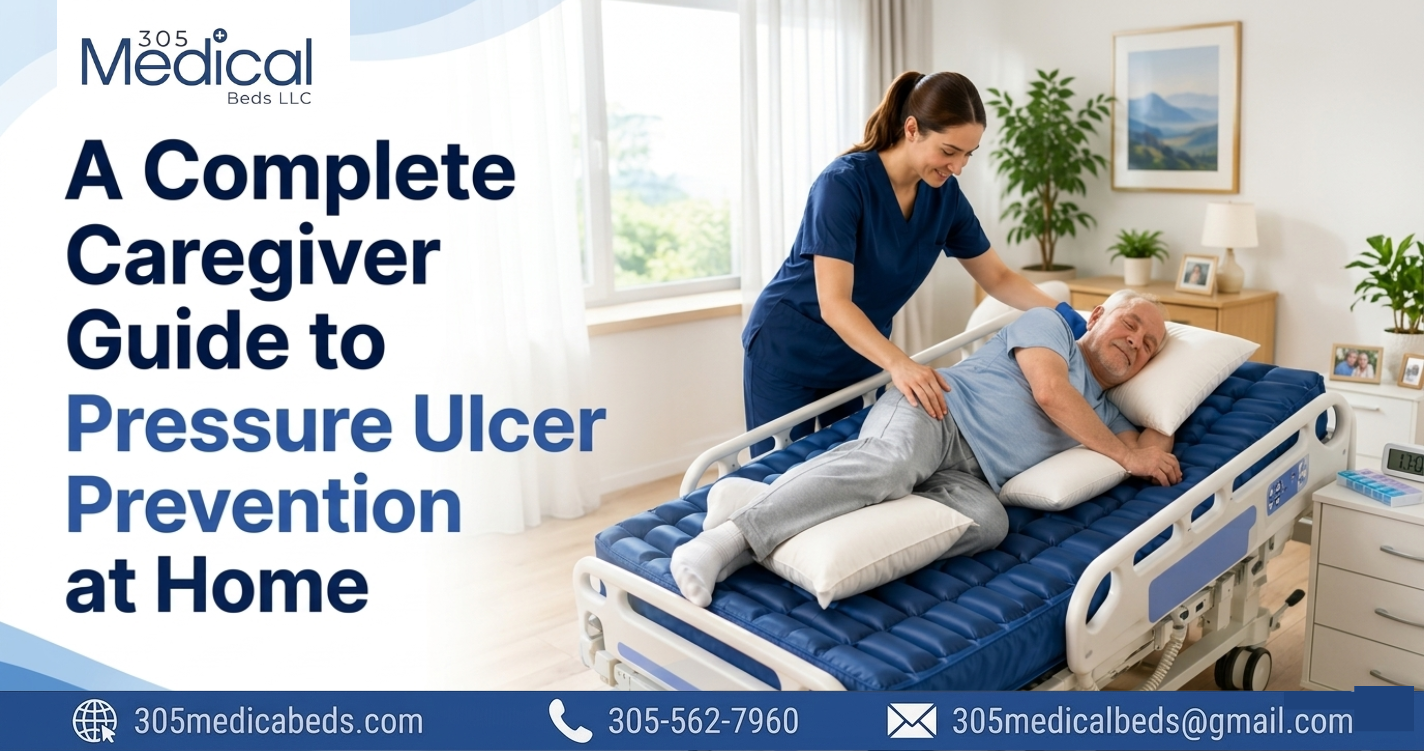
How to reposition correctly: When turning a patient, use a 30-degree lateral tilt rather than a full 90-degree side position. This avoids direct pressure on the hip bone (greater trochanter). Use pillows to support the position. For the heel one of the highest-risk areas float it off the mattress entirely using a pillow placed under the calf.
2. The Right Mattress Your Most Important Equipment Decision
A standard mattress concentrates pressure at bony prominences. A pressure-relief mattress redistributes body weight across a larger surface area, reducing the intensity of pressure at any single point.
There are two main categories relevant to home care:
- Reactive (static) foam or gel mattresses: High-density foam or viscoelastic (memory foam) surfaces that conform to the body. Good for lower-risk patients and comfortable for daily use.
- Active (dynamic) alternating-pressure mattresses: An air pump cyclically inflates and deflates different air cells, constantly shifting where pressure is applied. Recommended for moderate to high-risk patients.
At 305 Medical Beds, our Hill-Rom hospital beds are fully compatible with both foam and alternating-pressure air mattress overlays. The adjustable height and head/foot positioning on models like the Hill-Rom Versacare P3200 and TotalCare P1900 also lets caregivers use therapeutic positioning (like reverse Trendelenburg) that further reduces sacral pressure without manual repositioning.
3. Skin Inspection Catch Problems Before They Become Serious
Check the skin at every repositioning and at least twice daily. Use a flashlight or handheld mirror for hard-to-see areas like the sacrum and heels.
What to look for:
- Redness that doesn’t fade within 30 minutes of removing pressure (Stage 1)
- Warmth or firmness in a localized area (early deep tissue injury)
- Skin that looks darker than surrounding tissue in patients with darker skin tones (redness may not be visible)
- Blisters, open areas, or drainage
If you see Stage 1 changes, act immediately increase repositioning frequency, apply a protective barrier, and do not massage reddened areas (massage can worsen tissue damage).
4. Skin Care Moisture Management
Moisture from incontinence, sweat, or wound drainage softens and weakens skin, making it far more susceptible to breakdown. A structured skin care routine is essential:
- Use pH-balanced, no-rinse cleansers after every incontinence episode
- Apply a moisture barrier cream (zinc oxide or dimethicone-based) to areas exposed to incontinence
- Change absorbent briefs or pads promptly don’t wait for a scheduled change
- Keep bed linens dry and wrinkle-free (wrinkles create pressure points)
- Avoid talcum powder it can clump and cause friction
5. Nutrition and Hydration
Skin integrity depends on adequate protein, calories, and micronutrients. Malnourished patients develop ulcers faster and heal more slowly.
Key nutritional targets for at-risk patients:
- Protein: 1.2 to 1.5 g/kg body weight per day (more for existing wounds)
- Calories: enough to prevent unintentional weight loss
- Vitamin C and zinc: essential for wound healing and collagen synthesis
- Fluids: at least 6–8 cups of water daily unless medically restricted
If the patient has poor appetite, consult a registered dietitian. High-protein oral supplements (like Ensure or Boost) can help bridge the gap.
6. Friction and Shear Reduction
Friction occurs when skin rubs against a surface. Shear occurs when the skeleton moves in one direction while the skin stays put the classic example is a patient sliding down in bed while the head is elevated.
How to reduce friction and shear:
- Use a draw sheet or slide sheet to reposition patients instead of dragging
- Keep the head of the bed at 30 degrees or less when possible above 30 degrees significantly increases sacral shear
- Use heel protectors or heel-lift boots for bed-bound patients
- Apply a thin layer of barrier film or moisture barrier to protect fragile skin at transfer points
Hospital Bed Tip
The Hill-Rom TotalCare P1900 ICU bed includes a built-in microclimate management system and a low air loss mattress option that actively reduces skin temperature and moisture two of the most significant contributors to skin breakdown. These features are typically found only in ICU settings but are available through 305 Medical Beds for home use.
How the Right Hospital Bed Reduces Pressure Ulcer Risk
Not all beds offer the same level of protection. When buying or selecting a hospital bed for home care, these features are specifically relevant to bedsore prevention:
Adjustable Head and Foot Positioning
Keeping the head of the bed elevated helps with breathing and eating but increases pressure on the sacrum. The ability to fine-tune positioning (not just 0 or 45 degrees) allows you to find the therapeutic “sweet spot” comfortable for the patient, safer for the skin.
Low Height / High-Low Function
A bed that adjusts from 10 to 30 inches allows caregivers to work comfortably at a height that prevents them from dragging or sliding the patient the main cause of friction injuries.
Trendelenburg / Reverse Trendelenburg
The reverse Trendelenburg position (feet lower than the head, bed tilted as a whole unit) redistributes pressure off the sacrum and is clinically used as an adjunct to repositioning in ICU settings. Hill-Rom TotalCare models support this function.
Weight Capacity and Patient Size
Overloading a bed compromises its function and can prevent proper positioning. For bariatric patients (generally 350 lbs and above), a bariatric-rated bed like the Hill-Rom TotalCare P1840 Bariatric Plus is essential it also provides a wider sleep surface that allows better lateral positioning.
Compatible Pressure-Relief Mattress Surface
ICU-grade hospital beds are built to work with specialty mattresses. Standard consumer bases are not. If your loved one is at moderate or high risk, pair the bed with an alternating-pressure or low-air-loss mattress surface. 305 Medical Beds can advise on compatible mattress options for every bed we carry.
Daily Bedsore Prevention Checklist for Caregivers
- Reposition patient (log time and position)
- Inspect all bony prominences for redness or skin changes
- Check heels are they floating free of the mattress?
- Cleanse skin after any incontinence episode
- Apply moisture barrier cream to perineal/at-risk areas
- Ensure bed linens are clean, dry, and wrinkle-free
- Confirm head-of-bed angle is 30° or less (if medically appropriate)
- Offer fluids and note intake
- Document any skin changes and report to clinician if Stage 1 or above
- Check mattress pump (if using air mattress) confirm it’s functioning
Need a Hospital Bed Equipped for Pressure Ulcer Prevention?
305 Medical Beds carries certified refurbished Hill-Rom ICU, bariatric, and adjustable hospital beds fully compatible with pressure-relief mattress surfaces. We serve home care patients and healthcare facilities across Florida with same-day delivery in Miami-Dade.
Frequently Asked Questions
- How quickly can a bedsore develop?
A Stage 1 pressure injury can develop in as little as 1 to 2 hours of unrelieved pressure on vulnerable skin. In patients with severely compromised circulation, the timeline can be even shorter. This is why scheduled repositioning every 1 to 2 hours is the clinical standard. - Can you prevent bedsores with a regular mattress?
A standard consumer mattress provides no pressure redistribution and no repositioning capability. While repositioning schedules alone can prevent bedsores, a hospital-grade pressure-relief surface dramatically reduces caregiver workload and offers protection during periods when repositioning isn’t possible (overnight, for example). For moderate-to-high-risk patients, a purpose-built medical mattress is strongly recommended. - What is the best mattress for preventing pressure sores?
For most home care patients at moderate to high risk, an alternating-pressure (active air) mattress is the most evidence-supported option. These mattresses cycle pressure across different cells, effectively repositioning the patient’s weight automatically between manual turns. For lower-risk patients, a high-density medical foam mattress with memory foam or gel layer provides meaningful pressure redistribution at lower cost. - Should I massage reddened skin to improve circulation?
No. This is a common and dangerous misconception. Massaging reddened skin over bony prominences can rupture fragile capillaries and worsen tissue damage. Instead, relieve pressure immediately by repositioning and protect the area with a thin foam dressing if the skin is still intact. - What position is best for pressure sore prevention?
No single position is safest the key is rotation. However, 30-degree lateral tilt (as opposed to 90 degrees) puts less pressure on the hip. The supine (flat on back) position places the highest risk on the sacrum and heels. Semi-recumbent positions above 30 degrees increase sacral shear. A regular rotation schedule between back, left side, and right side with correct support is the clinical gold standard. - Does Medicare cover a hospital bed for home use?
Medicare Part B may cover a hospital bed for home use when prescribed by a physician and deemed medically necessary. Coverage typically applies to patients with conditions requiring positioning (e.g., severe heart or lung disease), not solely for comfort. However, Medicare covers rental of a basic hospital bed for higher-quality, ICU-grade, or bariatric beds, most families find that purchasing a certified refurbished bed from a supplier like 305 Medical Beds is more cost-effective than rental, especially for long-term needs.