
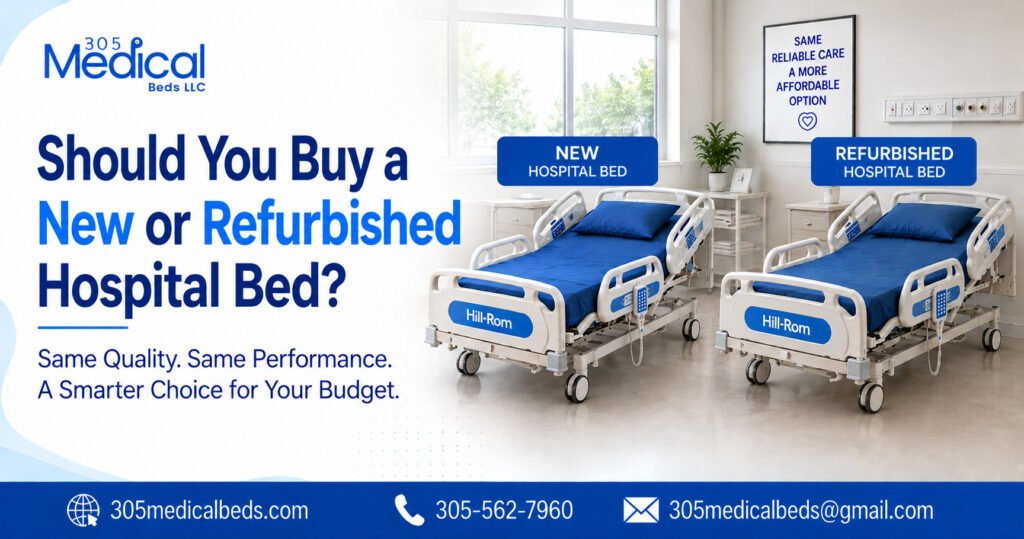
Should You Buy a New or Refurbished Hospital Bed?
When a hospital, care facility, rehabilitation center, or home-care provider needs a dependable medical bed, one of the first questions is whether to purchase a new bed or choose a refurbished model. While new equipment may seem like the obvious choice, it is not always the most practical or cost-effective option. For many buyers, refurbished hospital beds offer an excellent balance between price, reliability, functionality, and availability. A properly refurbished hospital bed can provide many of the features and capabilities expected from hospital-grade equipment while costing considerably less than purchasing new. At 305 Medical Beds, we help buyers explore practical hospital bed options based on their needs and budget. From standard hospital medical beds to specialized bariatric and advanced-care models, choosing the right equipment is about more than simply buying something new. It is about finding a bed that delivers the right combination of quality, functionality, fit, and value. Why Consider a Refurbished Hospital Bed? Healthcare equipment can be a significant investment. Hospitals and care providers may need multiple beds at once, while individual buyers may be looking for reliable equipment without taking on the high cost associated with brand-new models. This is where refurbished equipment can make a real difference. A quality refurbished hospital bed has already been manufactured and used, but it can be inspected, serviced, cleaned, tested, and prepared for continued use. Instead of paying a premium simply for new equipment, buyers can potentially access established hospital-grade equipment at a more affordable price. For budget-conscious healthcare providers, that can make refurbished equipment a particularly attractive option. Refurbished Hospital Beds Can Be More Cost-Friendly One of the biggest advantages of buying refurbished is the potential for significant cost savings. New hospital beds can be expensive, particularly when they include advanced positioning systems, electronic controls, specialized surfaces, or other clinical features. Buying several beds can quickly increase the total investment. A refurbished bed can provide access to many of those same types of features at a lower purchase price. The money saved can then be allocated toward other important healthcare needs, including mattresses, accessories, replacement components, maintenance, or additional patient-care equipment. For facilities working with a limited equipment budget, choosing affordable hospital beds does not necessarily mean compromising on quality. The key is selecting equipment from a dependable source and understanding exactly what has been inspected and serviced. Reliability Matters More Than Whether a Bed Is New A common misconception is that a new hospital bed is automatically more reliable than a refurbished one. In reality, reliability depends on the condition of the equipment, refurbishment process, components, maintenance, and supplier. A properly evaluated refurbished hospital bed can remain a dependable piece of equipment for hospitals, nursing facilities, rehabilitation environments, and other care settings. Before purchasing, buyers should look for beds that have been thoroughly checked for important functions such as: The goal should not simply be to find the cheapest bed available. Instead, buyers should look for a high-quality hospital bed that has been appropriately inspected and is suitable for its intended use. Refurbished Can Give You Access to Established Hospital-Grade Models Another advantage of buying refurbished is the opportunity to find established models that may otherwise be outside your budget when purchased new. For example, buyers researching a Hill-Rom Progressa bed may be interested in the capabilities of an established advanced-care platform without necessarily wanting to pay the cost of acquiring brand-new equipment. The same applies to specialized models such as the Hill-Rom Progressa Pulmonary Bed or Hill-Rom VersaCare P3200 hospital bed. Availability will vary depending on inventory and condition, but refurbished equipment can give buyers another route to finding the type of hospital bed they need. Instead of limiting your search to brand-new equipment, it can be worthwhile to compare new and refurbished options side by side. What About Bariatric Hospital Beds? Not every patient has the same mobility, size, or support requirements. For patients who require additional weight capacity and a wider sleeping surface, a standard bed may not be appropriate. A bariatric hospital bed is specifically designed to accommodate higher patient weight capacities and provide an appropriate platform for patient care. For facilities that need to purchase multiple beds, refurbished bariatric equipment may offer a more budget-friendly way to expand their available patient-care options. When considering a bariatric patient bed, however, buyers should pay close attention to specifications such as: The right choice should always be based on the patient’s requirements and the manufacturer’s specifications rather than price alone. Is a Refurbished Bed a Good Fit for Your Facility? Refurbished hospital beds can be particularly useful for organizations that need to balance equipment quality with budget requirements. They may be a practical option for: The important factor is matching the bed to the application. A basic medical bed may be appropriate for one patient-care environment, while another situation may require an advanced bed with specialized positioning or pulmonary-care capabilities. New vs. Refurbished: What Should You Choose? There is no single answer for every buyer. New equipment can make sense when a facility specifically requires the latest model, a particular manufacturer warranty, or features available only on newer equipment. However, if the priority is value, functionality, reliability, and cost control, refurbished equipment deserves serious consideration. Here is a simple comparison: Consideration New Hospital Bed Refurbished Hospital Bed Purchase cost Usually higher Usually more affordable Equipment age Brand new Previously used Potential savings Lower Higher Established models Available Often available Functionality New equipment features Depends on model and refurbishment Availability Depends on manufacturer Depends on inventory Best for Buyers prioritizing new equipment Buyers prioritizing value and budget The right decision ultimately comes down to your facility’s requirements, budget, and the condition and specifications of the equipment being considered. What Should You Check Before Buying a Refurbished Hospital Bed? Buying refurbished does not mean you should lower your standards. Before purchasing, ask the supplier about the bed’s condition and refurbishment process. Find out whether the equipment has been inspected and whether important functions have been tested. It