
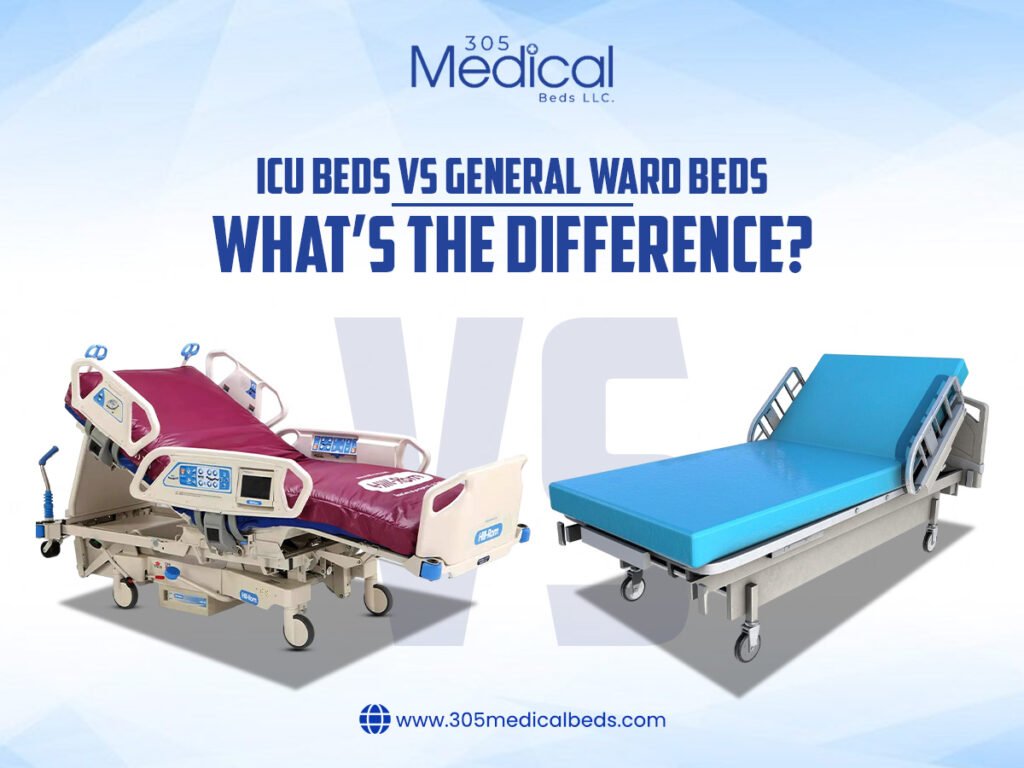
ICU Beds vs. General Ward Beds: What’s the Difference?
Not All Hospital Beds Are Created Equal If you’re searching for a hospital bed—whether for a loved one recovering at home or to equip a healthcare facility—you’ve probably noticed there are many types to choose from. Two of the most common terms you might hear are ICU beds and general ward beds. But what exactly sets these apart? Choosing the right bed isn’t just about comfort; it directly impacts patient safety, recovery speed, and the kind of care provided. In this comprehensive guide, we’ll break down the difference between ICU beds and general ward beds, their key features, cost differences, and help you decide which bed fits your unique needs. Key Differences Between ICU Beds and General Ward Beds Feature ICU Bed General Ward Bed Adjustability Full adjustability (head, feet, height) Limited or manual adjustability Technology & Monitoring Advanced built-in monitoring & alarms Basic or external monitoring Patient Type Critically ill, intensive care patients Stable, post-operative, recovering Cost Range $10,000 – $25,000+ $500 – $2,500 Mobility Features Integrated mobility, safety rails, alarms Basic safety features Usage ICU, critical care units, specialized rooms General wards, home care, rehabilitation What Is an ICU Bed? ICU (Intensive Care Unit) beds are specialized hospital beds designed for critically ill patients who require constant monitoring and life-support equipment. These beds come equipped with advanced features like adjustable height, multiple articulation points (head, legs, and tilt), integrated alarms, and compatibility with ventilators and other life-support machines. ICU beds are essential in critical care settings where patients’ vitals must be closely monitored and their positions adjusted frequently to prevent complications like bedsores and respiratory problems. Key Features of ICU Beds: Hill-Rom ICU beds are among the leading brands known for their reliability, durability, and advanced technology. These beds often feature customizable controls and are designed to maximize patient comfort and care efficiency. What Is a General Ward Bed? General ward beds are simpler and more affordable hospital beds used for patients who require less intensive care. These beds are designed for patients recovering from surgery, undergoing treatment, or stable enough not to need constant monitoring. General ward beds typically have manual or semi-electric adjustability, with basic safety features like side rails and comfortable mattresses. They’re ideal for hospitals, clinics, and home care where patients need rest and mobility support but not critical care. Key Features of General Ward Beds: These beds strike a balance between comfort and functionality without the advanced tech seen in ICU beds. ICU Beds vs General Ward Beds: Key Differences Explained While both types of beds serve the purpose of providing comfort and support to patients, they differ significantly in design, technology, and intended use: 1. Design and Engineering 2. Patient Monitoring Equipment 3. Electrical Components 4. Safety Features 5. Mobility and Weight Capacity How Costs Compare (And Why ICU Beds Cost More) One of the biggest differences between ICU beds and general ward beds is cost, often influencing purchasing decisions. Why Are ICU Beds More Expensive? If budget is a major concern but your patient needs intensive care, renting an ICU bed might be a practical alternative. Use Cases: When to Use ICU vs General Beds When to Use an ICU Bed: When to Use a General Ward Bed: Many families use general ward beds at home, while hospitals reserve ICU beds for life-threatening situations. Which One Should You Choose? Choosing between an ICU bed and a general ward bed depends on several factors: Still unsure? Our experts at 305MedicalBeds.com can guide you through selecting the perfect hospital bed tailored to your needs. Conclusion: Comfort vs. Critical Care ICU beds and general ward beds both play vital roles in patient care. The choice boils down to the patient’s medical condition, care requirements, and budget. ICU beds offer advanced technology and safety for critical patients, while general ward beds provide comfortable, practical support for stable patients. If you want to explore a wide selection of hospital beds tailored to your needs, visit 305MedicalBeds.com. Whether it’s a high-tech ICU bed or a budget-friendly general ward bed, our experts are ready to help you make the best choice. Frequently Asked Questions (FAQs) Q1. Can I Use an ICU Bed at Home? Yes, but it’s expensive and usually reserved for patients needing continuous monitoring and life support. Renting might be a better option. Q2. What Is the Cheapest ICU Bed Available? Basic ICU beds start around $10,000, but pricing varies greatly depending on features and brand. Q3. Does Insurance cover ICU Beds? Often, yes. Insurance policies like Medicare cover hospital beds if prescribed by a doctor for medical necessity. Q4. Can General Ward Beds Be Upgraded? Some general ward beds can be upgraded with additional features like electric adjustability, but they don’t match ICU beds’ complexity.