
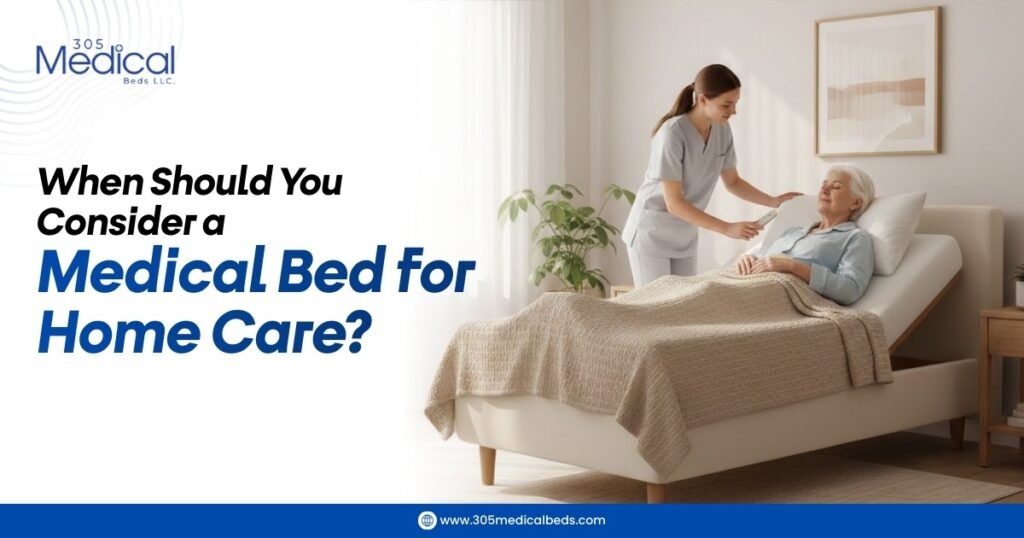
A medical bed for home care is recommended when a patient has limited mobility, increased fall risk, chronic illness, or requires special positioning for recovery. It improves safety, comfort, and caregiver efficiency at home.
Caring for a loved one at home is an act of love — but it also comes with challenges.
As health conditions change, regular beds may no longer provide the comfort, safety, or support needed. That’s when a medical bed for home care becomes more than just equipment — it becomes essential support for both the patient and caregiver.
If you’re wondering whether it’s time to consider one, this guide will help you make a confident and informed decision.
What Is a Medical Bed for Home Care?
A medical bed for home care is an adjustable hospital-style bed designed for residential use. It provides enhanced safety, positioning support, and comfort for individuals recovering from illness, surgery, injury, or managing chronic conditions.
Unlike standard beds, medical beds offer electric adjustability, side rails, and pressure-relief compatibility to improve quality of care at home.
7 Signs You Should Consider a Medical Bed for Home Care
Recognizing the right time is critical. Here are the most common situations where a medical bed becomes necessary.
1. Limited Mobility or Difficulty Moving
If your loved one:
- Struggles to sit up independently
- Has difficulty getting in or out of bed
- Requires assistance for repositioning
A medical bed for home care allows head, foot, and height adjustment, making movement safer and easier.
Risk of Falls
Falls are a serious concern, especially for elderly individuals.
A medical bed helps reduce fall risk through:
- Adjustable low-height positioning
- Side safety rails
- Stable frame support
- Lockable wheels
If falls are becoming frequent, it’s time to consider upgrading to a safer sleeping solution.
Chronic Illness or Long-Term Condition
Conditions such as:
- Neurological disorders
- Advanced arthritis
- Respiratory issues
- Stroke recovery
- Heart conditions
Often require special positioning and long periods in bed.
A medical bed for home care supports comfortable positioning that improves breathing, circulation, and pain management.
Post-Surgery Recovery
After surgery, patients need controlled positioning and limited strain.
Medical beds provide:
- Elevated head support
- Adjustable leg positioning
- Reduced pressure points
- Easier caregiver access
This promotes faster recovery and reduces complications.
Pressure Ulcer (Bedsores) Risk
If someone spends extended time in bed, pressure sores can develop quickly.
Medical beds support:
- Pressure-relief mattresses
- Easy repositioning
- Adjustable elevation
This reduces skin breakdown and improves blood circulation.
Caregiver Physical Strain
If caregivers experience:
- Back pain
- Difficulty lifting
- Trouble repositioning the patient
A medical bed for home care reduces physical effort through electric adjustments and optimal working height.
Caregiver safety is just as important as patient comfort.
Transition from Hospital to Home
When a patient is discharged but still requires medical-level support, a home medical bed bridges the gap between hospital and home recovery.
It ensures:
- Continuity of care
- Safe environment
- Proper positioning
- Reduced readmission risk
Benefits of Using a Medical Bed for Home Care
Investing in the right equipment improves both comfort and outcomes.
For Patients:
- Greater independence
- Better sleep quality
- Improved circulation
- Reduced pain
- Lower fall risk
For Caregivers:
- Easier transfers
- Reduced physical strain
- Better access for care tasks
- Enhanced safety
Types of Medical Beds for Home Care
Understanding your options helps you choose wisely.
Manual Medical Beds
- Hand crank adjustment
- Budget-friendly
- Basic positioning
Semi-Electric Beds
- Electric head/foot adjustment
- Manual height control
Fully Electric Medical Beds
- Complete electric control
- Height adjustment
- Maximum convenience
- Best for long-term care
Fully electric models are often the preferred choice for extended home care needs.
How Much Does a Medical Bed for Home Care Cost?
The cost depends on:
- Electric functionality
- Weight capacity
- Mattress type
- Additional accessories
- Delivery and setup
While prices vary, investing in a high-quality medical bed often reduces long-term healthcare costs by preventing injuries and complications.
For accurate pricing, request a personalized quote based on your specific care needs.
How to Choose the Right Medical Bed for Home Care
Before purchasing, consider:
- Patient mobility level
- Medical condition
- Caregiver involvement
- Room space
- Long-term vs short-term use
Choosing the right model ensures safety and long-term value.
Why Choose 305 Medical Beds for Home Care Solutions?
At 305 Medical Beds, we understand the challenges families face when transitioning care to the home.
We provide:
- High-quality medical beds for home care
- Reliable electric models
- Durable construction
- Professional guidance
- Nationwide delivery
Our goal is to make home recovery safer, easier, and more comfortable.
Ready to Improve Home Care Comfort?
Final Thoughts
Knowing when to consider a medical bed for home care can make a life-changing difference.
If mobility is declining, safety risks are increasing, or recovery requires extra support, investing in a medical bed ensures dignity, comfort, and proper care in a familiar environment.
FAQs
- Is a medical bed necessary for home care?
A medical bed is necessary when mobility is limited, fall risk increases, or medical positioning is required for recovery or chronic conditions. - Can insurance cover a medical bed for home care?
In some cases, insurance or Medicare may cover part of the cost if prescribed by a physician. Coverage depends on eligibility and documentation. - Are home medical beds comfortable?
Yes. Modern medical beds are designed to combine hospital-grade support with residential comfort. - How long should someone use a medical bed at home?
Duration depends on the medical condition. Some patients require temporary support after surgery, while others may need long-term assistance.