
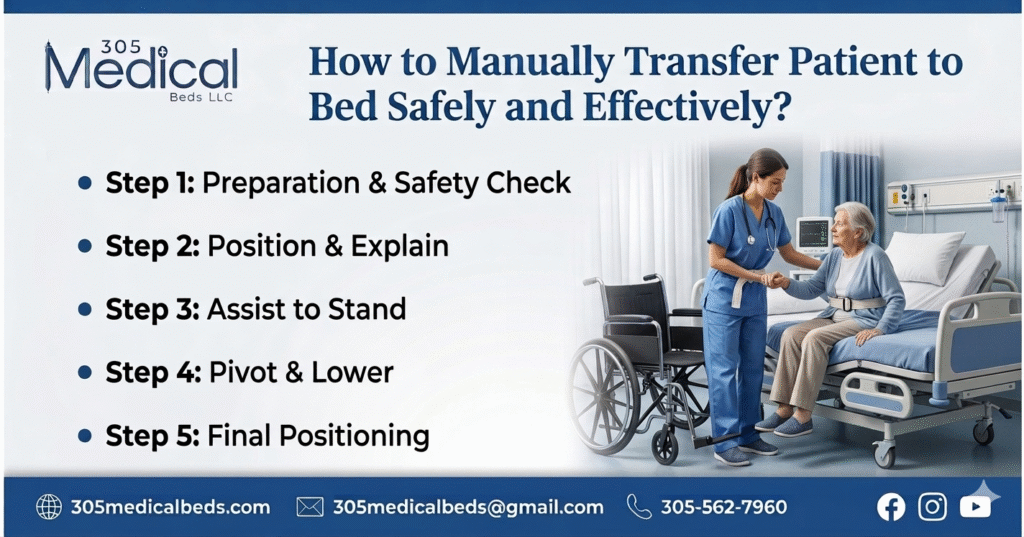
How to Manually Transfer Patient to Bed Safely and Effectively?
Quick Answer: A manual transfer bed is used safely by preparing the environment, locking all wheels, adjusting the bed height so the patient’s feet touch the floor, using assistive tools like transfer belts, and maintaining proper body mechanics. Clear communication and slow, controlled movements are essential to prevent falls and caregiver injuries. Introduction If you’re caring for someone with limited mobility at home or in a care facility, you already know that moving a patient is one of the riskiest moments of any caregiving day. A manual transfer bed changes that. Done right, it keeps your patient comfortable and your back intact. Whether you’re a professional caregiver, a nurse, or a family member stepping into a new role, this guide walks you through everything you need to know about using a manual transfer bed safely, avoiding the most common mistakes, and getting the most out of every transfer. Let’s get into it — step by step, no fluff. What Is a Manual Transfer Bed? A manual transfer bed is a specially designed medical bed that allows caregivers to safely move, reposition, or transfer patients — without the need for electric motors or powered mechanisms. It relies on manual adjustments, side rails, and often a low-height feature to make patient movement safe, controlled, and strain-free for both parties. Unlike standard hospital beds, manual transfer beds are built with the mechanics of safe patient handling in mind. They’re commonly used in home care settings, nursing homes, rehabilitation centers, and long-term care facilities. According to the CDC’s National Institute for Occupational Safety and Health, musculoskeletal injuries from patient handling are one of the leading causes of caregiver injuries — making proper transfer technique not just helpful, but essential. Why Safe Transfers Matter More Than You Think Poor transfer technique causes injuries on both sides — patients can suffer falls, skin tears, or joint stress, while caregivers risk serious back and shoulder injuries. A manual transfer bed gives you the tools to reduce those risks — but only if used correctly. Step-by-Step: How to Use a Manual Transfer Bed Safely Follow this process every time to ensure the safest possible transfer experience for both patient and caregiver. Step 1 — Prepare the environment before anything else Before touching the bed, set your workspace up for success. Clear the area of obstacles, ensure the floor is dry, and have all transfer equipment (transfer belt, slide sheet, wheelchair if needed) within arm’s reach. Lock all wheels on both the bed and any receiving equipment. Step 2 — Adjust the bed to the right height One of the greatest advantages of a manual transfer bed is its height adjustability. Lower the bed so that when the patient sits at the edge, their feet touch the floor flat. This reduces the risk of falls and gives the patient a sense of stability and control. A bed that is too high or too low increases fall risk significantly. Step 3 — Raise the head of the bed first If your patient is lying flat, use the manual crank or lever to raise the head of the bed to approximately 30–45 degrees before beginning repositioning. This makes it easier for the patient to shift their weight and reduces the effort required from the caregiver. Step 4 — Position yourself correctly This is where most caregiver injuries happen. Stand with your feet shoulder-width apart, bend your knees — not your back — and keep the patient as close to your body as possible during any lift or slide. Never reach across the bed or twist your torso while supporting a patient’s weight. Step 5 — Use a transfer belt or slide sheet For patients with limited strength, a gait/transfer belt around the patient’s waist gives you a firm, safe grip. For bed-to-bed or lateral transfers, a slide sheet reduces friction dramatically and allows two caregivers to move a patient in a single smooth motion. Always use assistive devices — they exist for a reason. Step 6 — Communicate every move Tell your patient exactly what you’re about to do before you do it. “I’m going to help you sit up now — on three, we’ll move together.” This reduces patient anxiety, improves cooperation, and results in safer, more controlled transfers every time. 01Prepare WorkspaceClear area, dry floor, equipment ready, wheels locked 02Adjust Bed HeightFeet flat on floor when patient sits at edge 03Raise Head of Bed30–45 degrees before repositioning begins 04Position YourselfFeet wide, knees bent, patient close to your body 05Use Assistive ToolsTransfer belt or slide sheet for every move 06Communicate ClearlyExplain each step before it happens Looking for a quality manual transfer bed? Browse our full selection of refurbished and new medical beds — built for safety, comfort, and durability at every care level. Critical Safety Rules You Should Never Break Important Safety Reminders How to Reposition a Patient in a Manual Transfer Bed Repositioning is just as important as transferring. Patients who remain in one position for extended periods are at high risk for pressure ulcers (bedsores), poor circulation, and respiratory complications. For most patients, repositioning every 2 hours is the clinical standard. Pro tip A body pillow or wedge foam behind the back is one of the most underused tools in repositioning. It maintains the patient in a supported lateral position without requiring the caregiver to hold them in place, reducing fatigue during long care shifts. Bed-to-Wheelchair Transfer: A Common Scenario Done Right The bed-to-wheelchair transfer is one of the most frequent — and most mishandled — moves in patient care. Here’s how to do it correctly using a manual transfer bed: Common Mistakes Caregivers Make with Manual Transfer Beds Even experienced caregivers fall into these habits — here’s what to watch for: Maintaining Your Manual Transfer Bed for Long-Term Safety A well-maintained manual transfer bed will perform safely for years. A neglected one becomes a liability. Make these checks part of your routine: Did you know? Refurbished hospital beds from trusted suppliers like 305 Medical Beds are fully inspected and restored to meet manufacturer standards —