
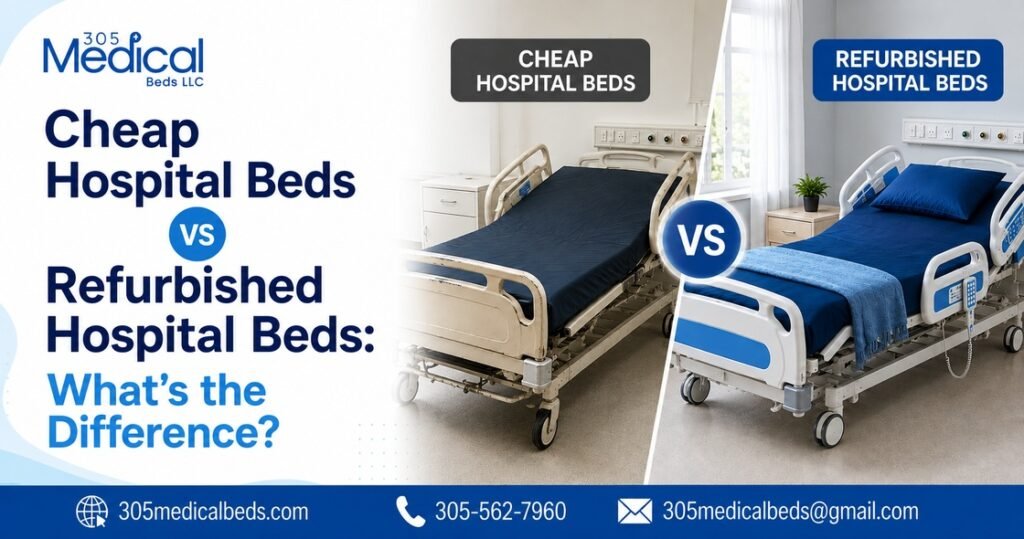
Cheap Hospital Beds vs. Refurbished Hospital Beds: What’s the Difference?
When you’re searching for a hospital bed for sale, price is naturally one of the first things you notice. You may find a basic hospital bed advertised at a surprisingly low price and think, “Why spend more when I can get a cheaper one?” But there is an important question to ask: Is the cheapest hospital bed actually the best value? Not necessarily. There is a major difference between a cheap hospital bed and a professionally refurbished hospital bed. A low-priced bed may simply be used equipment being resold, while a certified refurbished bed can go through inspection, testing, cleaning, replacement of worn components, and other restoration processes before it reaches the buyer. For families, caregivers, nursing facilities, and healthcare providers, understanding this difference can help prevent an inexpensive purchase from becoming an expensive problem later. What Is a Cheap Hospital Bed? The term “cheap hospital bed” can mean several different things. It could refer to: The important thing is that low price doesn’t automatically tell you the condition or value of the bed. For example, two hospital beds might look similar in an online listing, but one may have recently been inspected and serviced while the other may have unknown maintenance history. That’s why buyers should look beyond the sticker price. What Is a Refurbished Hospital Bed? A refurbished hospital bed is previously used medical equipment that has been restored and tested before being resold. However, not every seller uses the word “refurbished” in exactly the same way. A serious refurbishment process should involve more than simply cleaning the bed and taking new photographs. Depending on the supplier and model, refurbishment can include: At 305 Medical Beds, the company’s current product information states that its certified refurbished beds undergo a 47-point inspection and are offered at prices stated as 40–60% below new equipment, with products starting at $1,990. That distinction is important. Used doesn’t automatically mean refurbished. Cheap vs. Refurbished Hospital Beds: The Key Differences Here’s a simple way to compare them: Feature Cheap/Basic Used Bed Refurbished Hospital Bed Price Usually lower upfront Higher than the cheapest used option Inspection May be limited or unknown Professionally inspected Maintenance history May be unavailable Should be documented by seller Worn components May remain Often repaired/replaced Electrical testing Not always clear Should be tested Cleaning Varies Professional refurbishment should include cleaning Safety checks Varies by seller Should be part of refurbishment Warranty May be none Often available Support May be limited Better suppliers offer support Long-term value Depends heavily on condition Often stronger when properly refurbished The biggest difference isn’t simply price. It’s what you receive for that price. 1. Price: Is Cheap Always Cheaper? This is where many buyers make their first mistake. Suppose you find a hospital bed for a very low price. At first, it looks like a great deal. But then you discover that: Suddenly, the original price doesn’t look quite as attractive. This is known as total cost of ownership. Instead of asking: “How much does this bed cost?” Ask: “How much will this bed cost me to purchase, deliver, maintain, and use?” That’s a much better question. 2. Condition Matters More Than Appearance A hospital bed can look clean in a photograph and still have mechanical or electrical problems. This is particularly important when buying older equipment. Before purchasing a used or inexpensive hospital bed, ask: A professional refurbishment process should address these areas before the bed is sold. 3. Features Can Make a Big Difference A basic hospital bed may provide only the functions you actually need. But depending on the patient’s condition, additional features can be extremely useful. Some hospital beds may offer: For example, 305 Medical Beds currently offers refurbished Hill-Rom models including TotalCare, TotalCare Spo2rt, VersaCare, and Progressa. The right choice depends on the patient’s needs rather than simply choosing the bed with the lowest price. 4. Cheap Hospital Beds May Have Unknown History This is one of the biggest differences buyers should investigate. When buying used medical equipment, you want to know: Where did the bed come from? How old is it? How heavily was it used? Was it previously used in an ICU, hospital room, nursing facility, or home? What maintenance has been performed? A reputable refurbished-equipment supplier should be able to explain the condition and refurbishment process. If the seller cannot tell you anything about the bed’s history or condition, proceed carefully. 5. Refurbished Doesn’t Mean “Old and Broken” This is a common misconception. A refurbished hospital bed isn’t necessarily a bed that was damaged and simply put back on the market. Professional refurbishment is intended to restore equipment to a reliable, usable condition. For example, 305 Medical Beds describes its refurbishment process as involving electrical and mechanical testing, replacement of worn parts, cleaning, and quality checks. The result can be a hospital-grade bed at substantially less than the price of comparable new equipment. 6. Warranty and Customer Support Matter Imagine the bed arrives and two weeks later something stops working. Who do you call? This is why warranty and after-sale support should be part of your buying decision. Before purchasing, ask: Does the bed come with a warranty? What does the warranty cover? Who performs repairs? Are replacement parts available? Does the supplier offer installation? Can I contact someone if I have questions after delivery? A low-cost bed with no support may become frustrating if something goes wrong. 7. Cheap Hospital Beds Can Be Fine in Some Situations It’s important to be fair: Not every inexpensive hospital bed is a bad choice. A basic manual hospital bed may be perfectly suitable for someone who needs simple positioning and doesn’t require advanced functions. If your requirements are straightforward, you don’t necessarily need the most advanced ICU bed available. The key is matching the bed to the actual need. A basic bed may make sense when: A refurbished hospital bed may make more sense when: 8. Refurbished Hospital Beds Can Offer Better Value This is where refurbished equipment becomes