
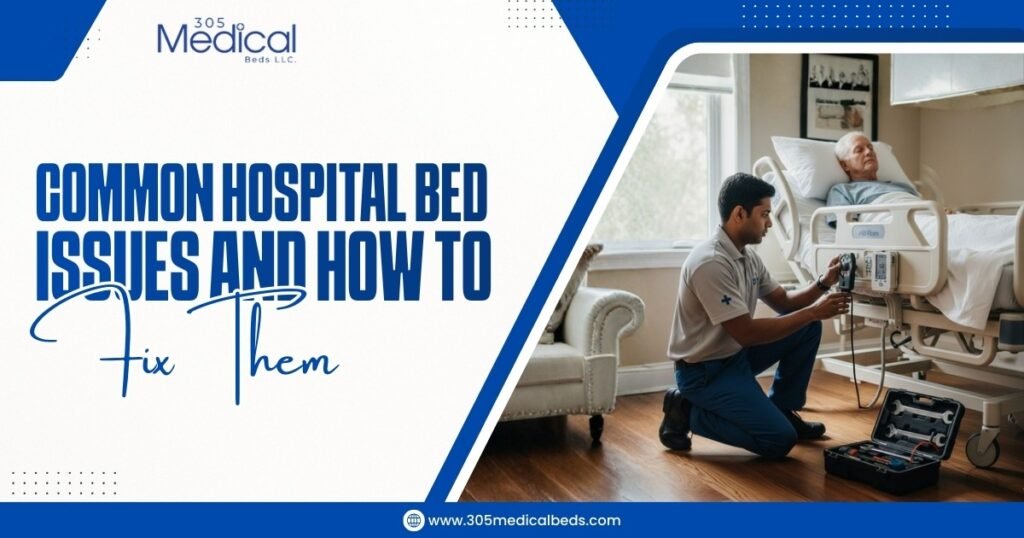
Hospital beds are designed to support patient comfort, mobility, and safety—but like all equipment, they can experience problems over time. Whether the bed is used in a clinical facility or at home, even small issues can disrupt patient care and create frustration for caregivers.
The good news? Most common hospital bed issues can be fixed with simple troubleshooting, routine maintenance, or part replacement. Understanding these problems early can save time, prevent breakdowns, and extend the lifespan of your equipment.
Below, we break down the most frequent issues users face and provide practical steps on how to fix them. For insight into how the right hospital bed enhances patient comfort, see our guide on selecting beds that support healing and safety.
Why Hospital Beds Develop Issues
Hospital beds are mechanical and electrical devices that undergo constant movement, frequent adjustments, and daily weight-bearing stress. Over time, components wear out or require recalibration.
Typical causes include:
- Continuous raising and lowering of the bed
- Heavy patient load
- Improper cleaning
- Aging motors or actuators
- Loose wiring
- Misaligned side rails
Most issues are routine and don’t require replacing the entire bed—just proper troubleshooting. For guidance on choosing a durable and reliable bed, consider our guide on choosing the right hospital bed.
1. Bed Does Not Raise or Lower Properly
One of the most common mechanical problems is when a hospital bed won’t lift, lower, or adjust smoothly.
Symptoms
- Bed won’t raise or lower
- Bed moves slowly or unevenly
- Motor makes a clicking or humming sound
- No movement when pressing control buttons
Likely Causes
- Faulty motor or actuator
- Power supply issues
- Loose wiring
- Damaged control box
- Overloaded weight capacity
How to Fix It
- Check the power source
Ensure the bed is plugged in securely.
Test the outlet with another device. - Examine the hand controller
Look for stuck buttons or frayed wiring. - Inspect cables under the bed
Loose or disconnected cables are a very common cause. - Check motor limits
Some motors shut off when overloaded to protect the system. - Reset the bed (if available)
Unplug for 1 minute, then reconnect power. - Replace actuator or motor
If the bed still won’t adjust, the actuator may have failed.
For beds that frequently malfunction, reviewing high-quality hospital beds that minimize mechanical issues can prevent recurring problems.
2. Hospital Bed Remote or Handset Not Working
The handset (controller) is used constantly, so it’s no surprise that issues are frequent.
Symptoms
- Buttons don’t respond
- Only some adjustments work
- Controller lights don’t turn on
- Cord is damaged or exposed
Common Causes
- Loose plug connection
- Broken cord or internal wiring
- Water or liquid damage
- Worn-out controller buttons
How to Fix It
- Check controller connection
Ensure the plug is firmly inserted into the control box. - Try another controller (if available).
Helps identify whether the issue is the handset or the bed. - Inspect for visible cord damage
Replace immediately if frayed. - Replace the handset
Handsets are generally inexpensive and easy to swap.
Pro Tip: If the Trendelenburg or tilt functions work but height adjustment doesn’t, the issue is likely with the actuator—not the controller.
For selecting beds with user-friendly controls, see our comparison of the best hospital beds for 2025.
3. Electric Bed Not Powering On
When a hospital bed won’t turn on, it interrupts patient care and mobility.
Symptoms
- No lights on the bed or controller
- Bed is completely unresponsive
- Electrical buzzing or burning smell
Possible Causes
- Faulty power cord
- Blown fuse
- Damaged control box or transformer
- Tripped circuit breaker
How to Fix It
- Check the outlet
Try a different power outlet. - Inspect the power cord for breaks
- Reset the surge protector (if included).
- Replace the fuse in the control box.
- Examine the power transformer
Replace if overheated or damaged. - Check for water contact
If wet, unplug immediately and wait 24 hours before powering on.
Understanding bed design and reliability can also be guided by our breakdown of hospital bed types and features.
4. Side Rails Not Locking or Moving Smoothly
Side rails play a crucial safety role. When they malfunction, patient risk increases.
Symptoms
- Rails feel loose
- Rails do not stay in position
- Rails catch, stick, or make grinding noises
Common Causes
- Worn-out locking pins
- Damaged brackets or springs
- Rust buildup
- Lack of lubrication
How to Fix It
- Inspect locking pins or knobs
Replace if worn or bent. - Lubricate moving parts
Use medical-grade lubricant. - Tighten mounting brackets
- Replace damaged rails
Safety should never be compromised.
For beds optimized for patient safety, read why quality hospital beds matter for patient outcomes.
5. Mattress Sagging or Causing Discomfort
A sagging or uncomfortable mattress can severely impact patient recovery.
Common Signs
- Dip in the center
- Difficulty repositioning
- Pressure sores developing
Causes
- Mattress age
- Overuse
- Damaged foam or springs
Fix Options
- Flip or rotate the mattress
- Upgrade to a pressure-relief mattress
- Replace the mattress entirely
For guidance on pairing beds with suitable mattresses, see how the right hospital bed enhances patient comfort.
6. Noisy Hospital Bed Motors
While some noise is normal, loud or unusual sounds may indicate deeper issues.
Symptoms
- Grinding
- Clicking
- High-pitched motor whine
Causes
- Worn gears
- Low lubrication
- Loose internal parts
- Failing actuator
How to Fix It
- Lubricate pivot points
- Tighten bolts
- Inspect actuators
- Replace noisy motor
Tip: If noise occurs under weight but not when empty, the actuator is beginning to fail.
Quality construction reduces these problems; check our guide on the best hospital beds for reliability and comfort.
7. Wheels or Casters Not Rolling or Locking Properly
Hospital beds rely on smooth mobility for patient transfers and cleaning.
Symptoms
- Bed is hard to move
- Casters won’t lock or unlock
- Wheel alignment looks off
Causes
- Dirt buildup
- Broken caster stems
- Jammed locking mechanisms
How to Fix It
- Clean casters thoroughly
- Lubricate the wheel axles
- Replace faulty casters
- Check alignment and frame integrity
Proper bed maintenance also supports safe home care settings.
8. Trendelenburg or Reverse Trendelenburg Not Functioning
These advanced features rely on motor synchronization.
Symptoms
- Bed tilts unevenly
- Tilt doesn’t activate
- Motors strain or stop mid-motion
Causes
- Faulty actuator
- Motor synchronization failure
- Handset malfunction
How to Fix It
- Test actuator performance
- Check control box
- Try a different handset
- Replace tilt actuator
For a deeper look at advanced ICU beds, see why new ICU beds aren’t always better.
Maintenance Tips to Prevent Future Issues
Clean the bed regularly.
Dust and debris can affect motors and moving parts.
Inspect wiring monthly
Look for frayed cables or loose connections.
Lubricate rails and joints
Prevents grinding and sticking.
Avoid exceeding weight capacity.
Overloading causes actuator failure.
Schedule professional servicing
Especially for high-use clinical settings.
When beds fail repeatedly, refurbished or replacement hospital beds offer a cost-effective, reliable alternative.
When to Call a Professional
Some issues require expert assessment, especially when involving:
- Electrical failures
- Repeated actuator problems
- Frame damage or bending
- Unusual burning smells
- Fully nonoperational beds
305 Medical Beds provides professional repair, refurbishment, and replacement solutions to keep your equipment safe and functional.
Need hospital bed repair or parts? Contact 305 Medical Beds today for expert support.
Conclusion
Understanding common hospital bed issues and how to fix them empowers caregivers, healthcare staff, and home users to maintain their equipment safely and efficiently. Most problems—whether mechanical, electrical, or safety-related—can be solved with simple troubleshooting.
A well-maintained hospital bed offers:
- Better patient comfort
- Improved mobility
- Long-term durability
- Fewer breakdowns
- Reduced repair costs
If your bed is showing repeated problems, it may be time to repair or replace it—and refurbished hospital beds from 305 Medical Beds offer a reliable, affordable alternative.
For choosing the right bed that avoids frequent issues, check our complete guide on hospital bed selection.