
If someone you love is spending long hours — or entire days — in a hospital bed, you already know how fast discomfort turns into something more serious. Sore spots, restless nights, skin that starts breaking down. It happens faster than most people expect.
An air mattress for a hospital bed is one of the most practical upgrades you can make — whether for a home care setup or a clinical environment. It’s not just about comfort (though that matters a lot). It’s about protecting the skin, improving circulation, and making recovery smoother for the person lying in that bed.
In this guide, you’ll find everything you need to understand why air mattresses matter, what types are available, and how to choose the right one.
What Is a Hospital Bed Air Mattress?
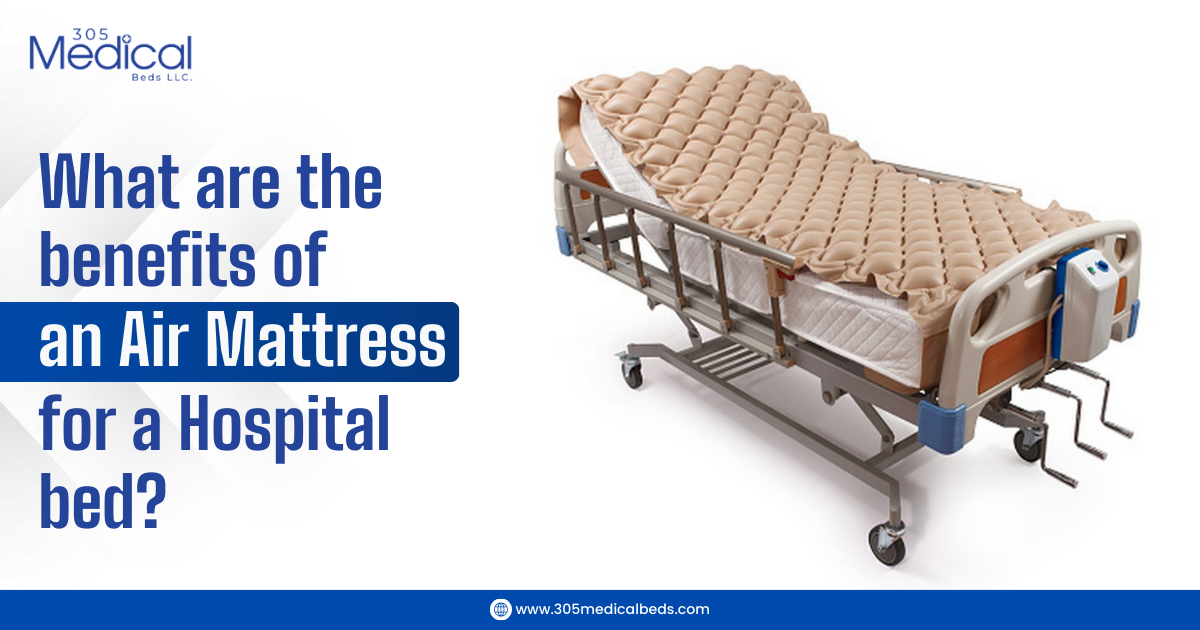
A hospital bed air mattress is a specialized pressure-relief mattress designed to fit standard hospital beds. Unlike a regular foam mattress, it uses air-filled chambers or cells that can be adjusted, inflated, or programmed to shift pressure across the body automatically.
These mattresses are commonly used for:
- Patients who are bedridden or have limited mobility
- Individuals recovering from surgery
- Elderly patients at risk of pressure sores
- Anyone with chronic illness requiring long-term bed rest
They’re built to work with the adjustable frames of hospital beds — including rentals and home care models — making them a direct fit rather than a workaround.
Top Benefits of an Air Mattress for a Hospital Bed
1. Prevents Pressure Ulcers (Bedsores)
This is the number-one reason healthcare providers recommend air mattresses. Pressure ulcers — also called bedsores — develop when the skin and underlying tissue are compressed against a surface for too long. They’re painful, difficult to treat, and can lead to serious infections.
An air mattress helps by redistributing pressure across the body’s surface. Alternating pressure models cycle air through different cells every few minutes, ensuring no single point bears constant weight. This simple mechanism dramatically reduces the risk of ulcer development, especially in patients who cannot reposition themselves.
According to general clinical guidelines, pressure redistribution surfaces are a frontline recommendation for any patient at moderate-to-high risk of pressure injuries.
2. Improves Circulation
Lying in one position for extended periods restricts blood flow — especially to the heels, tailbone, and shoulder blades. Poor circulation delays healing and increases the risk of tissue damage.
Air mattresses support better circulation by gently alternating pressure zones. This mimics some of the benefits of movement without requiring the patient to shift position manually. For post-surgical patients or those with limited mobility, this can be an important part of their overall recovery plan.
3. Reduces Pain and Discomfort
Many patients on traditional foam or spring mattresses report significant discomfort, particularly around bony prominences like the hips, knees, and heels. An air mattress offers customizable firmness — meaning it can be adjusted based on the patient’s weight, condition, and comfort preference.
Softer zones can be created under painful areas, while firmer support can be maintained where the body needs it most. This level of personalization is simply not possible with a standard mattress.
4. Supports Faster Recovery
Comfort directly affects recovery. Patients who sleep better, experience less pain, and maintain healthier skin tend to recover more quickly. An air mattress contributes to all three of these outcomes.
For home care patients especially — where the goal is to maintain quality of life and reduce hospital readmissions — investing in a quality air mattress for a hospital bed can make a measurable difference in health outcomes.
5. Easy for Caregivers to Manage
Modern hospital bed air mattresses often come with digital control units that allow caregivers to adjust firmness, cycle timing, and inflation levels without disturbing the patient. Some models include alarm systems that alert caregivers if the mattress deflates below a safe threshold.
This ease of management reduces caregiver strain and ensures consistent pressure relief even during overnight hours when repositioning may not be feasible.
6. Waterproof and Easy to Clean
Hospital-grade air mattresses typically feature waterproof, wipeable covers that resist bacteria and fluids. This is critical in care settings where hygiene directly affects patient health. Most covers can be cleaned with standard hospital disinfectants, making them practical for both clinical and home use.
Who Needs a Hospital Bed Air Mattress?
While any bedridden patient can benefit, certain groups have the highest need:
- Elderly patients with fragile or thinning skin
- Post-surgical patients who must remain immobile during healing
- Patients with spinal cord injuries or neurological conditions limiting movement
- Individuals with diabetes who have reduced sensation and slower wound healing
- Hospice and palliative care patients where comfort is the primary goal
- Stroke or paralysis patients who cannot reposition independently
In all of these cases, a standard mattress is simply not designed to meet the demands of prolonged bed rest. An air mattress is not a luxury — it’s a clinical necessity.
Final Thoughts
An air mattress for a hospital bed is one of the most impactful investments you can make in a patient’s care — whether at home or in a facility. From preventing painful pressure ulcers to supporting better sleep, circulation, and recovery, the benefits are well-documented and practically significant.
The right mattress isn’t the same for every patient. If you’re unsure where to start, look at the patient’s mobility level, skin condition, and how long they’re expected to be in bed. From there, matching the mattress type to those needs becomes much more straightforward.
At 305 Medical Beds, we carry a range of hospital beds and compatible pressure-relief accessories designed for real-world home care needs. If you’re setting up a care environment or upgrading an existing one, we’re here to help you get it right.