
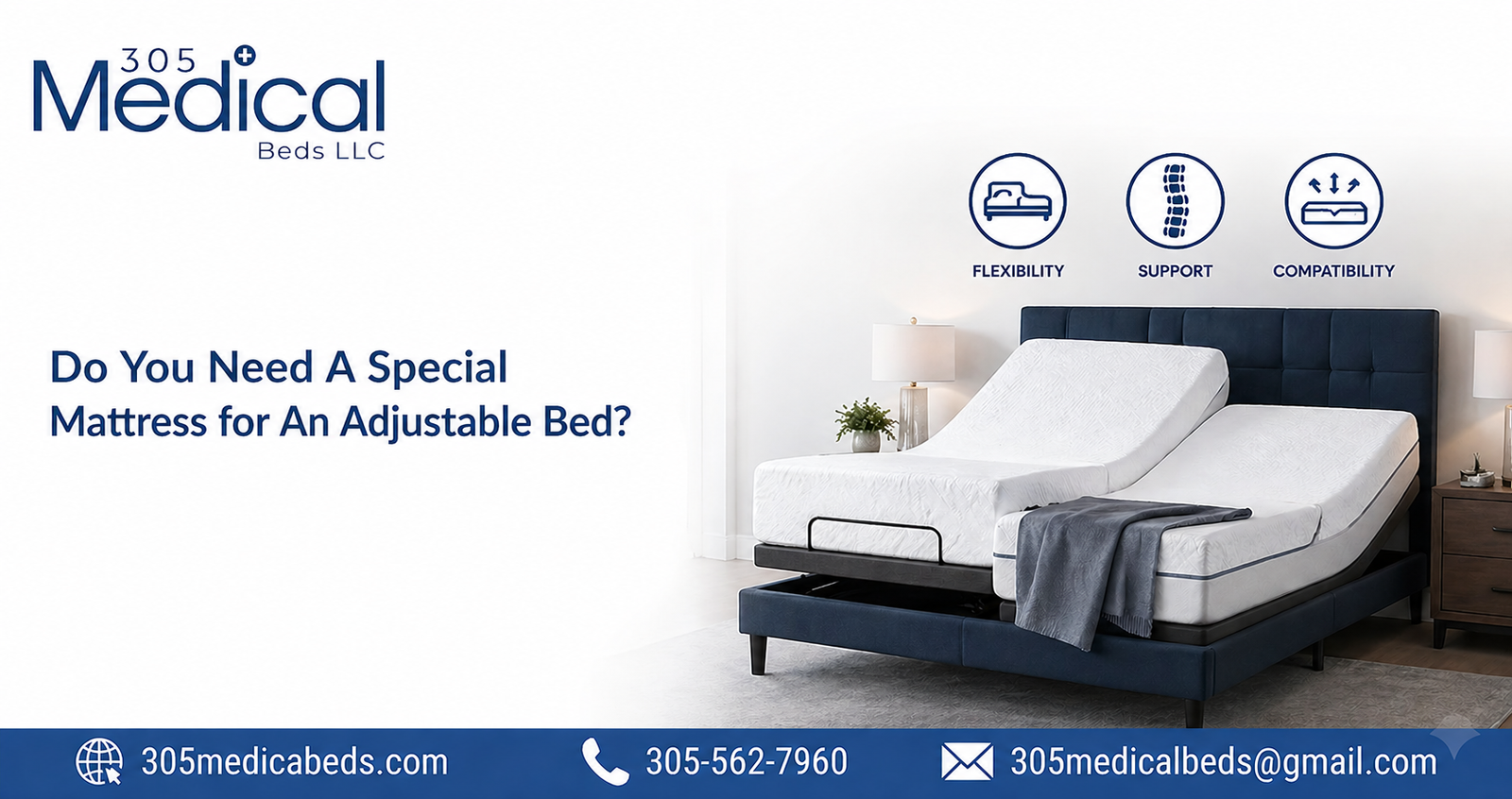
Quick Answer
Yes, adjustable beds require a flexible, compatible mattress. Not all mattresses can bend with the adjustable base. Memory foam, latex, and air mattresses are the top compatible types. Traditional innerspring and thick pillow-top mattresses are generally not recommended for adjustable beds, as they can crack, sag, or void your warranty.
If you’re shopping for adjustable beds or already own one, understanding mattress compatibility is essential — not just for comfort, but also to avoid costly mistakes. This guide walks you through everything you need to know to make the right choice.
Why Can’t You Use Any Mattress on an Adjustable Bed?
Adjustable beds are designed to move. They bend, flex, elevate the head, raise the foot, and sometimes do both at once. A mattress that sits on top needs to move with the base — not fight against it.
A traditional mattress with rigid internal coil springs was designed to lie flat and stay flat. When you try to bend it, the springs resist — and over time, they break. You end up with a mattress that feels lumpy, develops pressure points, and loses structural integrity much faster than expected.
Beyond damage, a rigid mattress also reduces the actual benefit of your adjustable bed. If the mattress can’t flex to match the raised position, your body doesn’t get the therapeutic support the adjustable base is designed to provide. You’re essentially paying for a feature you can’t use.
Important: Using an incompatible mattress can void your adjustable bed’s warranty. Always check your bed frame’s compatibility guidelines before purchasing a mattress.
What Types of Mattresses Work Best with Adjustable Beds?
The good news is that several excellent mattress types are designed specifically for adjustable bases. Here’s what works — and why.
Memory Foam
The most popular and reliable choice. Memory foam is highly flexible, contours to body shape, and bends easily with the base without losing structure.
Latex Foam
Natural or synthetic latex is durable, flexible, and responsive. It works well with adjustable bases and is a great option for those who prefer eco-friendly materials.
Air Mattress (Sleep Number style)
Adjustable air chambers pair perfectly with adjustable beds. Air doesn’t resist bending — it simply conforms to the base position naturally.
Hybrid Mattress
A hybrid (foam + coils) can work if it uses pocketed micro-coils. The key is flexibility. Some hybrids are adjustable-base certified — always check before buying.
Not Sure Which Mattress Fits Your Adjustable Bed?
Our specialists at 305 Medical Beds can help you find the right compatible mattress for your base — no guesswork needed.
Mattresses to Avoid on an Adjustable Base
Just as important as knowing what works — you need to know what doesn’t. Using the wrong mattress type is one of the most common and expensive mistakes people make when buying an adjustable bed.
Traditional Innerspring
Interconnected coil springs are rigid by design. They resist bending, causing the mattress to crack internally over time when used on an adjustable base.
Thick Pillow-Top Mattresses
Extra thick comfort layers prevent the mattress from bending naturally. They can shift, bunch up, or separate from the base when elevated.
Rigid Foam Slabs (Very Firm)
Ultra-high-density foam blocks that don’t flex can crack under repeated bending. Flexibility matters as much as density here.
Waterbeds
Traditional water mattresses are not designed for adjustable frames. Their rigid chambers and weight distribution don’t flex safely with a motorized base.
Key Features to Look for in an Adjustable Bed Mattress
When shopping for a special mattress for an adjustable bed, these are the features that matter most. Don’t just look at comfort — look at how the mattress is engineered to move.
- Flexibility Rating: Look for mattresses labeled “adjustable base compatible” or “flex-friendly.” Many manufacturers now specifically rate their mattresses for adjustable use.
- Thickness (6″–12″ Sweet Spot): Mattresses between 6 and 12 inches tend to flex most naturally. Anything thicker starts resisting the bend, especially at the head and foot zones.
- Zoned Support Construction: Some premium mattresses have different firmness zones designed to align with where the adjustable base bends. This reduces stress on the mattress material.
- No Coil Border Rods: Traditional innersprings have rigid border rods around the perimeter that prevent bending. Avoid any mattress with these if using an adjustable base.
- Certioficat or Warranty Coverage: Many top brands now offer warranties that specifically cover adjustable base use. This is a green flag — it means the manufacturer stands behind the compatibility.
- Weight Limit Compatibility: Make sure the mattress weight is within the adjustable base’s rated capacity. Heavy mattresses can strain the motor over time.
Adjustable Bed Mattress Compatibility at a Glance
| Mattress Type | Adjustable Base Compatible? | Recommended Thickness | Best For |
|---|---|---|---|
| Memory Foam | ✓ Yes | 8–12 inches | Pressure relief, back pain |
| Latex Foam | ✓ Yes | 8–12 inches | Eco-conscious buyers, bounce |
| Air Mattress | ✓ Yes | Varies | Customizable firmness |
| Hybrid (pocketed coils) | ✓ Sometimes | 10–12 inches | Those who prefer coil feel |
| Traditional Innerspring | ✗ No | — | Not suitable |
| Pillow-Top (very thick) | ✗ No | — | Not recommended |
Do Medical Adjustable Beds Have Different Mattress Requirements?
If you’re looking at a medical or hospital-style adjustable bed — such as those used for post-surgery recovery, elderly care, or managing chronic conditions — the mattress requirements are even more specific.
Medical adjustable beds often have more articulation points than consumer models. They may have knee-break positions, Trendelenburg tilts, and weight-rated motors. This means:
- The mattress must be thinner in most cases (typically 4–8 inches) to allow full range of motion without buckling
- Medical-grade foam or gel-infused foam is often preferred for pressure ulcer prevention
- The mattress should be easy to clean and may need a waterproof cover
- Fire-resistant materials may be required for healthcare facility compliance
- Anti-microbial fabric mattress covers are common in clinical and home care environments
At 305 Medical Beds, we carry adjustable beds and compatible mattress solutions designed specifically for both home users and medical environments.
Can You Keep Your Current Mattress? Here’s How to Tell
Before spending money on a new mattress, do a quick compatibility check with your existing one. Here’s a simple way to evaluate it:
- Bend the mattress manually at the one-third point — if it resists significantly or creaks, it won’t work
- Check the mattress tag or brand website for “adjustable base compatible” labeling
- If your mattress has interconnected innersprings, it’s almost certainly not compatible
- If it’s a memory foam or all-latex mattress under 12 inches thick, it likely will work fine
- Contact the mattress manufacturer directly — most have a dedicated compatibility FAQ
Need help finding the right adjustable bed setup?
Health Benefits You’re Missing Without the Right Mattress
Pairing your adjustable bed with the right mattress isn’t just about avoiding damage — it’s about actually getting the health benefits you invested in.
With a compatible mattress and an adjustable base working together, users commonly report:
- Significant reduction in lower back and hip pain through zero-gravity positioning
- Improved circulation and reduced leg swelling, especially beneficial for seniors and post-surgery patients
- Reduced acid reflux and GERD symptoms by elevating the upper body during sleep
- Better breathing and reduced snoring with a slightly elevated head position
- Easier transfer in and out of bed for people with limited mobility
- Reduced pressure on joints, helping with arthritis and chronic pain conditions
None of these benefits are fully achievable if your mattress is fighting the base rather than working with it. A mismatched mattress creates pressure points, restricts elevation, and forces your body into unnatural positions.
How Much Does an Adjustable Bed Mattress Cost?
Pricing for adjustable-compatible mattresses varies widely, but here’s a realistic breakdown by category:
| Mattress Type | Price Range (Queen) | Lifespan |
|---|---|---|
| Memory Foam (Entry Level) | $400 – $800 | 7–10 years |
| Memory Foam (Premium) | $900 – $2,000+ | 10–15 years |
| Latex Foam | $800 – $2,500 | 12–20 years |
| Hybrid (Adjustable Compatible) | $900 – $2,500 | 8–12 years |
| Medical-Grade Foam | $300 – $1,200 | 5–8 years (clinical use) |
Keep in mind that a quality compatible mattress is a long-term investment. Buying an incompatible mattress and damaging your adjustable base motor or frame ends up costing far more than getting the right mattress upfront.
Shop Adjustable Beds & Compatible Mattresses
305 Medical Beds specializes in adjustable bases for home care, post-surgery recovery, and everyday comfort — with expert guidance on what works best together.