
Table of Contents
- Choosing the Right Medical Bed Can Change Daily Care
- What Is a Medical Adjustable Bed?
- Top Features to Look for in a Medical Adjustable Bed
- 1. Head-and-foot adjustability
- 2. Adjustable Bed Height
- 3. Medical-Grade Frame and Weight Capacity
- 4. Compatibility With Medical Mattresses
- 5. Easy-to-Use Controls
- 6. Safety Side Rails (Optional but Important)
- 7. Quiet and Smooth Motor System
- 8. Ease of Cleaning and Maintenance
- 9. Space-Efficient Design for Home Use
- 10. Rental or Purchase Flexibility
- Who Should Consider a Medical Adjustable Bed?
- Why Choosing the Right Features Matters
- Conclusion: Invest in Comfort, Safety, and Care
Choosing the Right Medical Bed Can Change Daily Care
When someone needs extra care at home, comfort alone is no longer enough. Sitting up, sleeping, breathing, or even getting out of bed can become difficult without proper support. This is where a medical adjustable bed makes a real difference.
But not all adjustable beds are built for medical needs. Knowing which features truly matter helps you make a safe, practical, and long-term decision—whether for recovery, elderly care, or ongoing medical conditions.
This guide explains the top features to look for in a medical adjustable bed so you can choose one that supports comfort, safety, and daily care at home.
What Is a Medical Adjustable Bed?
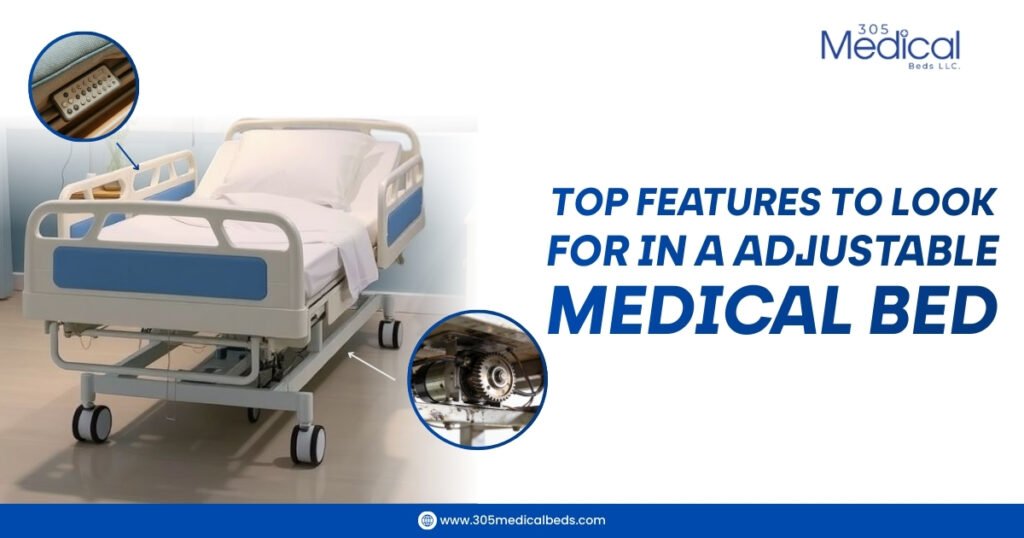
Medical adjustable beds are medical-grade bed designed to support patients who need special positioning, mobility assistance, or long-term care at home.
Unlike standard adjustable beds, medical models are built to:
- Support clinical needs
- Improve patient safety
- Assist caregivers
- Accommodate medical accessories
Choosing the right features ensures the bed meets both patient and caregiver needs.
Top Features to Look for in a Medical Adjustable Bed
1. Head-and-foot adjustability
One of the most essential features of a medical adjustable bed is independent head and foot adjustment.
Why it matters:
- Helps with breathing and circulation
- Reduces pressure on joints
- Improves comfort during rest and sleep
- Supports eating, reading, or watching TV in bed
This feature is especially important for patients with respiratory issues, heart conditions, or limited mobility.
2. Adjustable Bed Height
Height adjustability is a critical safety feature.
Benefits include:
- Easier and safer transfers in and out of bed
- Reduced fall risk
- Better caregiver access
- Comfortable working height for daily care
A medical adjustable bed with height control helps prevent injuries for both patients and caregivers.
3. Medical-Grade Frame and Weight Capacity
Not all adjustable beds are designed for medical use. A medical adjustable bed should have a strong, durable frame.
Look for:
- High weight capacity
- Reinforced steel or medical-grade construction
- Stability during movement and adjustments
This ensures long-term safety and reliability, especially for daily or extended use.
4. Compatibility With Medical Mattresses
A medical adjustable bed should support specialized mattresses.
Important options include
- Pressure-relief mattresses
- Low-air-loss mattresses
- Foam or hybrid medical mattresses
This feature is essential for patients at risk of bedsores or those who spend extended time in bed.
5. Easy-to-Use Controls
Controls should be simple and accessible.
Key features to look for:
- Handheld remote
- Clearly labeled buttons
- Smooth and quiet operation
Easy controls allow patients to adjust positions independently and reduce caregiver involvement when possible.
6. Safety Side Rails (Optional but Important)
Side rails add an extra layer of safety for patients with limited mobility or fall risk.
Benefits of side rails:
- Prevent accidental falls
- Provide support when repositioning
- Increase patient confidence
Rails should be sturdy, easy to lower, and securely attached.
7. Quiet and Smooth Motor System
A medical adjustable bed should operate smoothly and quietly.
Why this matters:
- It prevents sleep disturbances.
- Reduces stress for patients
- Improves overall comfort
Reliable motor systems also ensure consistent performance over time.
8. Ease of Cleaning and Maintenance
Medical beds require regular cleaning for hygiene.
Look for:
- Easy-to-clean surfaces
- Minimal crevices
- Durable finishes
This is especially important for infection control and long-term use.
9. Space-Efficient Design for Home Use
A medical adjustable bed should fit comfortably in a standard bedroom.
Important considerations:
- Standard width options
- Compact frame design
- Easy placement in bedrooms or care areas
A well-designed bed blends functionality with home comfort.
10. Rental or Purchase Flexibility
Depending on care duration, flexibility matters.
Choose a provider that offers:
- Short-term rentals
- Long-term rental options
- Purchase options for permanent needs
This allows you to match the bed to your care timeline and budget.
Who Should Consider a Medical Adjustable Bed?
A medical adjustable bed is ideal for:
- Patients recovering from surgery
- Seniors are aging at home.
- People with chronic illnesses
- Individuals with limited mobility
- Patients receiving long-term or palliative care
Why Choosing the Right Features Matters
The right features:
- Improve daily comfort
- Reduce injury risks
- Support faster recovery
- Make caregiving safer and easier
Choosing the wrong bed can lead to discomfort, safety issues, and unnecessary stress.
Conclusion: Invest in Comfort, Safety, and Care
A medical adjustable bed is more than a piece of furniture—it’s a critical part of home healthcare.
By focusing on the top features to look for in a medical adjustable bed, you ensure better comfort, safer mobility, and reliable support for both patients and caregivers.
When medical needs arise at home, the right adjustable bed can make everyday care easier and more effective.