
Key Takeaways
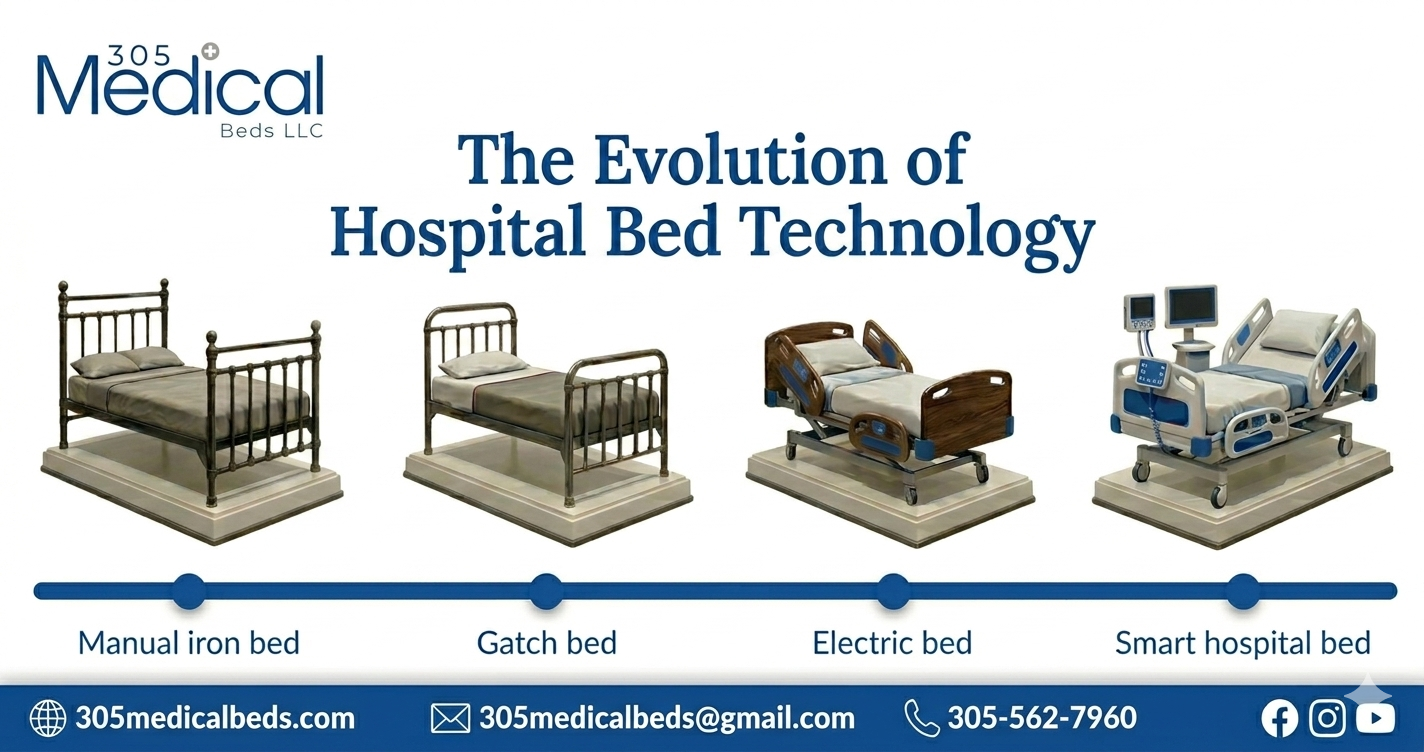
- Hospital bed technology has evolved over 200+ years — from iron-frame cots to AI-monitored ICU platforms.
- The first electric hospital bed was introduced in the 1940s. Hill-Rom released its first fully electric model in 1956.
- Modern ICU beds like the Hill-Rom Progressa P7500 feature lateral rotation therapy, EHR connectivity, and real-time patient monitoring built directly into the frame.
- Certified refurbished hospital beds deliver identical performance to new units—fully electric—at a cost that is 40–70% lower.
- The same ICU-grade technology used in hospitals is now accessible for home care and smaller healthcare facilities.
- The future of hospital bed technology centers on AI monitoring, automatic repositioning, and deep integration with smart room systems.
Table of Contents
- Key Takeaways
- Introduction
- When Did Electric Hospital Beds Become Standard?
- Shop Hill Rom Electric Hospital Beds
- Why Refurbished Hospital Bed Technology Is a Smart Choice
- Explore Certified Refubished Hospital Beds
- What Will the Next Generation of Hospital Beds Look Like?
- Hospital Bed Technology Comparison: Manual vs. Electric vs. ICU
- Final Thoughts
- Frequently Asked Qustions
Introduction
Think about the last time you adjusted a recliner with a button or slept on a mattress that adapts to your body. Imagine that same level of precision applied to a bed, where someone’s recovery—or even their life—depends on it. That’s exactly what hospital bed technology has become.
What started as little more than a wooden frame with a thin mattress has evolved into one of the most sophisticated pieces of medical equipment in any healthcare facility. Today, hospital bed technology not only supports patient comfort but actively contributes to clinical outcomes, caregiver safety, and infection control.
Whether you’re a healthcare administrator, a home caregiver, or someone exploring options for a loved one, understanding how hospital beds have evolved helps you make a smarter, more informed purchase decision. At 305 Medical Beds, we’ve helped hundreds of healthcare facilities and home care families access hospital bed technology that meets ICU standards through certified refurbished equipment. This guide contains all the information we have, presented clearly and without jargon.
Where It All Started: The Early History of Hospital Beds
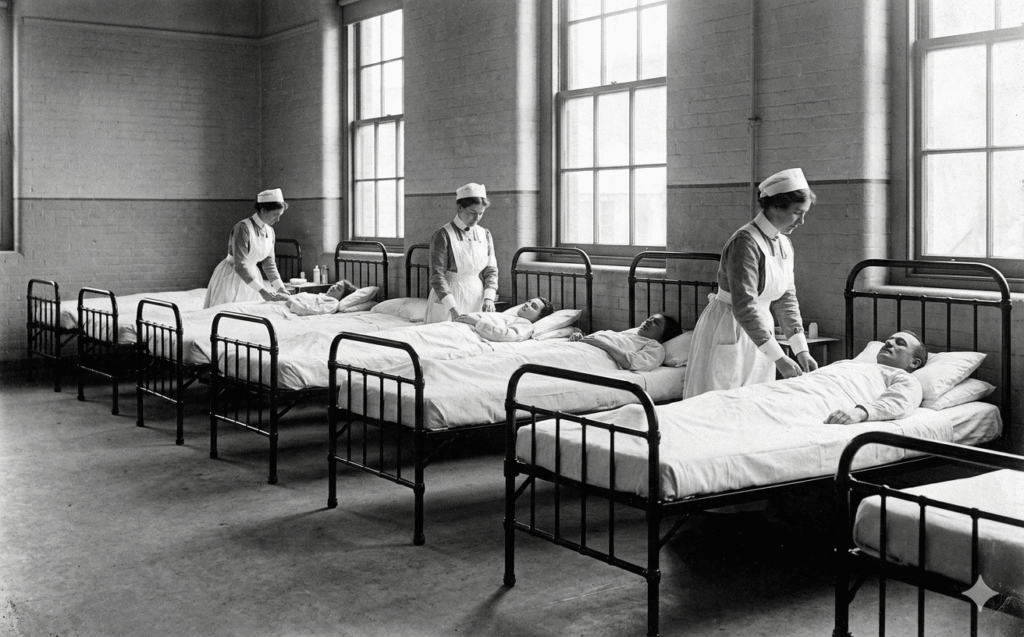
For most of human history, patients lay on whatever surface was available tframes in the floor, straw mats, or basic wooden cots. The idea that a bed itself could be a medical tool simply didn’t exist.
The first meaningful shift came in the early 1800s when hospitals began using iron-framed beds. These were sturdier and easier to clean than wood — a critical advancement during a time when germ theory was just beginning to emerge. Florence Nightingale, the founder of modern nursing, was one of the first to insist that hospital environments — including beds — needed to be sanitary, well-ventilated, and designed for healing.
By the late 1800s, the first adjustable hospital beds appeared. These early models featured hinged backrests that nurses could prop up manually using bolts or pins. It was a simple mechanism, but it represented a turning point: the recognition that bed position directly affects patient health.
Key milestones in early hospital bed technology history:
| → 1874 | First U.S. patent issued for an adjustable hospital bed backrest |
| → 1900s | Iron and steel frames replace wooden construction across hospitals |
| → 1920s | Spring-coil mattresses introduced for improved patient comfort |
| → 1930s | Manual crank mechanisms allow height and angle adjustment without moving the patient |
The Mid-20th Century: Manual Cranks and the First Standardization
After World War II, hospital infrastructure expanded rapidly across the United States. The urgent need to care for injured veterans at scale pushed manufacturers to standardize hospital bed design for the first time.
The iconic “manual crank bed” emerged during this period. Nurses could now raise the head of the bed, elevate the foot section, and adjust overall height — with 1930s Manual—without physically moving the patient. This was a significant improvement for both patient comfort and caregiver efficiency.
The Trendelenburg position (feet elevated above the head) became widely used in surgical recovery during this era, and beds were specifically engineered to achieve it safely and consistently.
→ Side rails to prevent patient falls during sleep or confusion
→ Locking caster wheels for safer patient transport between rooms
→ Standardized frame dimensions for compatibility with IV poles, overbed tables, and monitoring equipment
→ Improved mattress materials including high-density foam and rubber composites
While these beds were a major step forward, every adjustment still required manual effort from nursing staff — and the beds offered no monitoring, no alerts, and no patient autonomy.
When Did Electric Hospital Beds Become Standard?
The shift to electric hospital bed technology is one of the most transformative moments in medical equipment history — amaterials,—andnd it happened faster than most people realize.
General Electric developed an early push-button hospital bed concept in the 1940s. Hill-Rom released its first fully electric hospital bed in 1956, and Dr. Homer Stryker developed his revolutionary Circ-O’lectric rotating bed — design—and—designeded for spinal and burn patients — —designed—inin 1958.
These weren’t incremental upgrades. They fundamentally changed what a hospital bed could do. For the first time, patients could adjust their own bed position using a simple handheld remote givingng them autonomy and reducing demands on nursing staff. That shift from nurse-controlled to patient-controlled positioning had measurable effects on recovery time, patient satisfaction, and staff injury rates.
As the technology matured through the 1980s and 1990s, electric hospital bed technology advanced rapidly:
- Full-electric controls replaced all manual cranks
- Trendelenburg and reverse Trendelenburg functions became standard features
- Integrated nurse call systems connected bed controls to the nursing stations—givingtation.
- Low-entry positions (as low as 9 inches from the floor) allowed patients to get in and out more safelysstation.afely.
- Weight scales built directly into bed frames enabled continuous patient monitoring without transferstsafely.ransfers.
- Chair position functionality supported post-surgical recovery and patients with respiratory conditionsctransfers.onditions.
By the 1990s, Hill-Rom and Stryker had emerged as the dominant innovators in hospital bed technology. Their beds went from being simple furniture to complex medical devices with multiple integrated systems. This is the era that gave rise to the models many healthcare facilities still rely on today — includiconditions.—includingng the Hill-Rom TotalCare and Versacare series, which remain some of the most trusted platforms in clinical settings worldwide.
Shop Hill Rom Electric Hospital Beds
Certified refurbished. ICU-grade. Fully tested.
What Does ICU-Grade Hospital Bed Technology Actually Include?
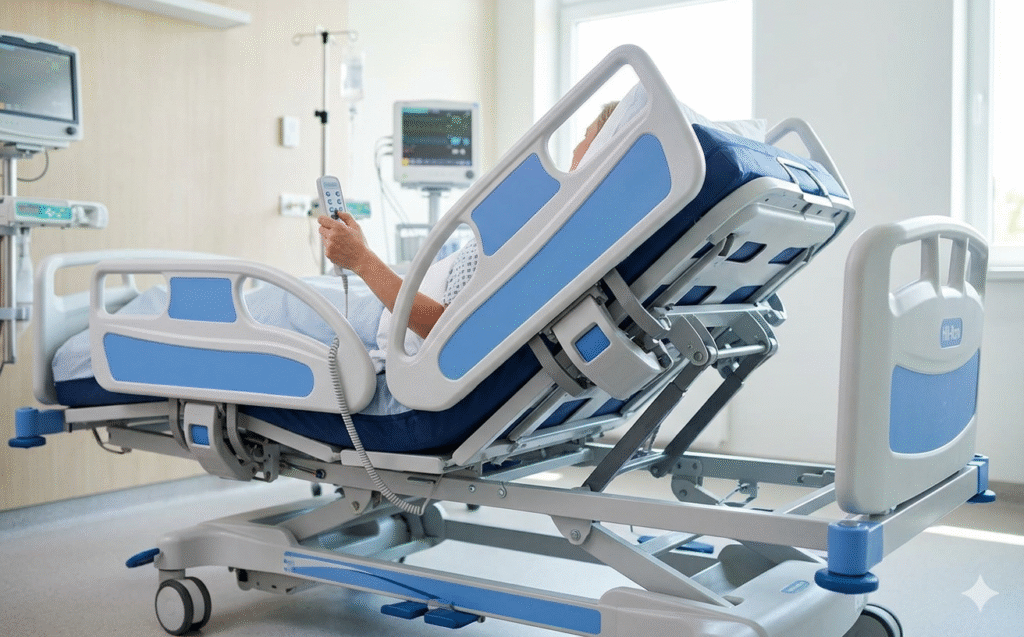
Modern ICU hospital beds represent the pinnacle of what hospital bed technology has achieved. These are not just beds — they are patient management platforms. Every component is engineered to directly support clinical outcomes.
Today’s advanced hospital beds, like the Hill-Rom Progressa P7500 and TotalCare Spo2rt P1900, include features that were unimaginable just 30 years ago.
Continuous patient monitoring
- Built-in weight and load sensors track patient weight in real time — withoSport—withoutut requiring a physical transfer to a separate scale
- Exit detection systems alert staff the moment a patient attempts to leave the bed unassistedu—withoutnassisted.
- Pressure mapping technology continuously monitors skin contact points and flags high-risk areas before pressure ulcers developdunassisted.evelop.
Pulmonary and respiratory support
This is where modern hospital bed technology has perhaps its greatest clinical impact.
- Continuous Lateral Rotation Therapy (CLRT) automatically rotates patients side to side to prevent hospital-acquired pneumonia — odevelop.—onene of the leading causes of ICU mortality
- Percussion and vibration therapy assists in secretion clearance for patients with pulmonary conditionsc—oneonditions.
- Head-of-bed angle monitoring with automatic alerts ensures compliance with ventilator bundle protocols —conditions.—a a critical infection prevention measure
Caregiver safety features
According to the CDC’s safe patient handling guidlines, overexertion injuries from patient handling are among the most common workplace injuries in healthcare. Modern hospital bed technology directly addresses this.
- Articulating assist rails reduce the need for manual patient repositioningr—aepositioning.
- One-touch CPR flat positioning allows immediate emergency response without fumbling with controlscrepositioning.ontrols.
- Integrated scales eliminate the need to transfer patients for routine weighing — ocontrols.—onene of the highest fall-risk moments in any care setting
Smart connectivity
- Beds communicate with electronic health record (EHR) systems via hospital networks — b—one—beded position, exit events, and weight data flow directly into the patient’s chartc—bedhart.
- Real-time data is transmitted to nursing stations and mobile devices, reducing response timestchart.imes.
- Integration with nurse call systems and alarm management platforms reduces alarm fatigue —times.—a a documented patient safety issue in modern ICUs
How Mattress Technology Evolved Alongside the Bed Frame
It would be incomplete to discuss hospital bed technology without addressing the mattress. The two systems work together, and ignoring one undermines the other.
Early hospital mattresses were basic foam pads — function—a—functionalal but offering no pressure redistribution, moisture management, or therapeutic benefit. Today’s hospital mattresses are engineered medical devices in their own right:
- Static foam mattresses— High-density—functionalHigh-density,, pressure-redistributing foam designed to reduce skin breakdown. Ideal for general care and home settings where patient mobility is reasonable.
- Dynamic air mattresses— AlternatinHigh-density,Alternatingg air cells inflate and deflate in programmed cycles, continuously shifting pressure points away from vulnerable skin areas. Essential for wound care and high-risk patients.
- Low air loss mattresses— FeaturAlternatingFeaturee tiny perforations that allow moisture and heat to escape, keeping skin dry and significantly reducing infection risk. Used most often in intensive care and burn units.
- Hybrid mattresses— Combine high-density foam with integrated air zones, offering both the support of foam and the therapeutic benefits of dynamic air. Best for patients who need pressure relief without full air mattress instability.
The right mattress is just as important as the right bed frame. At 305 Medical Beds, our refurbished hospital beds are available with both foam and air mattress options — Feature—soso you get the complete system, not just the frame.
Why Refurbished Hospital Bed Technology Is a Smart Choice
One of the most important developments in recent years is not a new feature — it’s the growing recognition that certified refurbished hospital beds are a legitimate, safe, and smart alternative to purchasing new.
This matters because the best hospital bed technology — the ICU-grade platforms with lateral rotation, smart monitoring, and EHR connectivity — carries a new-unit price tag that puts it out of reach for many home care users, smaller clinics, and budget-conscious facilities. Refurbishment changes that.
A properly certified refurbished hospital bed undergoes a rigorous process before it’s cleared for resale:
- Full disassembly and component-level inspection of every mechanical and electrical part
- Replacement of worn motors, actuators, control boards, and electrical components
- Deep sanitization using hospital-grade disinfection protocols — identical to those used between patients in a clinical setting
- Comprehensive functional testing of every electronic system: scales, positioning motors, exit detection, nurse call integration, and lateral rotation if applicable
- Cosmetic restoration of frames, side rails, controls, and mattress platforms
The result is a bed that performs identically to a new unit — at 40 to 70 percent less cost. For home care users, nursing facilities, and smaller clinics, this makes ICU-grade hospital bed technology genuinely accessible.
At 305 Medical Beds, every refurbished bed we sell — including the Hill-Rom TotalCare P1900 and the Hill-Rom Progressa P7500 — goes through this exact process before it leaves our facility.
Curious whether a refurbished bed is right for your situation? Read our guide: What You Need to Qualify for a Hospital Bed at Home.
Explore Certified Refubished Hospital Beds
Certified refurbished. ICU-grade. Hill-Rom & Stryker. ICU-grade. 40–70% less than new.tested.
What Will the Next Generation of Hospital Beds Look Like?
The next frontier of hospital bed technology is centered on three areas: AI-driven patient monitoring, robotic repositioning, and deeper integration with hospital information systems. Some of these capabilities are already in development or early deployment:
- AI deterioration detection— beds that analyze subtle, continuous changes in patient weight, movement patterns, and positioning over time to flag early warning signs of sepsis, respiratory decline, or neurological changes — before they become emergencies
- Automatic repositioning— scheduled, algorithm-driven repositioning of patients at precise intervals, without nurse intervention, optimizing pressure relief while minimizing sleep disruption
- Direct care team communication— beds that push real-time alerts to physician smartphones and nursing dashboards, with context (which patient, which bed, what changed, for how long)
- Smart room integration— bed systems connected to room lighting, temperature controls, call buttons, and entertainment systems — all adjustable from the bed’s interface or a patient’s personal device
As these technologies become standard, the line between a hospital bed and a patient monitoring station will continue to blur. The bed will remain at the center of patient care — not just as a surface to rest on, but as an active participant in recovery.
Hospital Bed Technology Comparison: Manual vs. Electric vs. ICU
Not sure which type of hospital bed fits your situation? Here’s a clear side-by-side comparison of the three main categories of hospital bed technology available today.
| Feature | Manual Bed | Semi / Full Electric | ICU / Smart Bed |
|---|---|---|---|
| Positioning | Hand crank | Motor + remote | Motor + smart presets |
| Patient control | None | Yes (remote) | Yes (advanced remote) |
| Height adjust | Manual crank | Electric | Electric + hi-low |
| Side rails | Basic fixed | Adjustable | Articulating assist |
| Patient monitoring | None | Basic scale (some models) | Scale + exit + pressure + position |
| Lateral rotation (CLRT) | No | No | Yes |
| EHR connectivity | No | No | Yes |
| Best for | Budget home care, short-term use | Home care / long-term care / rehab | ICU / clinical / high-acuity home care |
| Typical cost (refurbished) | $300–$1,200 | $1,500–$5,000 | $2,500–$8,000 refurb / $5,000–$30,000+ new |
Final Thoughts
From a hinged wooden backrest in the 1800s to AI-integrated ICU platforms today, hospital bed technology has made one of the most remarkable journeys in medical history. Every advancement — electric motors, lateral rotation, smart sensors, pressure mapping, EHR connectivity — exists for the same reason: to help patients heal faster, safer, and with greater dignity.
At 305 Medical Beds, we make that advanced technology accessible. Our certified refurbished Hill-Rom and Stryker beds bring ICU-grade hospital bed technology to healthcare facilities and families who need it — without the new-equipment.
Frequently Asked Qustions
What is the most advance hospital bed today?
ICU beds like the Hill-Rom Progressa P7500 and TotalCare Spo2rt P1900 represent the current peak of hospital bed technology. They include continuous lateral rotation therapy, real-time patient monitoring, pulmonary support, and full EHR connectivity — all built into the bed frame itself.
When were electric hospital beds first invented?
General Electric developed an early push-button hospital bed in the 1940s. Hill-Rom released its first fully electric hospital bed in 1956, and Dr. Homer Stryker introduced the Circ-O’lectric rotating bed in 1958. By the 1980s, full-electric beds had become the standard in U.S. hospitals.
Are refurbished hospital beds as technologically capable as new ones?
Yes — when refurbished by certified technicians, hospital beds retain the full electronic and mechanical functionality of new units. Every motor, actuator, control board, and sensor is tested and replaced if needed. The hospital bed technology is identical; the price is 40–70% lower.
What is the difference between a semi-electric and full-electric hospital bed?
A semi-electric hospital bed uses electric motors for head and foot positioning but requires a manual crank for height adjustment. A full-electric hospital bed controls all three functions — head, foot, and overall height — electrically via a patient or caregiver remote.
What hospital bed features matter most for home care?
For home use, the most critical hospital bed technology features are hi-low height adjustment (for safe entry and exit), full-electric positioning, quality side rail systems, and an easy-to-use patient remote. Pairing with the right pressure-relief mattress is equally important.
How long do refurbished hospital beds last?
A properly refurbished hospital bed — with all worn components replaced — typically lasts 10 to 15 years under normal use. Hill-Rom and Stryker frames are built to clinical standards and remain structurally sound well beyond initial hospital service life.
Does Medicare cover hospital beds for home use?
Medicare Part B covers hospital beds as durable medical equipment (DME) when a physician prescribes them as medically necessary for home use. Coverage applies to both rentals and purchase. Visit the Medicare hospital bed coverage page for current eligibility requirements.
How do I choose the right hospital bed for my needs?
The right choice depends on the patient’s condition, mobility level, caregiver availability, and care setting. Our team at 305 Medical Beds will walk you through every option at no obligation — contact us here or call 305-562-7960.